
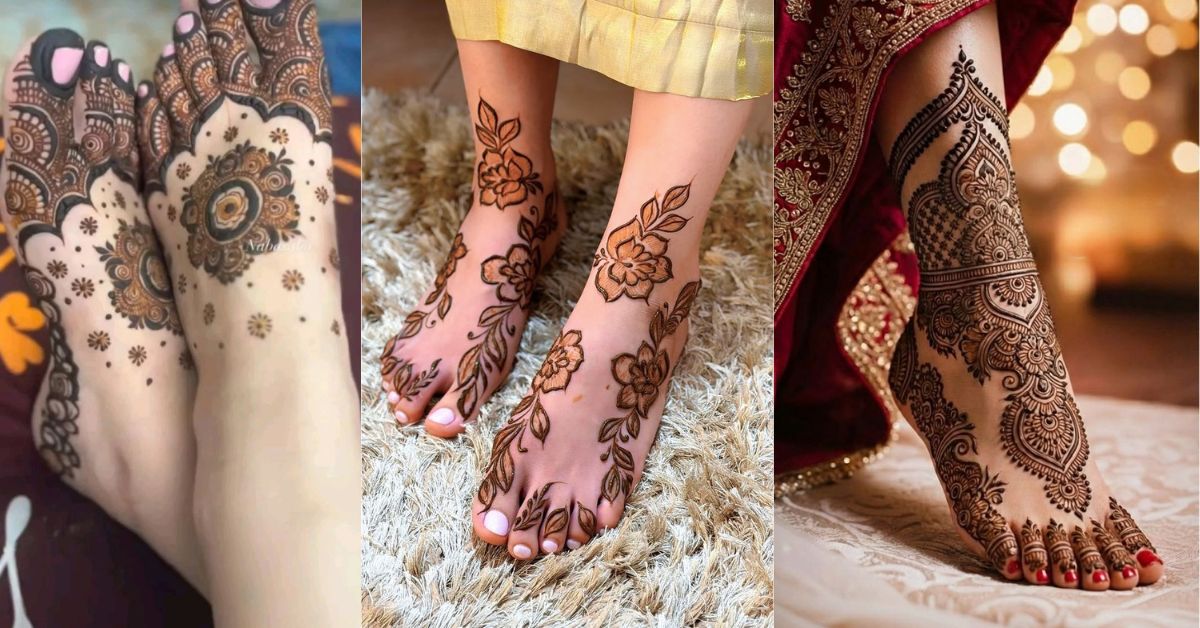
Mehndi has been an integral part of South Asian culture for centuries. While hand mehndi usually receives the most attention, a beautiful foot mehndi design can be just as attractive and graceful. Decorating the feet with henna adds an elegant finishing touch to traditional and festive looks, especially when wearing sandals, open-toe shoes, traditional dresses, or bridal footwear.
A well-chosen foot mehndi design can range from a small floral pattern to a detailed bridal design covering the toes, feet, sides, and ankles. The best design depends on the occasion, outfit, personal style, and how much time you want to spend applying mehndi.
Simple foot mehndi designs are especially popular among beginners because they are easy to apply and do not require advanced artistic skills. On the other hand, brides often prefer detailed patterns featuring flowers, paisleys, leaves, mandalas, peacocks, vines, and traditional motifs.
At Mehndi Crafted, we love exploring beautiful mehndi ideas that combine traditional artistry with modern trends. In this guide, you will discover different types of foot mehndi designs, application tips, aftercare advice, common mistakes, and helpful ideas for choosing the right design for your occasion.
Whether you are preparing for Eid, a wedding, a festival, a family gathering, or simply want to decorate your feet, these ideas can help you find an attractive style for 2026.
Benefits of Foot Mehndi Design
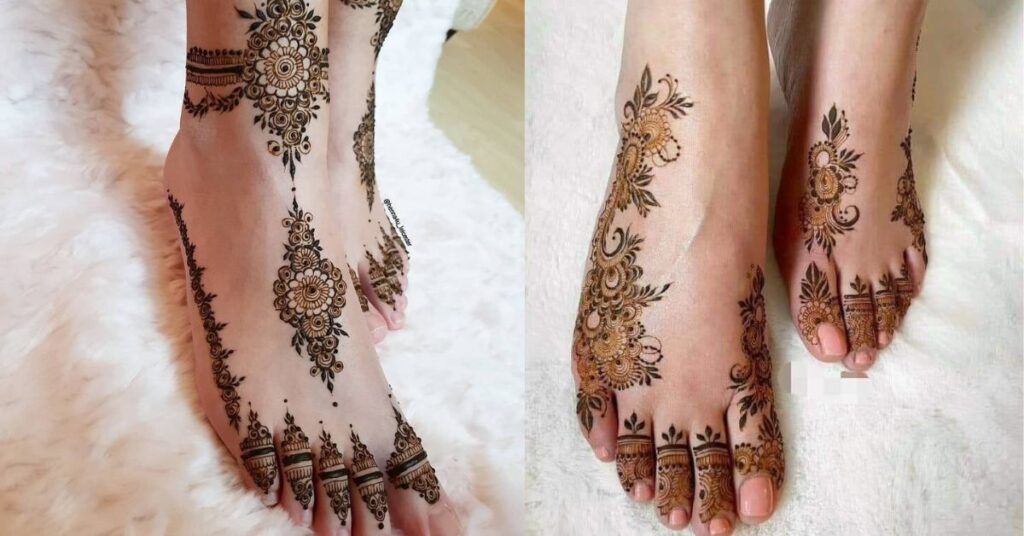
Applying mehndi on the feet comes with several benefits. Apart from enhancing the appearance of your feet, henna is also an important part of cultural and festive traditions in many South Asian communities.
Enhances Appearance: A beautiful foot mehndi design can make the feet look more elegant and decorated. Floral vines, small leaves, dots, and geometric patterns can create a graceful appearance without requiring heavy coverage.
Cultural Significance: Mehndi has a strong cultural connection with weddings, festivals, celebrations, and special occasions. Bridal foot mehndi is particularly popular because decorated feet complement traditional bridal clothing and jewelry.
Relaxation: The process of choosing and applying mehndi can be enjoyable and relaxing. Many people find the artistic process calming, especially when applying a simple design at home.
Customization: Foot mehndi can easily be customized according to your personal style. You can choose a minimal pattern if you prefer simplicity or a detailed design if you love traditional and elaborate artwork.
Long-Lasting: Mehndi on the feet can often remain visible for several days. However, its longevity depends on the quality of henna, skin type, washing habits, footwear, and aftercare.
Another advantage is that foot mehndi can be coordinated with your hand mehndi. Matching floral motifs, similar lines, or repeated paisley patterns can create a complete and balanced look.
For casual occasions, you can decorate only the toes or center of the foot. For weddings, the design can extend from the toes toward the ankle for a more traditional appearance.
Types of Foot Mehndi Design
There are many different styles of foot mehndi available today. Some focus on simplicity and negative space, while others use detailed patterns and full coverage.
When selecting a design, consider the occasion and your experience level. Beginners may find floral and minimal patterns easier to manage, while experienced mehndi artists can experiment with intricate bridal and contemporary designs.
Simple Foot Mehndi Design
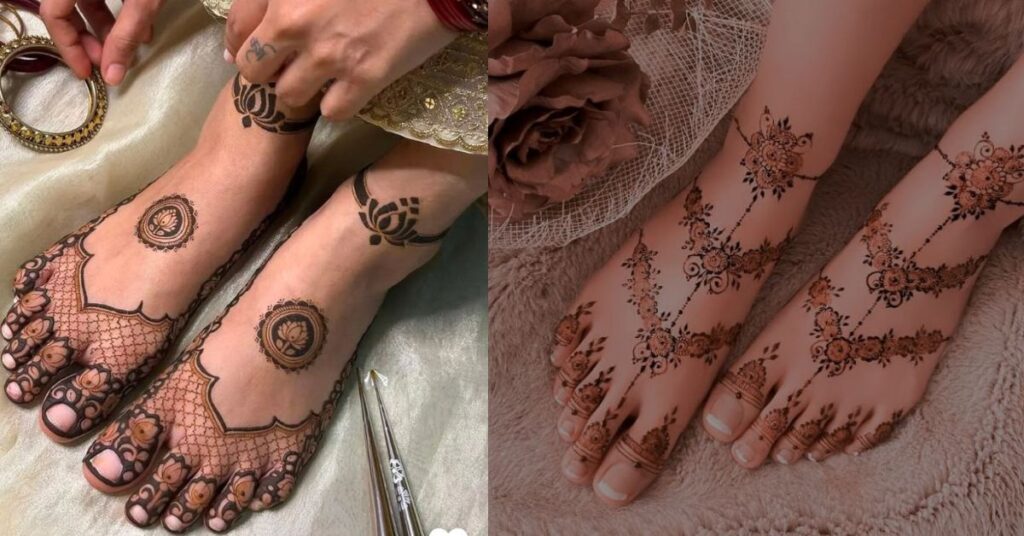
Simple foot mehndi designs are perfect for beginners and casual occasions. These designs usually include small floral patterns, leaves, dots, curved lines, vines, and minimal geometric details.
A simple design does not need to cover the entire foot. In fact, leaving some skin visible can make the pattern look cleaner and more modern.
For everyday wear, you can try a small flower near the center of the foot connected to a thin leafy vine. Another option is to decorate the toes with small dots and curved lines while keeping the middle of the foot mostly empty.
Simple foot mehndi is also a great choice for Eid, family gatherings, college events, festivals, and small celebrations. It takes less time to apply and is easier to maintain than a heavy design.
If you are new to mehndi application, begin with basic elements such as:
- Small flowers
- Leafy vines
- Dots
- Curved lines
- Tiny paisleys
- Simple mandala shapes
- Minimal toe patterns
You can also combine two or three simple elements instead of trying to create a complicated composition. This creates a neat result while keeping the application process manageable.
Bridal Foot Mehndi Design
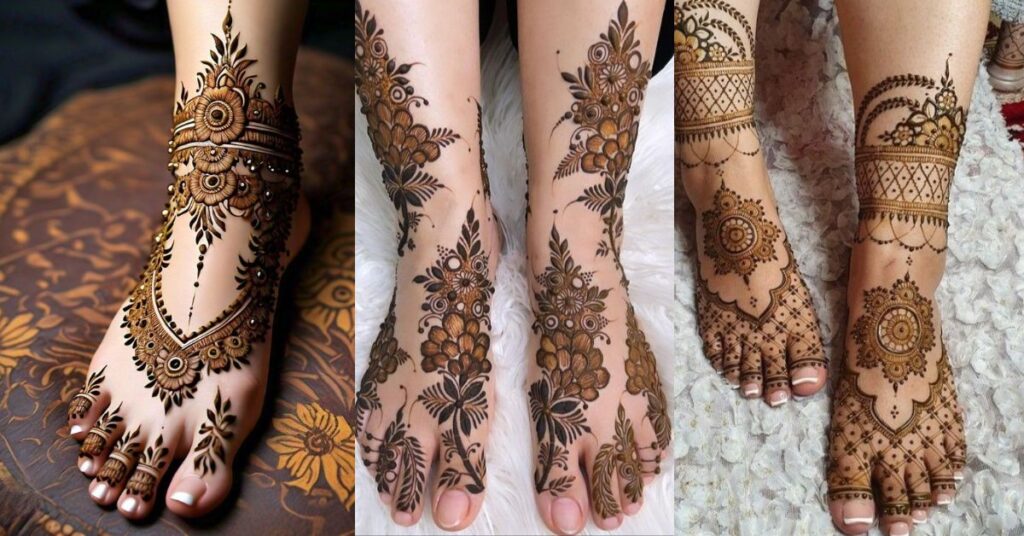
Bridal foot mehndi design is more detailed and intricate than everyday styles. Brides often choose elaborate patterns that cover the toes, central foot area, sides, and sometimes the ankles.
Traditional bridal patterns may include paisleys, flowers, peacocks, leaves, vines, mandalas, jaali patterns, and fine line detailing. The design can be coordinated with the bride’s hand mehndi to create a consistent overall look.
For a traditional bridal appearance, full-foot coverage with detailed motifs can create a rich and luxurious effect. If you prefer a modern bridal look, you can combine detailed sections with areas of negative space.
The choice of bridal foot mehndi can also depend on the wedding outfit. A heavily embroidered bridal dress can be paired with a detailed mehndi pattern, while a simpler outfit may look beautiful with a balanced and less crowded design.
Brides should also consider the footwear they plan to wear. If the feet will be visible through open sandals or traditional bridal shoes, placing important motifs in visible areas can make the design stand out.
Before the wedding day, it is a good idea to decide the design in advance. This allows enough time to practice, prepare the mehndi cone, and plan the application without rushing.
Modern & Contemporary Foot Mehndi Design
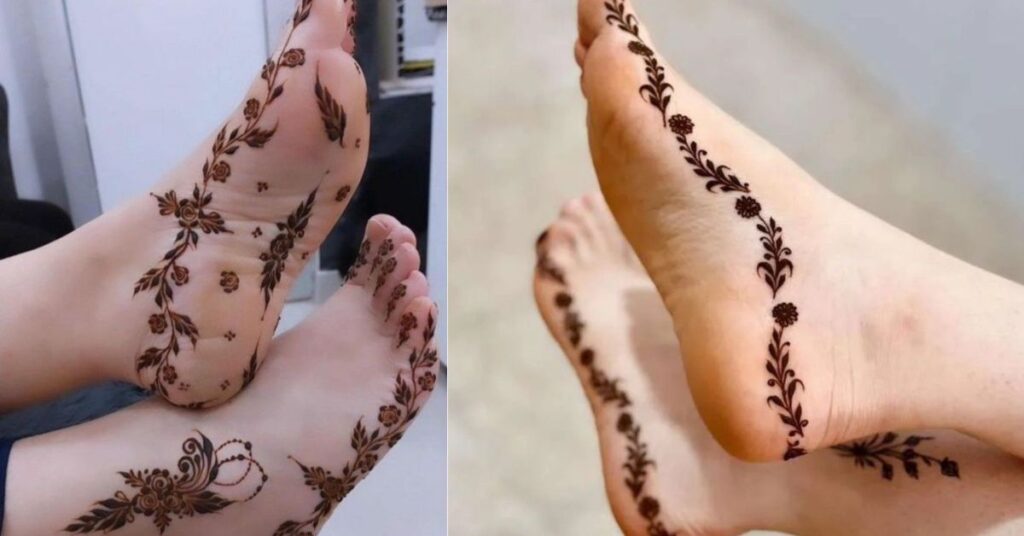
Modern foot mehndi designs combine traditional henna elements with minimal and fashionable patterns. These styles are ideal for girls and women who want something stylish without using heavy traditional coverage.
Modern designs may include mandalas, lace-inspired patterns, thin vines, geometric shapes, minimal flowers, bracelet-like ankle details, and carefully placed dots.
One popular approach is to decorate only one side of the foot. Another is to create a thin floral trail extending from the toes toward the ankle.
Negative space is also an important part of contemporary mehndi. Instead of filling every area, the artist leaves intentional gaps between motifs. This gives the design a clean and sophisticated appearance.
Modern foot mehndi designs are suitable for parties, Eid celebrations, festivals, engagement events, and other occasions where you want your mehndi to look fashionable and different.
Step-by-Step Guide to Apply Foot Mehndi Design
Applying a foot mehndi design can be simple when you prepare properly and work patiently. Good preparation is important because the feet can come into contact with water, footwear, and other surfaces more frequently than expected.
Preparation
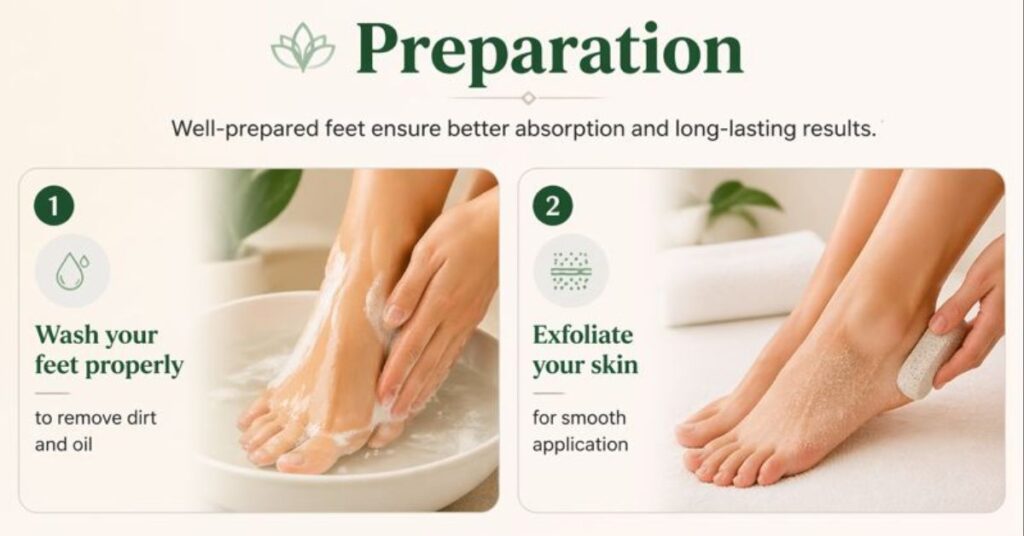
Before applying mehndi, wash your feet properly to remove dirt, sweat, oil, and any product residue.
Exfoliating gently can help remove dead skin and create a smoother surface for application. However, avoid aggressive scrubbing immediately before applying henna because irritated skin may become uncomfortable.
Follow these preparation steps:
- Wash your feet with mild soap and water.
- Dry them completely before application.
- Gently exfoliate if needed.
- Avoid applying oily creams or lotions.
- Keep your mehndi cone ready.
- Select your design before starting.
- Sit in a comfortable position where your foot can remain still.
Avoid applying oil, moisturizer, or greasy products immediately before mehndi because they can interfere with the application and stain development.
If you are using a new design, practicing a few flowers, leaves, or lines on paper first can help you become comfortable with the cone.
Application Process
Start by choosing a design that matches your skill level and the occasion.
Prepare your mehndi cone with a fine tip so you can create controlled lines. A fine cone is particularly useful for floral details, thin vines, dots, and intricate patterns.
Begin with the main outline of the design. Once the basic structure is in place, add smaller details gradually.
A useful order is:
- Draw the main flower, paisley, or central motif.
- Add connecting vines or curved lines.
- Add leaves around the main pattern.
- Fill selected areas with smaller details.
- Add dots to balance empty spaces.
- Check the overall design before allowing it to dry.
Try not to rush. Foot mehndi can become messy if the skin moves while you are applying detailed patterns.
If you are applying mehndi yourself, support your foot in a comfortable position. You can use a cushion or folded towel to reduce movement and make the application easier.
Aftercare Tips
After applying mehndi, allow the design to dry naturally. Avoid touching the pattern unnecessarily because wet henna can smudge easily.
Once the paste has dried, a light lemon and sugar mixture is sometimes used by mehndi enthusiasts to help keep the paste attached to the skin for longer. Use it carefully and avoid excessive moisture.
For a deeper stain, many people keep the dried mehndi on for several hours or overnight, depending on their personal routine and the type of henna being used.
Important aftercare tips include:
- Allow the paste to dry completely.
- Avoid washing immediately after removing the dried paste.
- Gently scrape or brush off dried henna rather than rubbing aggressively.
- Avoid excessive water exposure immediately after removal.
- Keep the feet warm and dry when possible.
- Avoid applying creams directly over a fresh stain.
Remember that natural henna develops gradually. The initial orange stain may become darker over the following hours as the color oxidizes.
Common Mistakes to Avoid
Avoid these mistakes for better results:
Skipping exfoliation: Very rough or flaky skin can make the application look uneven. Gentle preparation can provide a smoother surface.
Rushing the design: Trying to finish too quickly can lead to uneven lines and smudged patterns. Take your time, especially with detailed designs.
Washing too early: Washing the area immediately after removing the paste may reduce the development of the stain.
Using a thick cone tip: A very thick tip can make small patterns difficult to control. A fine tip is generally more suitable for detailed foot designs.
Ignoring aftercare: Good aftercare helps the stain develop properly and can help the design remain attractive for longer.
Another common mistake is choosing a design that is too complicated for your experience level. If you are a beginner, start with simple floral vines, dots, and leaves before attempting intricate bridal patterns.
Pro Tips for Perfect Foot Mehndi Design
Follow these tips to get the best results:
Practice on paper before applying: Practicing basic patterns helps improve cone control and line consistency.
Keep your feet relaxed: A comfortable sitting position can make application easier and reduce accidental movement.
Start with simple designs if you are a beginner: Simple floral and leafy patterns can look elegant without requiring advanced skills.
Match your design with your outfit: Consider your dress color, embroidery, jewelry, and footwear when selecting a pattern.
Avoid applying creams before mehndi: Oily products can make application difficult and may affect the staining process.
You can also take inspiration from your hand mehndi. For example, if your hand design includes floral vines, repeating a similar floral element on your feet can create a coordinated appearance.
Another useful tip is to think about balance. A foot mehndi design does not need to be filled from edge to edge. Strategic empty spaces can make the design look cleaner and help important motifs stand out.
For weddings, consider the visibility of the design when selecting your footwear. Designs that extend slightly toward the ankle can look especially attractive with open sandals.
For everyday occasions, a small design near the toes or center of the foot may be enough. This keeps the look elegant and practical.
If you want a trendy 2026 look, experiment with combinations of traditional flowers and modern negative-space patterns. This creates a style that feels traditional while still looking fresh and contemporary.
FAQs
How long does a foot mehndi design last?
A foot mehndi design usually lasts around 7–14 days, although the exact duration varies from person to person. Skin type, washing frequency, footwear, friction, and aftercare can all affect how quickly the stain fades.
The color may appear darker during the first couple of days and then gradually become lighter as the skin naturally sheds.
How can I make my mehndi darker?
For a darker stain, allow the mehndi paste to remain on the skin for several hours and follow suitable aftercare practices. Many people use a light lemon-sugar mixture after the paste has dried and keep the paste on for several hours or overnight.
Natural henna stains also deepen naturally after the paste is removed, so do not judge the final color immediately.
The quality and freshness of the henna can also influence the final result.
Can beginners apply foot mehndi at home?
Yes. Beginners can apply foot mehndi at home, especially when starting with simple designs.
Floral patterns, leafy vines, dots, small paisleys, and minimal geometric designs are easier to practice than highly detailed bridal patterns.
Start slowly and practice cone control on paper first. With regular practice, you can gradually move toward more detailed designs.
Is foot mehndi only for weddings?
No. Foot mehndi can be worn for many occasions besides weddings.
You can apply a simple foot mehndi design for:
- Eid
- Festivals
- Family gatherings
- Parties
- Engagement celebrations
- Cultural events
- Traditional functions
- Casual occasions
The amount of coverage can be adjusted according to the occasion. A minimal design works well for everyday events, while a detailed design may be better suited to weddings.
When should I wash my feet after mehndi?
It is generally best to avoid washing the feet immediately after applying mehndi. Allow the paste to dry and remain on the skin for several hours before removing it.
After the dried paste is removed, avoid excessive water exposure immediately if you want to encourage the stain to develop.
The exact timing can vary depending on the henna product and application method, so always follow the instructions provided with the henna you are using.
Conclusion
A beautiful foot mehndi design is an elegant way to decorate your feet while celebrating traditional henna artistry. From simple floral patterns to elaborate bridal designs, there are countless styles to choose from according to your occasion, outfit, and personal preference.
Simple designs are ideal for beginners and casual celebrations because they are easy to apply and maintain. Bridal foot mehndi, on the other hand, offers detailed patterns and fuller coverage for brides who want a traditional and luxurious appearance.
Modern and contemporary foot mehndi designs provide another exciting option. Minimal vines, mandalas, lace-inspired details, geometric elements, and negative space can create a stylish look while keeping the design fresh.
In 2026, combining traditional motifs with clean and modern layouts is a beautiful way to create a unique mehndi style. Whether you are preparing for Eid, a wedding, a festival, or simply want to try something new, the right foot mehndi design can add an elegant finishing touch to your look.
At Mehndi Crafted, we hope these ideas help you discover a style that matches your personality and occasion. Take your time, choose a design you can comfortably apply, and follow proper aftercare to enjoy your beautiful henna stain for as long as possible.