Simple mehndi designs are one of the most beautiful ways to decorate your hands without spending hours applying complicated patterns. They are elegant, easy to create, and suitable for women and girls of all ages. Whether you are getting ready for Eid, a wedding, an engagement, a family gathering, a festival, or simply want a beautiful henna look for an ordinary day, simple mehndi designs can be a perfect choice.
Unlike heavy bridal mehndi, simple designs usually focus on clean lines, small floral motifs, leafy vines, dots, circles, paisleys, and balanced empty spaces. This gives the hands a neat and modern appearance while keeping the design comfortable and easy to apply.
In 2026, minimal and easy henna patterns continue to be popular because many people prefer stylish designs that do not look overly crowded. Simple mehndi designs are also perfect for beginners who are learning how to hold a mehndi cone and create clean patterns.
At Mehndi Crafted, we share beautiful henna inspiration, easy mehndi ideas, and modern designs to help you find a pattern that matches your personal style.
What Are Simple Mehndi Designs?
Simple mehndi designs are light, clean, and easy henna patterns that focus on elegance instead of heavy detailing. These designs can cover a small area of the hand or create a beautiful pattern across the palm, fingers, wrist, or back of the hand.
The main feature of a simple mehndi design is balance. Instead of filling every space with intricate details, these patterns allow some skin to remain visible. This creates a fresh, graceful, and modern appearance.
Simple designs can include flowers, leaves, vines, paisleys, dots, curved lines, geometric shapes, small mandalas, and bracelet-style patterns.
They are especially useful for beginners because most patterns can be created using basic shapes. Once you become comfortable with these shapes, you can combine them to create your own unique designs.
Why Simple Mehndi Designs Are Trending
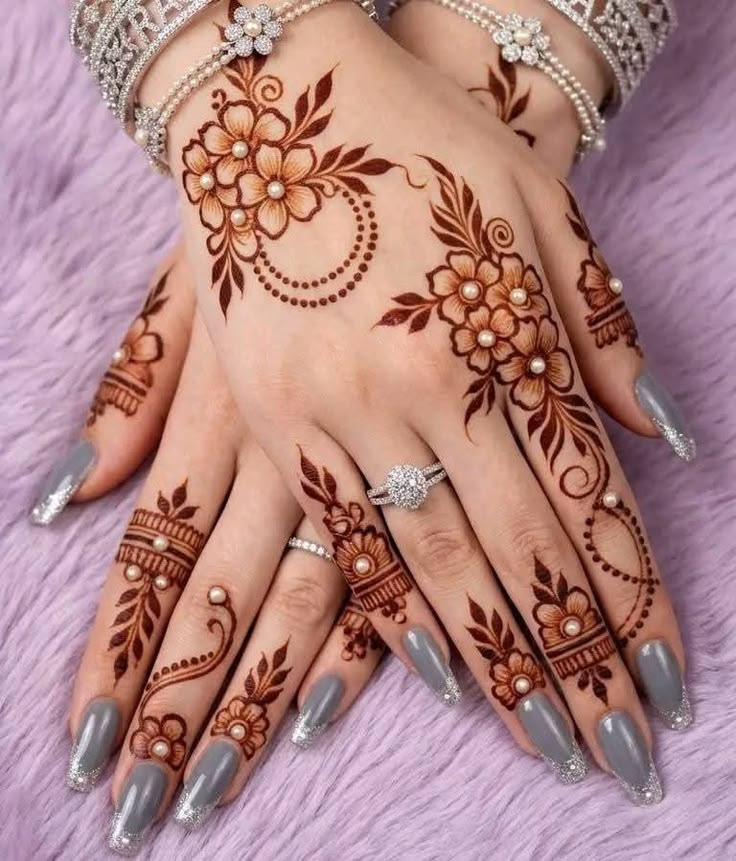
The popularity of simple mehndi designs has increased because modern fashion is moving toward clean, comfortable, and minimal styles. Many women no longer want extremely heavy designs for every occasion.
A simple design can provide the beauty of traditional henna while keeping the overall appearance light and stylish.
Another reason for their popularity is convenience. A detailed mehndi pattern can take several hours to complete, while a simple pattern can often be applied much faster.
Simple mehndi designs are also easy to match with different outfits. Whether you are wearing a traditional Pakistani dress, an Indian outfit, a simple kurta, or even a western-style dress, a delicate henna pattern can complement your look.
Types of Easy Mehndi Designs
There are many different styles of easy mehndi designs. You can choose a pattern depending on the occasion, your experience level, and how much coverage you want.
Simple Mehndi Design for Hands
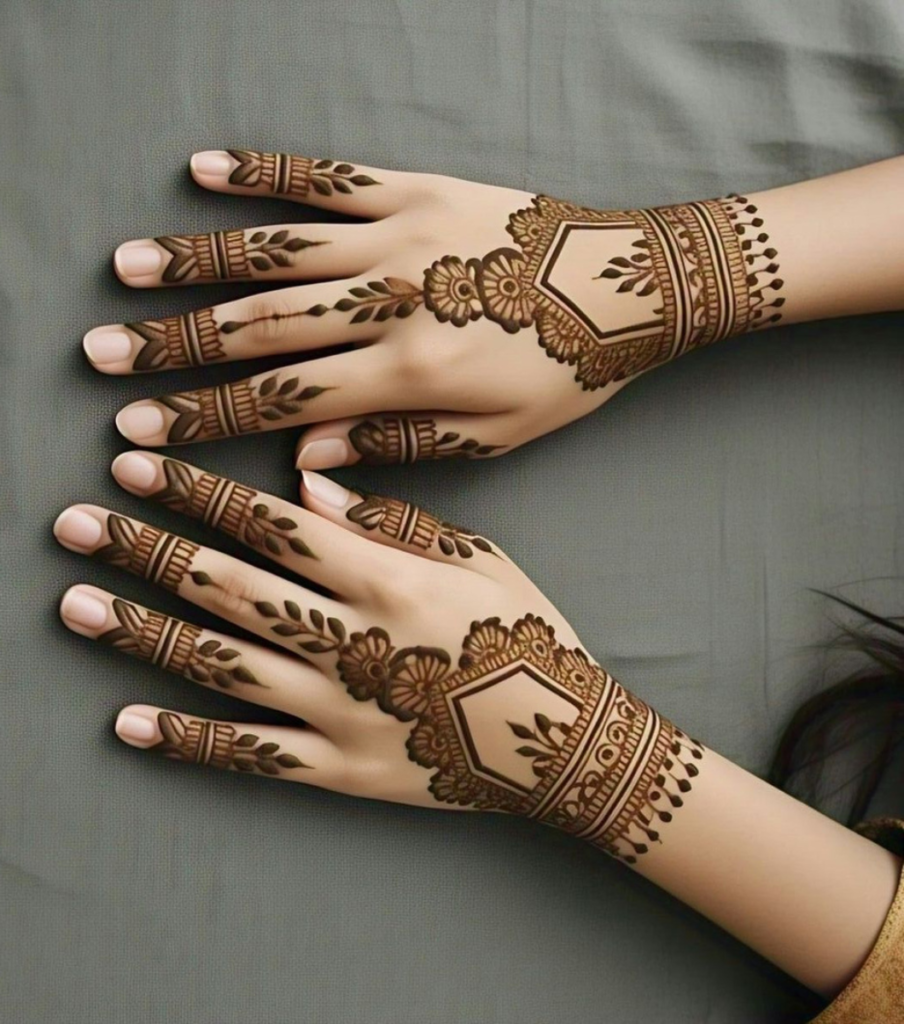
A simple mehndi design for hands usually focuses on one main area rather than covering the entire hand. You can place a flower in the center of the palm, create a leafy trail from the wrist toward the fingers, or use a small mandala as the focal point.
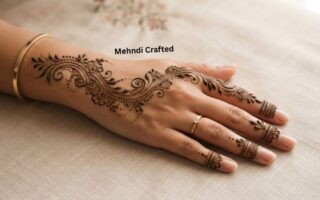
The back of the hand is another excellent place for a simple pattern. A floral vine running diagonally across the hand can create a stylish look while leaving plenty of space.
If you are a beginner, start with basic shapes rather than attempting a complicated design immediately.
Minimal Mehndi Patterns
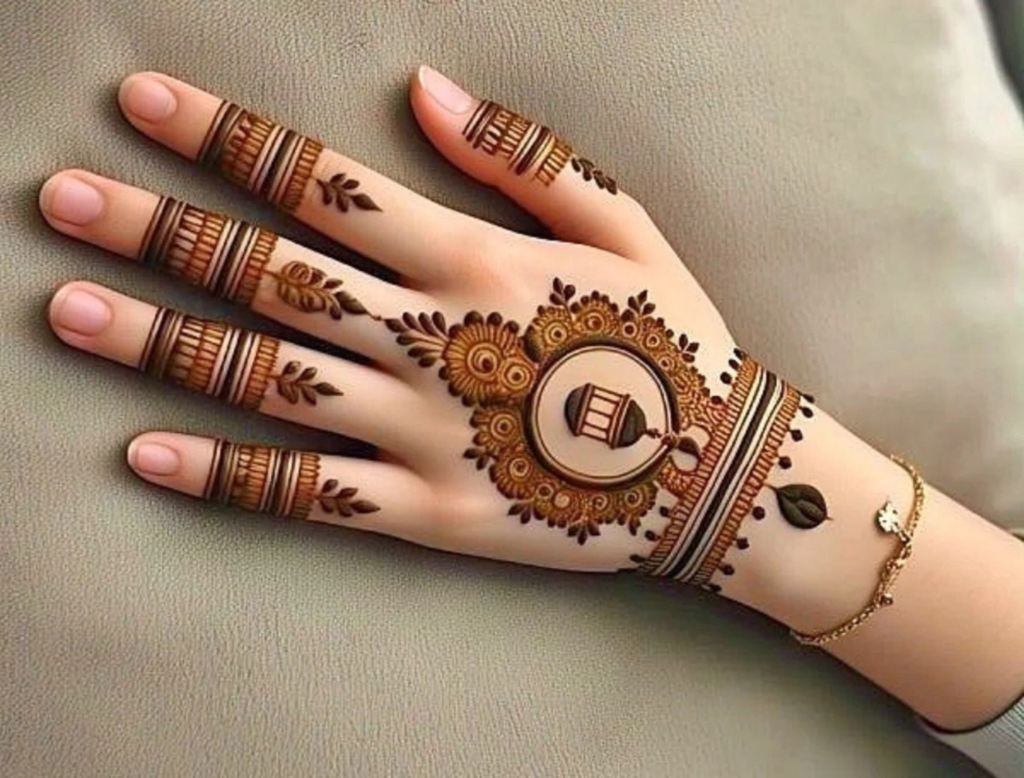
Minimal mehndi patterns are perfect for people who prefer a clean and sophisticated appearance. These designs use fewer elements and leave enough space between the motifs.
A minimal design does not mean boring. Even a few carefully placed flowers, leaves, and dots can create an attractive pattern.
For a modern look, try a thin leafy vine across the back of the hand with small dots around the leaves. Another option is a simple geometric design placed near the wrist.
Easy Front Hand Mehndi Designs
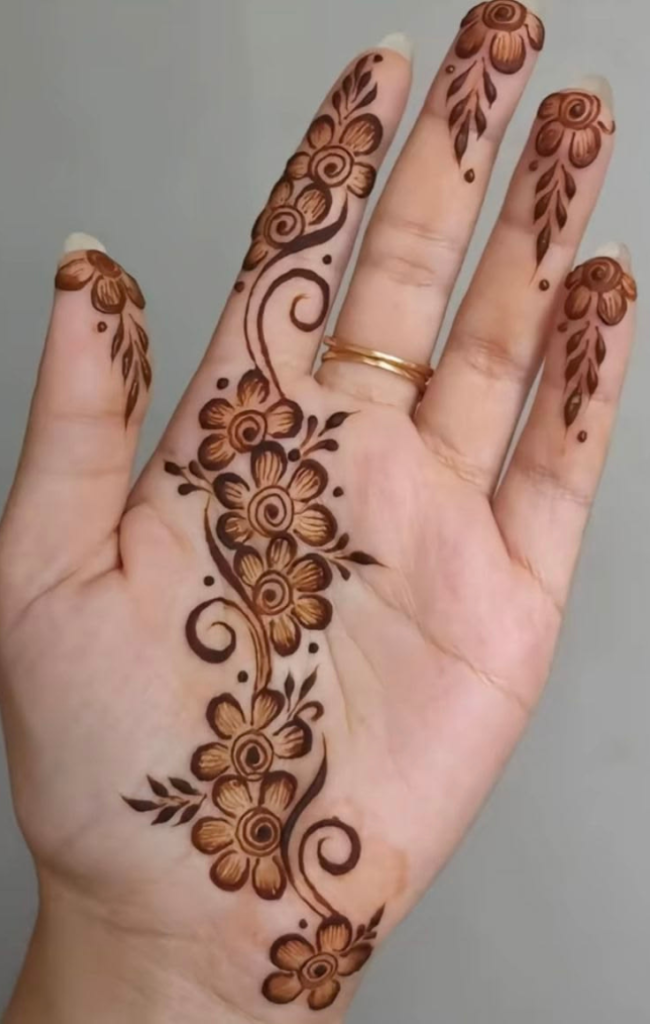
The front of the hand is highly visible, making it an excellent area for simple and attractive patterns.
A small floral motif in the center of the palm can create an elegant focal point. You can connect it to the fingers using thin lines or small leaves.
Another popular idea is a bracelet-style design around the wrist combined with a small floral trail moving toward the palm.
For a modern appearance, avoid filling the entire palm. Instead, use one central motif and allow the surrounding skin to remain open.
Best Ideas
Some beautiful front-hand ideas include:
- Lotus design in the middle of the palm
- Small floral mandala
- Bracelet-style mehndi
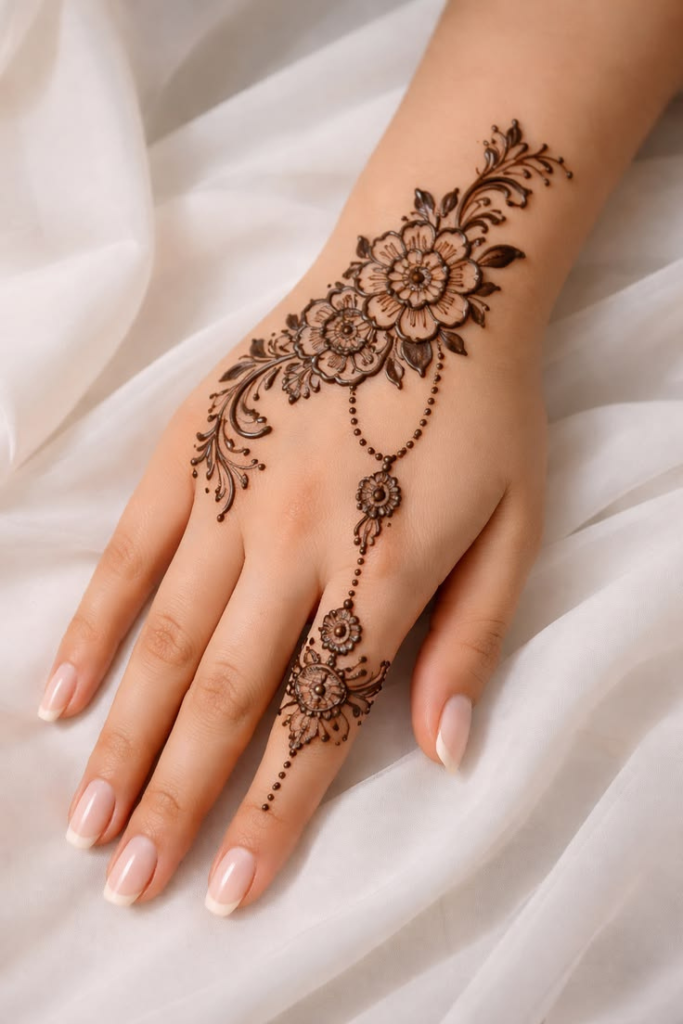
- Ring and chain mehndi
- Leafy palm trail
- Minimal Arabic design
- Small paisley design
- Finger-focused pattern
If you are attending a casual event, a light front-hand pattern can look more appropriate than a heavy bridal design.
Stylish Back Hand Mehndi Designs
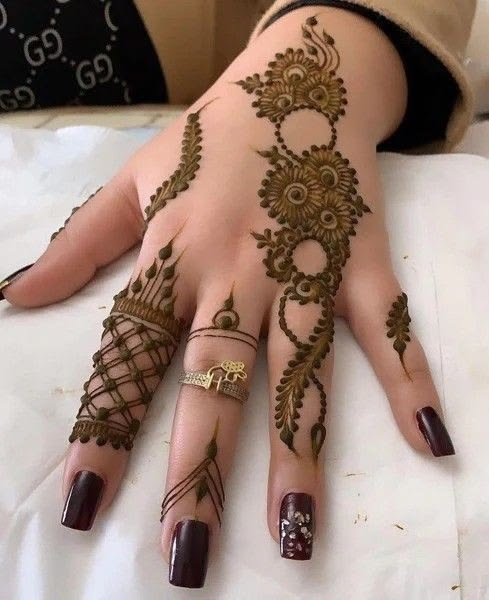
Back-hand mehndi designs are extremely popular because they are easy to see and photograph beautifully.
A simple flower connected to a leafy vine can create a graceful appearance. You can also create an Arabic-inspired design by placing larger motifs diagonally across the hand.
One of the biggest advantages of back-hand designs is that you can create attractive patterns without covering the whole hand.
Trending Styles
Popular back-hand styles include:
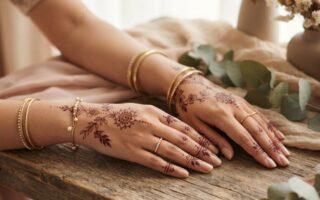
- Flower with finger trails
- Arabic-inspired leafy design
- Half-hand mehndi
- Diagonal floral vine
- Minimal paisley design
- Bracelet-connected pattern
- Small mandala with leaves
- Finger and wrist combination
These patterns are particularly suitable for parties, Eid celebrations, family gatherings, and casual weddings.
Mehndi Designs for Beginners
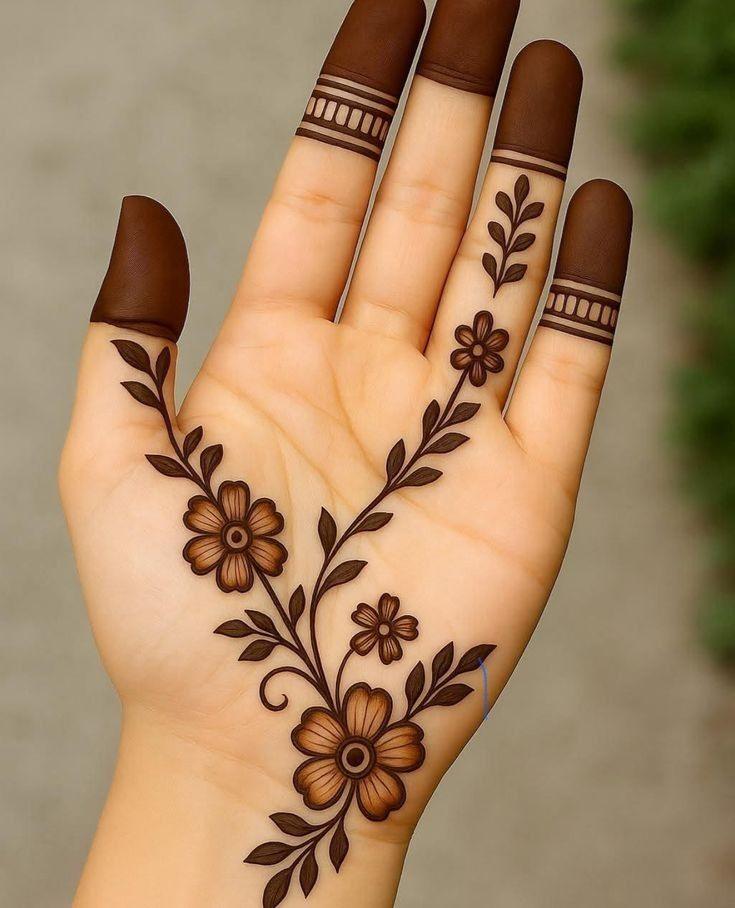
If you are new to mehndi, simple designs are the best place to start. You do not need professional skills to create attractive patterns.
Begin with basic shapes such as dots, circles, leaves, flowers, and curved lines. Once your hand becomes comfortable with the cone, you can gradually add paisleys, vines, shading, and more detailed elements.
Practicing on paper before applying mehndi directly to your skin can also help improve your control.
Beginner-Friendly Patterns
Try these patterns if you are just starting:
- Dots and circles
- Small paisleys
- Straight borders
- Simple floral vines
- Tiny leaves
- Basic mandalas
- Finger lines
- Small hearts
- Bracelet patterns
The most important thing for beginners is consistency. Do not worry if your first few designs are not perfect. With regular practice, your lines will become smoother and more controlled.
Benefits of Easy Mehndi Designs
Key Benefits
- Easy to Apply – No professional skills needed
- Time-Saving – Takes less time compared to heavy designs
- Elegant Look – Clean and classy appearance
- Budget-Friendly – Less mehndi cone usage
- Versatile – Suitable for all events
- Quick Drying – Stains set faster
Step-by-Step Guide to Apply Simple Mehndi Designs
Creating beautiful mehndi at home becomes easier when you follow a few basic steps.
Step 1: Prepare Your Hands
Start by washing your hands thoroughly. Remove dirt, oil, lotion, or moisturizer from the skin.
Allow your hands to dry completely before applying mehndi. Clean skin helps the paste sit properly on the surface.
Step 2: Choose an Easy, Simple Design for Hands
Select a pattern that matches your skill level.
If you are a beginner, choose flowers, leaves, dots, or a small vine. Avoid very complicated designs until you are comfortable controlling the cone.
Think about the placement before starting. Decide whether you want the design on the palm, fingers, wrist, or back of the hand.
Step 3: Practice on Paper
Practicing on paper is especially helpful for beginners.
Draw basic lines, circles, leaves, flowers, and paisleys. Try to maintain the same pressure while using the cone.
This small practice session can make your actual mehndi application much easier.
Step 4: Start Applying Mehndi
Hold the cone comfortably and apply gentle pressure.
Start with the main outline of your design and then add smaller details. Try to keep your lines smooth and consistent.
Do not rush. Slow and controlled movements usually create cleaner results.
Step 5: Let It Dry Naturally
Once the design is complete, allow the mehndi to dry naturally.
Avoid touching or rubbing the design while it is wet. Give the paste enough time to set properly.
Step 6: Enhance the Color
For a deeper stain, allow the dried mehndi to remain on the skin for several hours.
A traditional lemon-and-sugar mixture is sometimes used to help keep the paste attached to the skin, but avoid applying anything that irritates your skin.
Once the paste has completely dried and you are ready to remove it, gently scrape it away rather than washing it immediately with water.
Best Occasions for Simple Mehndi Designs
these mehndi designs suit almost every occasion
Perfect For
- Eid celebrations
- Weddings
- Engagement ceremonies
- Family functions
- Casual wear
- Festivals like Diwali and Karva Chauth
Tips to Make Mehndi Designs Look Beautiful
- Use fresh and natural mehndi
- Keep lines thin and neat
- Do not overfill the design
- Leave spaces for a clean look
- Moisturize hands after removing mehndi
Common Mistakes to Avoid
Using Old Mehndi
Old mehndi gives a light stain.
Overcrowding the Design
Simple means minimal.
Thick and Shaky Lines
Always aim for thin and smooth lines.
Washing Hands Too Early
Avoid water for at least 12 hours.
Applying Lotion Before Mehndi
Oily hands prevent mehndi from sticking.
Simple Mehndi Designs vs Heavy Mehndi Designs
| Simple Mehndi Designs | Heavy Mehndi Designs |
|---|---|
| Easy to apply | Requires more experience |
| Takes less time | Takes several hours |
| Light and clean | Dense and detailed |
| Uses less mehndi | Uses more mehndi |
| Suitable for everyday wear | Often chosen for major events |
| Beginner-friendly | Better for experienced artists |
| Modern and minimal | Traditional and elaborate |
| Leaves more space | Covers larger areas |
Both styles have their own beauty. The right choice depends on the occasion and your personal preference.
FAQs About Simple Mehndi Designs
How long do simple mehndi designs last?
A henna stain commonly lasts around one to two weeks, although the exact duration depends on skin type, washing habits, the quality of henna, and how much friction the hands experience.
Are simple mehndi designs suitable for weddings?
Yes. Simple mehndi designs are excellent for wedding guests, bridesmaids, engagement events, and smaller wedding functions. Brides who prefer minimal styles can also choose a more detailed version of a simple pattern.
Can beginners apply simple mehndi designs at home?
Absolutely. Simple patterns are among the best choices for beginners. Start with basic flowers, leaves, dots, and lines and gradually develop your skills.
Which mehndi gives the darkest color?
Fresh, natural henna generally provides a good stain when it is properly prepared and allowed enough time to develop. The final color can also depend on skin type, aftercare, and the quality of the henna.
Are minimal mehndi patterns trending?
Yes. Minimal and clean henna styles remain popular because they are easy to wear, quick to apply, and suitable for modern fashion.
Can simple mehndi designs suit kids?
Yes, simple patterns are often a good choice for children because they can be small and quick to apply. Always use suitable natural henna and avoid products containing harmful chemicals such as black henna containing PPD.
How to Care for Mehndi After Application
Proper aftercare can help your mehndi stain develop nicely.
- Keep the dried paste on the skin for several hours.
- Avoid washing the area immediately after removing the paste.
- Keep the hands away from excessive water during the early staining period.
- Avoid harsh soaps and strong cleaning products.
- Use natural oils if desired after the paste has been removed.
- Allow the stain to darken naturally over the next couple of days.
- Avoid excessive scrubbing of the design.
Remember that henna stains usually become darker after the paste is removed. A stain may initially appear orange and gradually develop into a deeper reddish-brown shade.
Why Simple Mehndi Designs Are Perfect for Modern Style
Modern fashion increasingly focuses on comfort, simplicity, and individuality. Simple mehndi designs fit perfectly into this trend because they provide traditional beauty without creating a heavy appearance.
A minimal floral design can look beautiful with a traditional outfit, while a delicate finger or wrist pattern can also complement Western clothing.
Another advantage is that simple patterns allow you to experiment. You can combine different motifs, change the placement, or create your own design instead of copying a complete traditional pattern.
For example, a small lotus can be placed in the center of the palm and connected to a thin leafy vine. Similarly, a few tiny flowers can be arranged around the wrist to create a bracelet effect.
This flexibility makes simple mehndi designs suitable for women who want their henna to feel personal rather than overly traditional.
How to Choose the Right Simple Mehndi Design
Choosing the right design depends on several factors.
First, consider the occasion. A casual gathering may require only a small floral pattern, while an engagement or wedding may call for something slightly more detailed.
Second, think about your experience level. Beginners should choose designs with fewer complicated details.
Third, consider the amount of time available. If you have only 15–20 minutes, select a small finger, wrist, or back-hand pattern.
Finally, choose something that matches your personality. If you love flowers, select a floral vine. If you prefer geometric patterns, try lines, circles, and symmetrical shapes.
Simple Mehndi Design Ideas for Different Hand Areas
Different areas of the hand can create completely different looks.
Fingers:
Small lines, rings, dots, leaves, and tiny flowers work beautifully on fingers.
Wrist:
Bracelet-style patterns, vines, and floral borders are excellent choices.
Palm:
A small mandala, flower, lotus, or paisley can become a beautiful central motif.
Back Hand:
Diagonal vines, floral trails, Arabic-inspired designs, and minimalist patterns work particularly well.
Side Hand:
A narrow vine or paisley trail can create an elegant look without covering too much skin.
Experimenting with different placements can help you discover a style that suits your hand best.
Conclusion
Simple mehndi designs are a timeless choice for anyone who wants beautiful henna without a complicated or heavy pattern. Their clean lines, delicate flowers, leafy vines, dots, paisleys, and open spaces make them suitable for beginners as well as experienced mehndi lovers.
Whether you need a quick design for Eid, a wedding guest pattern, a casual everyday style, or an elegant look for a special occasion, there are countless ways to create a beautiful, simple mehndi design.
The key is to choose a pattern that matches your occasion, practice your basic shapes, use fresh henna, and take proper care of the stain after application.
At Mehndi Crafted, we believe that beautiful henna does not always have to be complicated. Sometimes, a few carefully placed flowers, leaves, dots, and graceful lines can create the most elegant result.
If you love minimal, modern, and easy-to-create henna, simple mehndi designs are definitely worth trying in 2026.