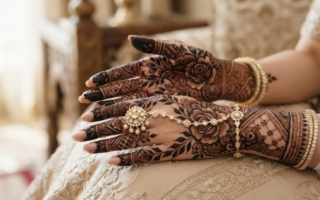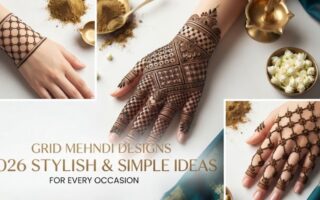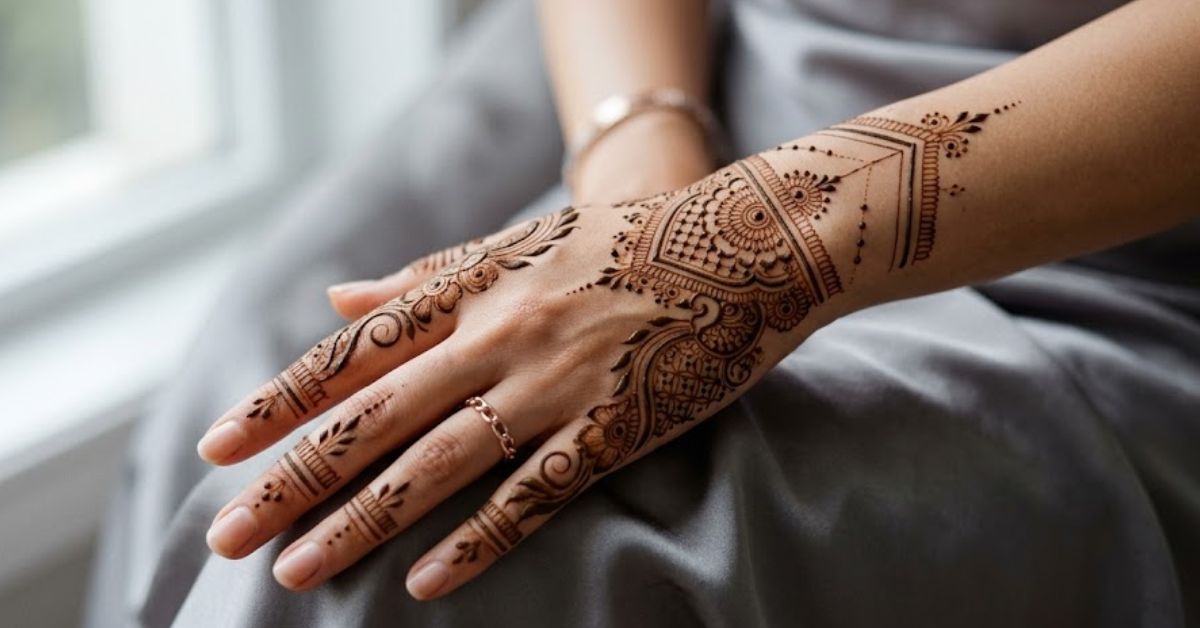
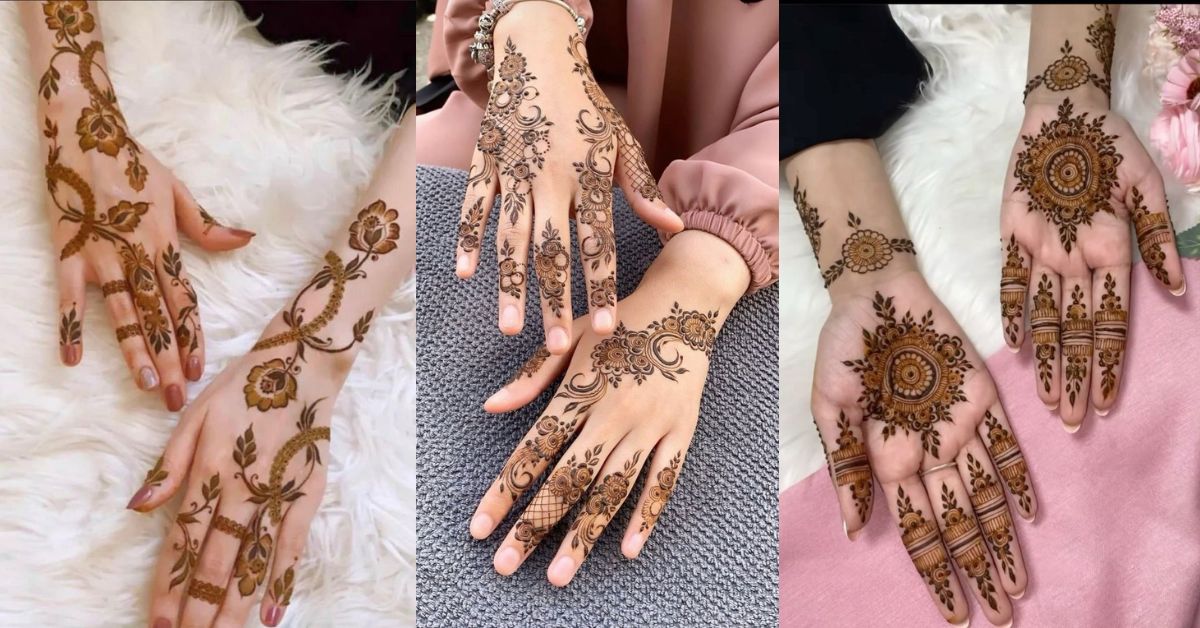
A beautiful two-hand mehndi design can instantly make your hands look more graceful, stylish, and festive. Applying mehndi on both hands creates a balanced and complete appearance that works beautifully for weddings, Eid, festivals, family gatherings, parties, and other special occasions.
There are many different ways to decorate both hands with henna. Some women prefer detailed traditional patterns, while others love a two-hand mehndi design simple enough to apply at home. You can also choose Arabic floral patterns, modern minimal designs, finger-focused styles, or heavy bridal mehndi depending on the occasion and your personal preference.
In 2026, two-hand mehndi designs continue to combine traditional henna artistry with modern, clean, and creative patterns. Floral vines, paisleys, leafy trails, mandala elements, delicate fingers, bracelet-style details, and negative-space patterns are especially attractive for people who want a stylish yet graceful look.
At Mehndi Crafted, we love sharing beautiful henna inspiration for women and girls who want easy ideas as well as detailed designs. Whether you are a beginner looking for a simple pattern or a bride searching for a fuller style, there is a two-hand design that can match your needs.
What is Two-Hand Mehndi Design?
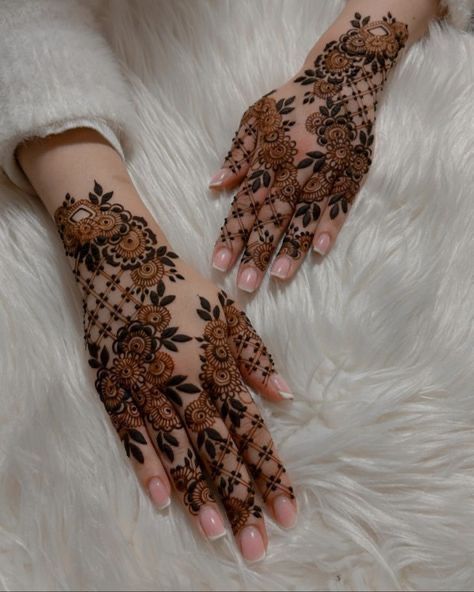
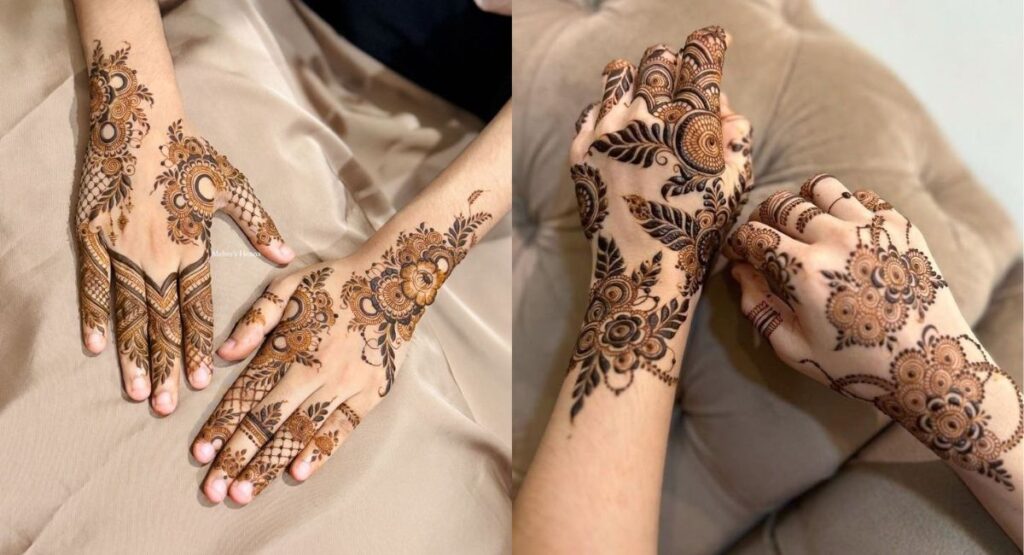
A two-hand mehndi design means applying henna on both the left and right hands. The two designs can be identical, mirror each other, or simply follow the same artistic theme.
The main advantage of decorating both hands is that the final appearance looks more complete. Instead of focusing on only one hand, the design creates a balanced look from different angles.
A two-hand mehndi design can include:
- The front of both hands
- The back of both hands
- Fingers and fingertips
- Palms and wrists
- Full hands extending toward the arms
- Matching designs on both hands
- Different designs connected through a similar theme
For example, one hand may have a large floral motif while the other hand has a similar floral arrangement with slightly different details. This creates a coordinated appearance without making both hands look the same.
Why Two-Hand Mehndi Design Is So Popular
There are many reasons why mehndi for both hands remains popular among women of different ages.
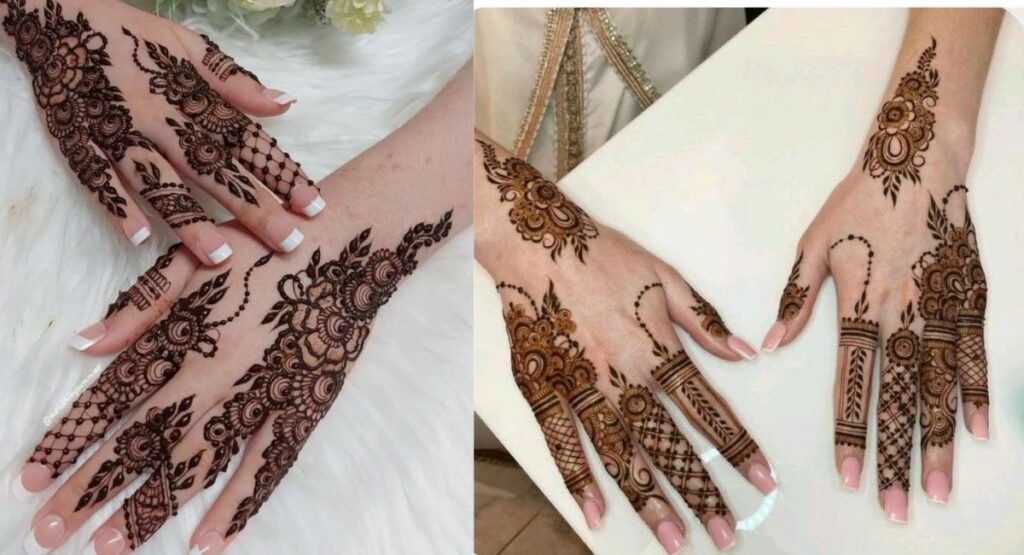
First, it gives the hands a more complete and decorated appearance. When both hands are visible in photographs, matching or coordinated henna makes the overall look more attractive.
Another reason is versatility. You do not have to choose an extremely heavy design. A simple floral vine or minimal Arabic pattern can look just as elegant as a detailed bridal design when it is placed correctly.
Two-hand mehndi designs are especially popular because they:
- Create a balanced appearance
- Look beautiful in photographs
- Work well with traditional clothing
- Can be customized for different occasions
- Suit both beginners and experienced artists
- Can be simple, moderate, or heavily detailed
- Allow you to combine different mehndi styles
For weddings and major celebrations, many women choose fuller patterns. For Eid, parties, and casual events, a lighter two-hand mehndi design in a simple style may be more practical.
Types of Two-Hand Mehndi Design
There is no single style that defines mehndi for both hands. You can choose a pattern according to your outfit, occasion, available time, and experience level.
Traditional Two-Hand Mehndi Design
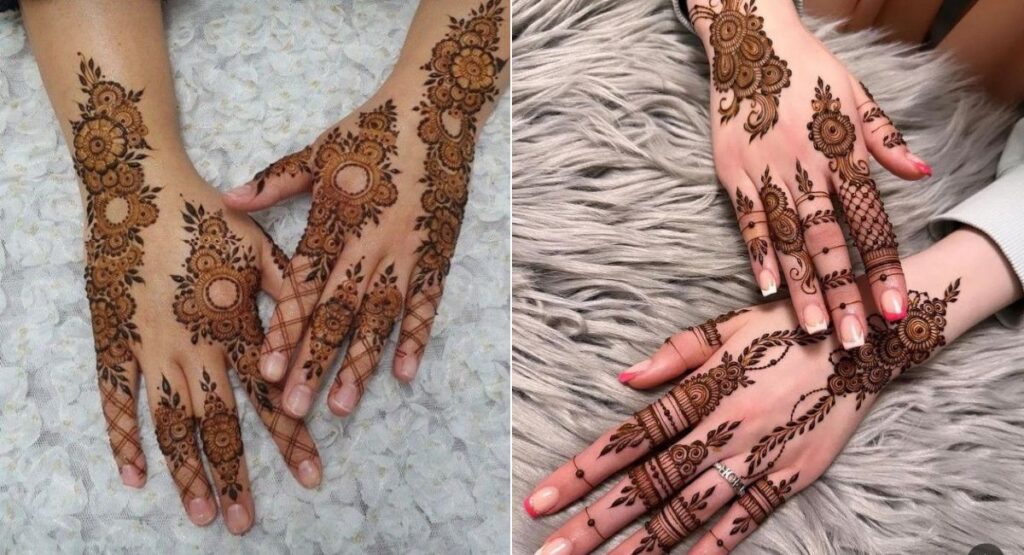
Traditional mehndi designs are inspired by classic South Asian henna artistry. They often include flowers, paisleys, leaves, vines, dots, curves, and detailed filling.
A traditional two-hand mehndi design may cover most of the palms and fingers and can continue toward the wrists. This style is particularly suitable for weddings, engagements, Eid celebrations, and cultural events.
Common features include:
- Floral motifs
- Paisley patterns
- Fine line detailing
- Repeated traditional motifs
- Dense filling
- Decorative fingers
- Detailed wrist patterns
Traditional designs are a great choice if you want your mehndi to have a classic and timeless appearance..
Two-Hand Mehndi Design Simple
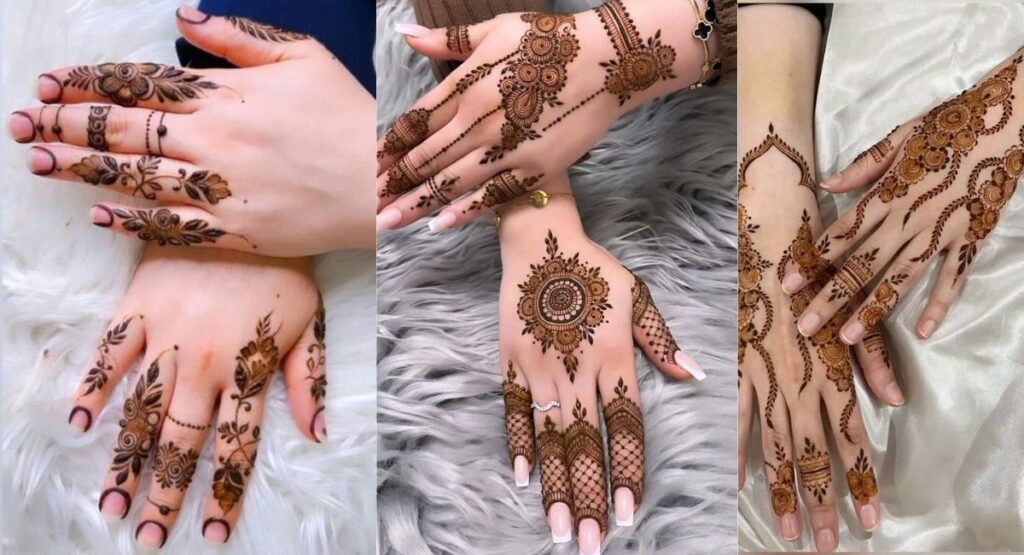
A two-hand mehndi design simple style is ideal for girls and women who prefer clean patterns without excessive detailing.
Simple designs are also useful for beginners because they require less time and are easier to control. Instead of covering the entire hand with dense patterns, you can focus on a few attractive elements.
A simple design may include a floral vine across the palm, a few leaves on the fingers, a small mandala, or a bracelet-style wrist pattern.
The main features of simple designs are:
- Clean lines
- Minimal filling
- Small floral elements
- Open spaces
- Easy finger patterns
- Quick application
- Elegant overall appearance
Simple does not mean boring. With the right spacing and placement, a minimal design can look extremely stylish.
Arabic Two-Hand Mehndi Design
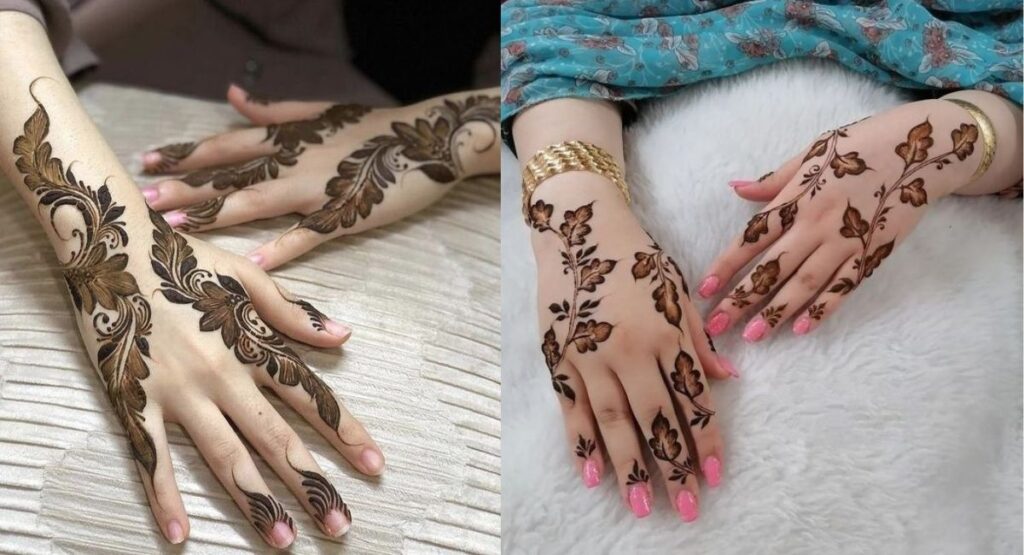
Arabic mehndi is known for bold floral motifs, flowing vines, leaves, and open spaces. Instead of filling every part of the hand, Arabic designs usually allow some skin to remain visible.
This makes Arabic patterns a good choice when you want a noticeable design without spending many hours applying henna.
Arabic two-hand designs can feature:
- Large flowers
- Long leafy vines
- Paisleys
- Curved trails
- Open spaces
- Bold outlines
- Decorative fingers
You can use the same Arabic pattern on both hands or create two slightly different designs that follow the same theme.
Modern and Minimal Two-Hand Mehndi Design
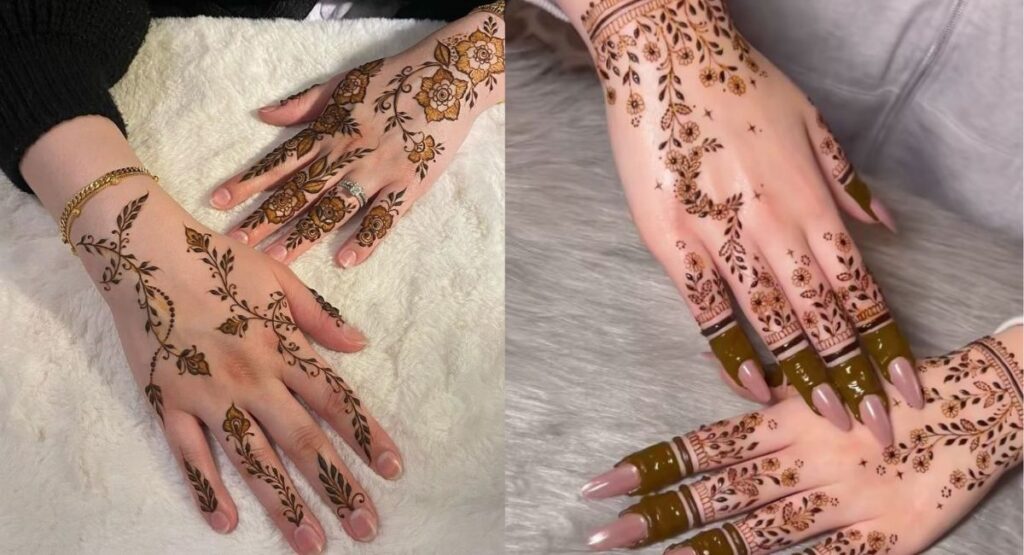
Modern mehndi designs are especially popular among girls who prefer contemporary patterns.
These designs may combine traditional henna elements with geometric shapes, thin lines, small flowers, finger details, negative space, and bracelet-inspired patterns.
A modern design can be concentrated around the fingers and wrist while leaving the center of the palm relatively open. This creates a fashionable and lightweight appearance.
Modern styles may include:
- Geometric patterns
- Minimal flowers
- Finger-focused designs
- Bracelet-style mehndi
- Fine-line vines
- Small hearts
- Negative-space patterns
These designs are suitable for parties, birthdays, photoshoots, college events, and casual celebrations.
Bridal Two-Hand Mehndi Design
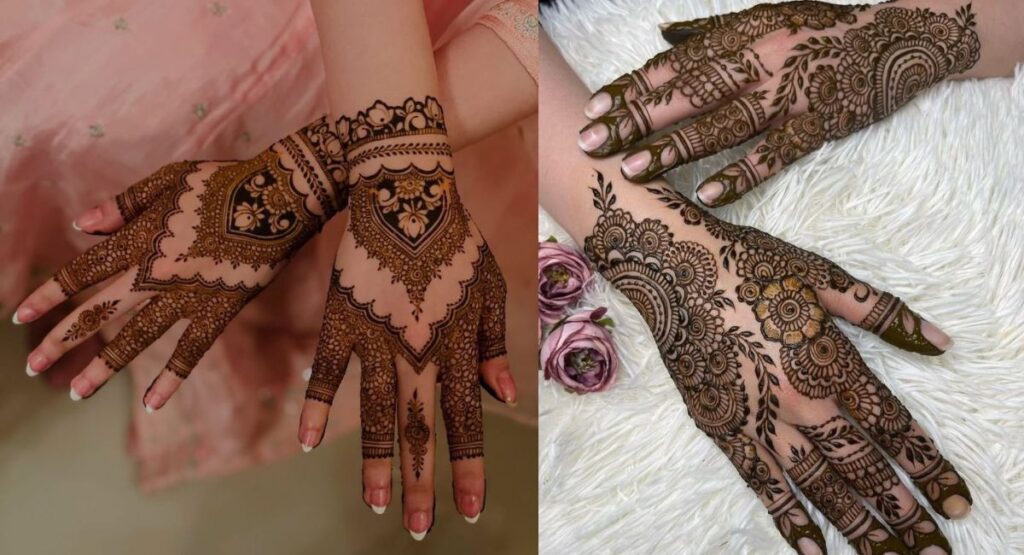
Bridal mehndi is usually more detailed than everyday henna. Since weddings are special occasions, brides often choose designs that cover larger areas of both hands.
A bridal two-hand mehndi design may include floral patterns, paisleys, peacocks, mandalas, traditional motifs, personalized elements, and storytelling details.
Bridal designs can also include:
- Bride and groom motifs
- Wedding-related symbols
- Names or initials
- Detailed floral compositions
- Full palm patterns
- Elaborate finger designs
- Wrist and arm detailing
Because bridal designs are highly detailed, they usually take considerably longer to apply than a simple design. If you are preparing for a wedding, choosing a design early can help you decide how much coverage and detail you actually want.
Front Hand vs Back Hand Mehndi Design
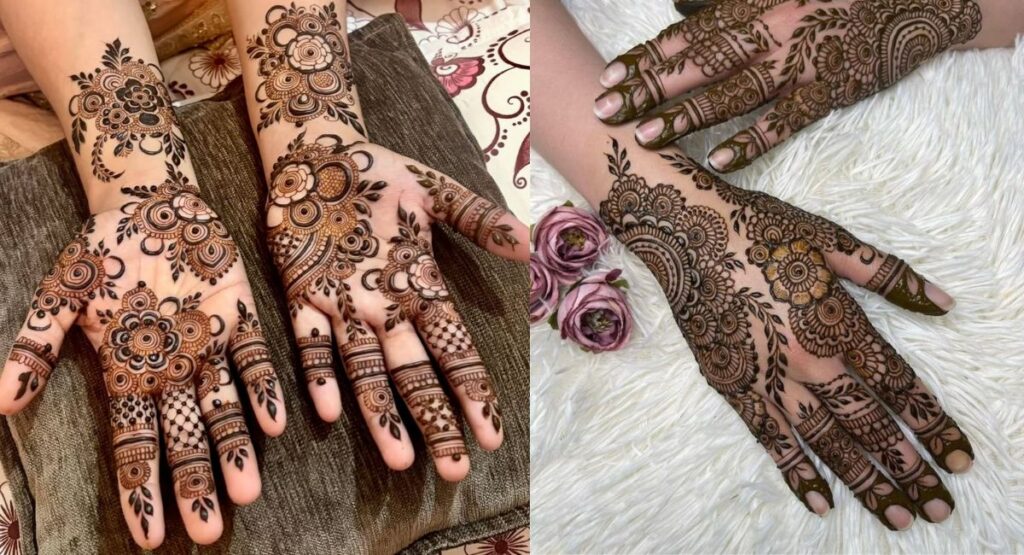
Both front-hand and back-hand designs can be used when decorating both hands. The choice mainly depends on the occasion and the appearance you prefer.
Front Hand Mehndi Design for Both Hands
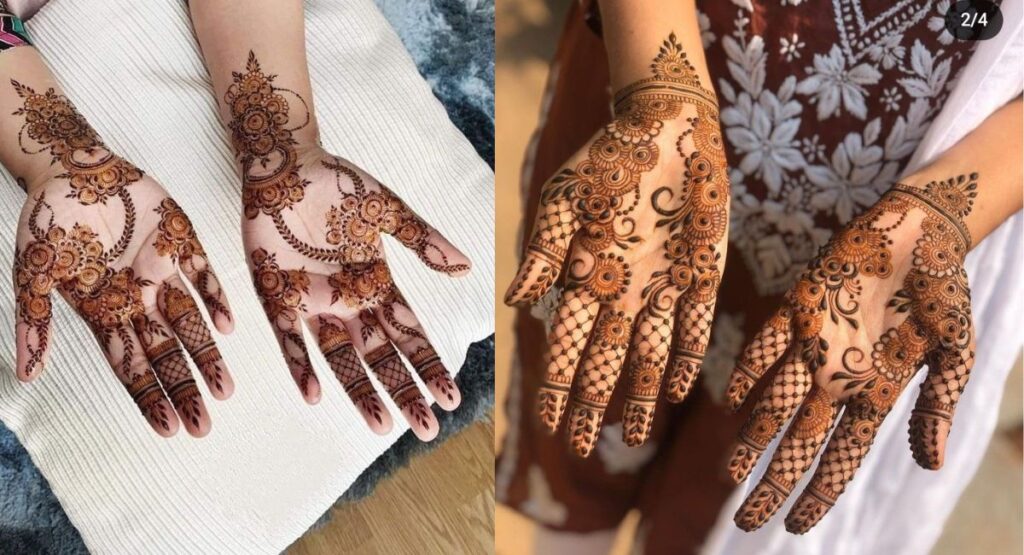
Front-hand mehndi is applied on the palm side. This area provides plenty of space for floral, paisley, mandala, Arabic, and traditional patterns.
For weddings and festivals, front-hand designs can be more detailed because the palms offer a large canvas for creative patterns.
A front-hand design may include:
- Large central motifs
- Floral vines
- Paisleys
- Mandalas
- Finger details
- Wrist bands
- Traditional fillers
If you want your mehndi to look rich and traditional, decorating both palms can create a beautiful result.
Back Hand Mehndi Design for Both Hands
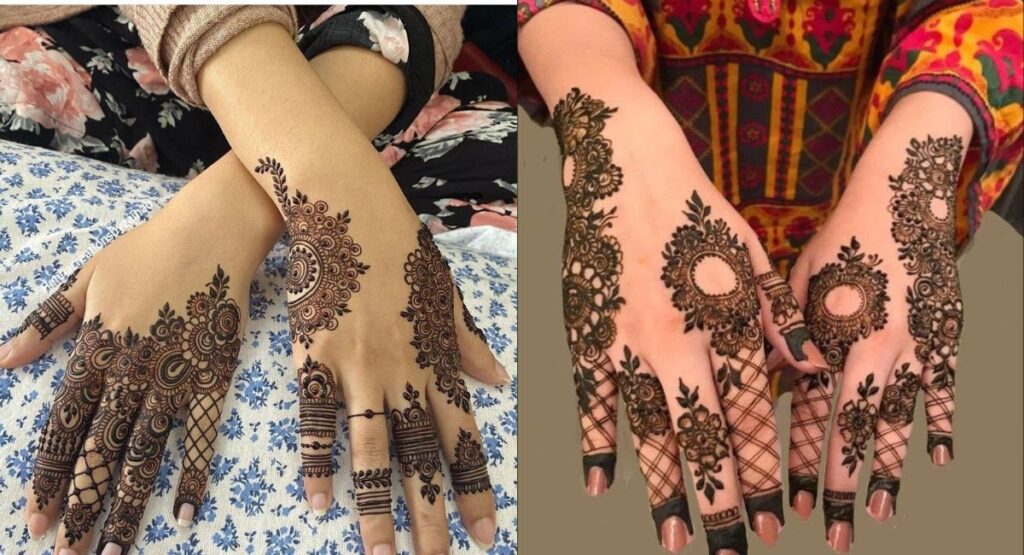
Back-hand mehndi is applied on the outer side of the hands. These designs are often lighter and more visible when the hands are naturally placed or photographed.
Back-hand patterns commonly feature:
- Floral vines
- Large central flowers
- Leaf trails
- Bracelet-style wrists
- Decorative fingers
- Minimal geometric details
Back-hand mehndi is a good option for women who want something stylish without covering their entire hands with dense patterns.
You can also combine both styles by applying a detailed design on the front and a simpler pattern on the back.
Benefits of Two-Hand Mehndi Design
Applying mehndi on both hands has many benefits:
Enhances overall hand beauty
Gives a balanced and symmetrical look
Makes special occasions more memorable
Matches traditional outfits perfectly
Suitable for all age groups
A well-done mehndi design for both hands always looks elegant and festive.
How to Choose the Right Two-Hand Mehndi Design
Before selecting your design, consider these points:
Occasion: Wedding, Eid, party, or casual
Time: Simple designs need less time
Outfit: Match the design style with the dress
Skill level: Beginners should choose simple patterns
Choosing the right two-hand mehndi design, simple or detailed style, makes a big difference.
Step-by-Step Guide to Apply Two-Hand Mehndi Design
Step 1: Prepare Your Hands
Wash your hands properly
Remove oil and lotion
Dry hands completely
Step 2: Choose the Design
Decide front, back, or full hand
Select the same or different patterns
Keep reference images ready
Step 3: Start Applying Mehndi
Begin with the main outlines
Move from palm to fingers
Keep pressure steady
Step 4: Let It Dry
Allow mehndi to dry naturally
Avoid touching water
Step 5: Dark Color Tips
Apply the lemon and sugar mix
Keep mehndi for 6–8 hours
Avoid soap for 24 hours
Following these steps ensures a beautiful two-hand mehndi design.
Common Mistakes to Avoid
Many people make small mistakes that affect the final look:
Applying mehndi on oily hands
Choosing very complex designs as beginners
Removing mehndi too early
Using low-quality henna
Rushing the process
Avoiding these mistakes helps achieve a darker and cleaner mehndi design for both hands.
Tips to Make Mehndi Color Darker
The final henna stain depends on several factors, including the quality of the henna, skin type, application time, and aftercare.
For a better stain:
- Use fresh, good-quality natural henna.
- Apply it to clean, dry skin.
- Allow the paste to remain on the skin for several hours.
- Keep the hands warm while the paste is developing.
- Avoid washing the hands immediately after removing the dried paste.
- Give the stain time to darken naturally.
- Avoid excessive soap and water soon after application.
Some traditional home-care methods use lemon and sugar mixtures or clove warmth. If you use any home remedy, be careful with heat and avoid anything that irritates your skin.
Remember that the color does not become darkest immediately. Fresh henna often develops gradually after the paste is removed.
Best Occasions for Two-Hand Mehndi Design
A two-hand mehndi design can be worn for many different occasions.
Weddings
Brides can choose detailed full-hand designs, while wedding guests can select medium or simple patterns.
Eid
Eid is one of the most popular occasions for mehndi. Floral, Arabic, and simple designs are especially suitable because they can be applied without taking too much time.
Engagements
A coordinated two-hand design can complement an engagement outfit beautifully.
Birthday Parties
For a birthday celebration, modern minimal or Arabic designs can create a stylish appearance.
Family Gatherings
A simple floral or leafy design is perfect when you want festive hands without heavy coverage.
Photoshoots
Two decorated hands provide plenty of opportunities for creative hand poses and close-up photographs.
FAQs
1. What is a two-hand mehndi design?
A two-hand mehndi design means applying henna on both hands to create a complete and balanced look.
2. Is the two-hand mehndi design suitable for beginners?
Yes, beginners can choose two-hand mehndi designs with simple patterns and minimal details.
3. How long does mehndi take to dry?
Mehndi usually takes 20–30 minutes to dry, but for a dark color, it should stay on for several hours.
4. Which style is best for festivals?
Arabic and traditional mehndi designs for both hands are best for festivals.
5. Can I apply different designs on both hands?
Yes, many people choose different but matching patterns on each hand.
6. How long does mehndi color last?
Mehndi color lasts 7–14 days, depending on care and skin type.
7. Is full hand mehndi necessary for weddings?
Not necessary, but a full-hand, two-hand mehndi design is very popular for brides.
Conclusion
A two-hand mehndi design is a beautiful way to make your hands look elegant for both traditional and modern occasions. From detailed bridal patterns to a two-hand mehndi design simple enough for beginners, there are countless styles to choose from.
The best design is not always the most complicated one. A clean floral vine, an elegant Arabic pattern, or a minimal finger design can look just as beautiful when the lines are neat and the spacing is balanced.
Before choosing your design, consider the occasion, outfit, available time, and your experience level. With the right pattern and proper aftercare, you can create a beautiful henna look that complements your style.
At Mehndi Crafted, we continue to share simple, modern, traditional, and bridal mehndi inspiration to help you discover designs that suit every celebration.