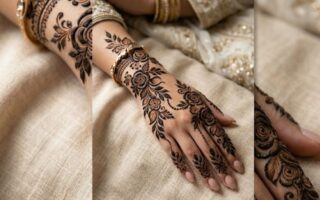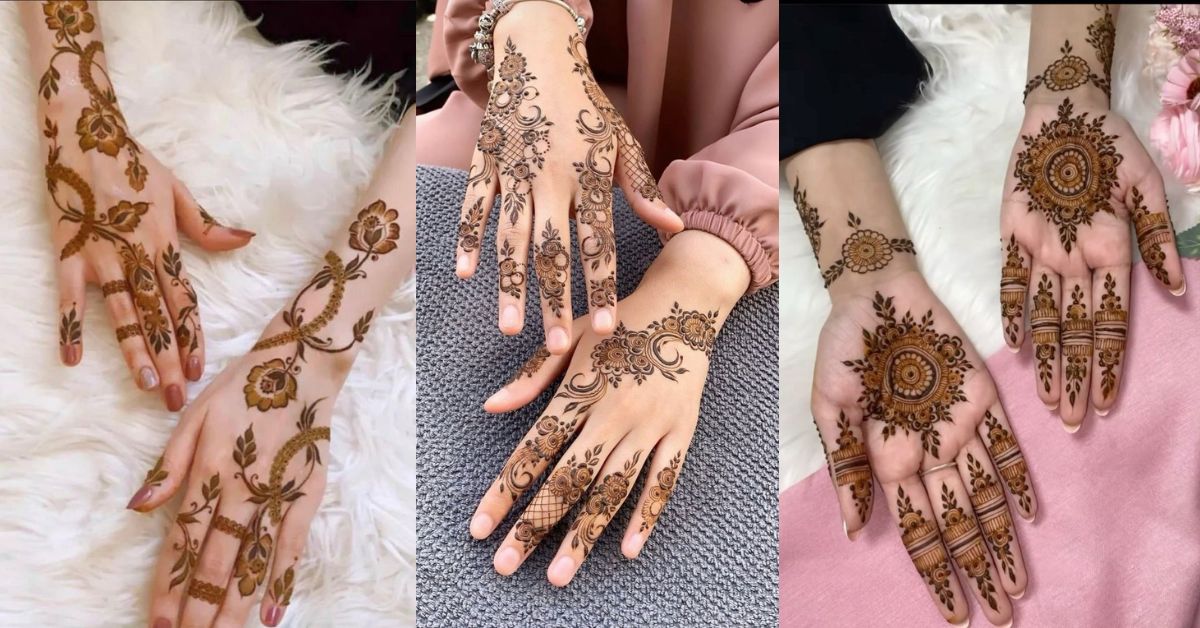
There’s something effortlessly beautiful about Arabic Mehndi Designs. Their bold outlines, flowing floral patterns, graceful vines, and carefully placed empty spaces create a look that feels elegant without becoming too heavy. Unlike very detailed mehndi styles that cover almost every part of the hand, Arabic mehndi usually allows the natural skin to remain visible, which gives the design a modern and stylish appearance.
Arabic mehndi has become a favorite choice for women who want a design that looks attractive but does not take too long to apply. The patterns often move diagonally across the hand or along the fingers and wrist, creating a natural flow that makes the hand look longer and more graceful.
These designs are suitable for many occasions, including weddings, engagements, Eid celebrations, parties, family gatherings, and festive events. They can also be customized according to your outfit, jewelry, and personal style.
If you love a combination of traditional henna art and modern simplicity, Arabic mehndi can be an excellent choice. From simple floral vines to glamorous bridal patterns, there are many styles to explore.
What Makes Arabic Mehndi Designs Unique?
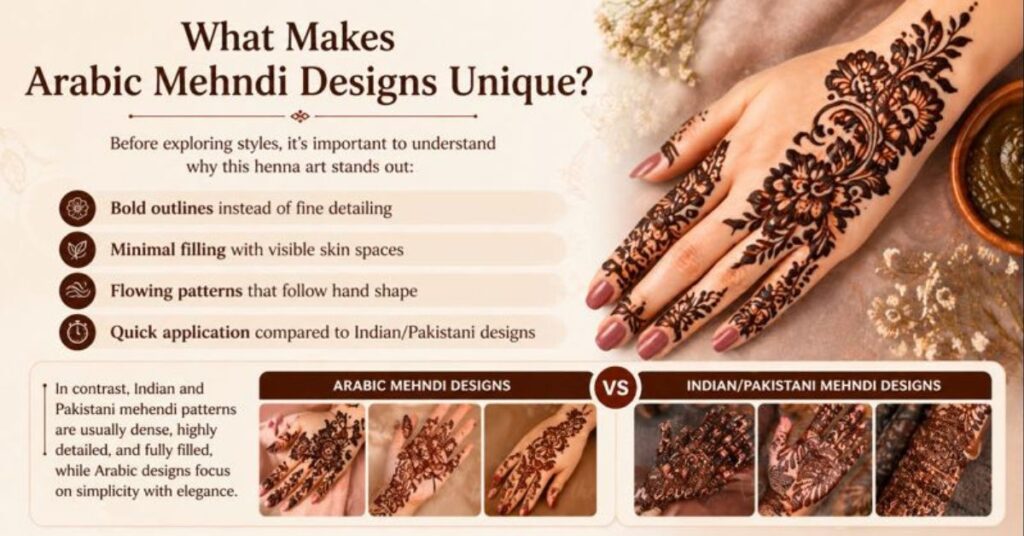
Arabic mehndi designs have a recognizable appearance because they focus on strong shapes, open spaces, and flowing compositions rather than filling the entire hand with complicated details.
One of the most noticeable features is the use of bold outlines. Flowers, leaves, paisleys, vines, and curved lines are usually drawn with clear and confident strokes. This makes the design easy to notice even from a distance.
Another important feature is the use of negative space. Instead of covering every area of the hand, Arabic henna patterns leave small sections of natural skin visible. This creates contrast and makes the main motifs stand out beautifully.
Arabic designs also tend to follow the natural shape of the hand. A vine may begin near the wrist and move toward the fingers, while flowers and leaves can be arranged diagonally across the back of the hand.
Types of Arabic Mehndi Designs
There are many ways to style Arabic henna depending on the occasion and the amount of coverage you want. Some designs are extremely simple and suitable for beginners, while others combine Arabic motifs with detailed bridal elements.
Here are some of the most popular types of Arabic mehndi designs.
1. Simple Arabic Mehndi Designs
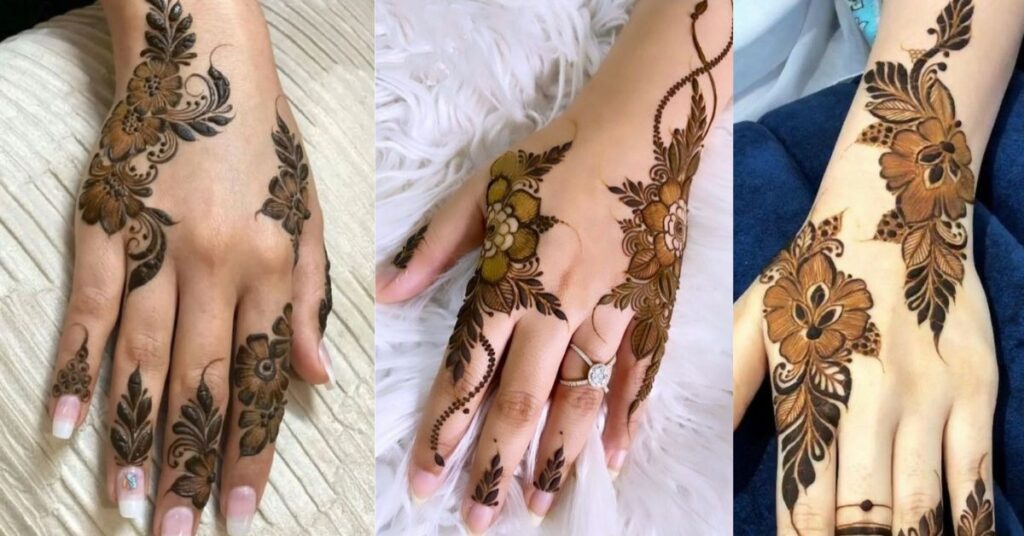
Simple Arabic mehndi designs are perfect for anyone who wants beautiful henna without spending a long time on application. These patterns usually include a small flower, leafy vine, paisley, or curved trail placed across the hand.
The beauty of a simple Arabic design comes from its clean arrangement. Instead of filling the palm, the artist can create one main motif and connect it with a few leaves or delicate lines.
Simple designs are especially useful for:
- Eid celebrations
- Small family gatherings
- College and university events
- Casual parties
- Everyday festive looks
- Beginners learning to apply henna
A simple Arabic mehndi design can also be made more attractive by adding tiny dots, small petals, or delicate finger details.
If you are applying mehndi yourself, start with a basic vine and add flowers at selected points. Avoid adding too many elements because the open spaces are an important part of the Arabic style.
2. Bridal Arabic Mehndi Designs
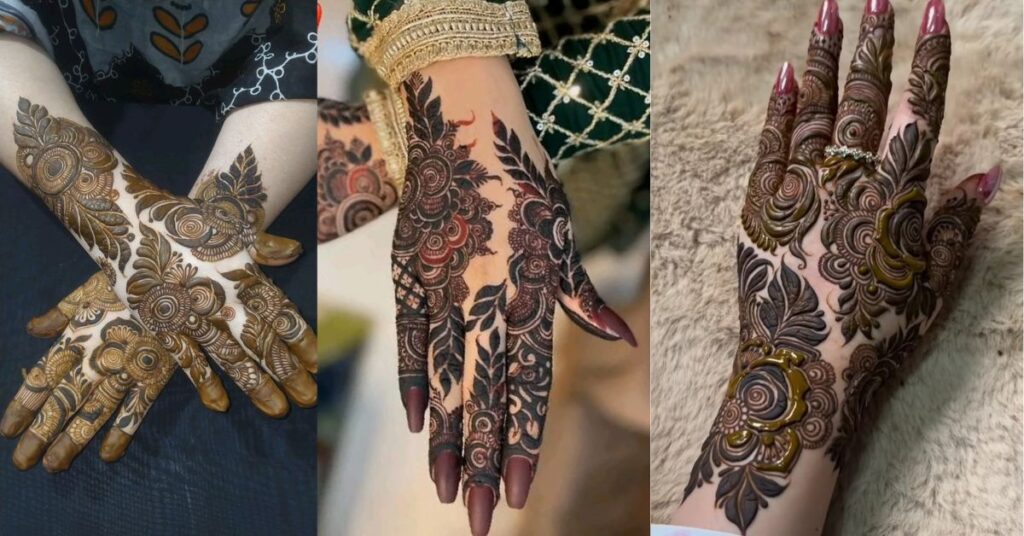
Bridal Arabic mehndi designs offer a more luxurious version of the classic Arabic style. They combine bold Arabic flowers, paisleys, leaves, vines, and larger motifs with additional details suitable for a bride.
Modern brides often prefer Arabic-inspired bridal mehndi because it can look rich without feeling excessively crowded. The design can cover the hands and extend toward the wrists and arms while still maintaining visible spaces between the motifs.
A bridal Arabic design can include:
- Large floral patterns
- Bold paisleys
- Shaded petals
- Leafy vines
- Detailed finger patterns
- Bracelet-inspired wrist designs
- Arabic-style trails
- Traditional bridal elements
For a wedding, the design can be customized according to the bride’s dress and jewelry. Gold, maroon, green, red, or pastel bridal outfits can all be paired with Arabic henna.
Another advantage is that Arabic motifs can be combined with other mehndi styles. A bride may choose an Arabic floral pattern on one part of the hand and add more detailed traditional elements around the fingers or wrist.
This makes bridal Arabic mehndi a beautiful option for brides who want something traditional but slightly more modern and spacious.
3. Jewelry-Style Mehndi Designs
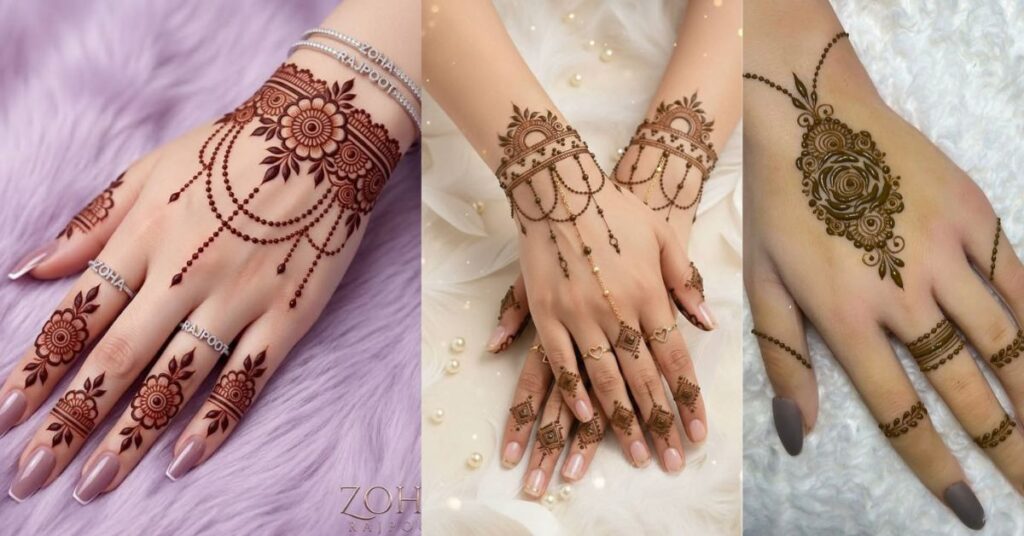
Jewelry-style mehndi designs create the appearance of wearing delicate accessories made from henna. These designs often use bracelet bands, rings, chains, finger trails, and connecting lines.
Instead of placing a large motif in the center of the hand, the artist can create a decorative arrangement around the wrist and fingers.
Popular jewelry-inspired elements include:
- Henna bracelets
- Ring-style patterns
- Finger chains
- Wrist cuffs
- Delicate vines
- Small floral connections
- Beaded-looking dots
This style is particularly attractive when you are wearing minimal jewelry and want your hands to remain the main focus.
A jewelry-style Arabic mehndi design can also be paired with real bangles or rings. The open spaces allow the jewelry and henna to complement each other rather than compete for attention.
For parties, engagements, Eid, and wedding functions, this style can create a soft and feminine appearance.
4. Floral Arabic Mehndi Designs
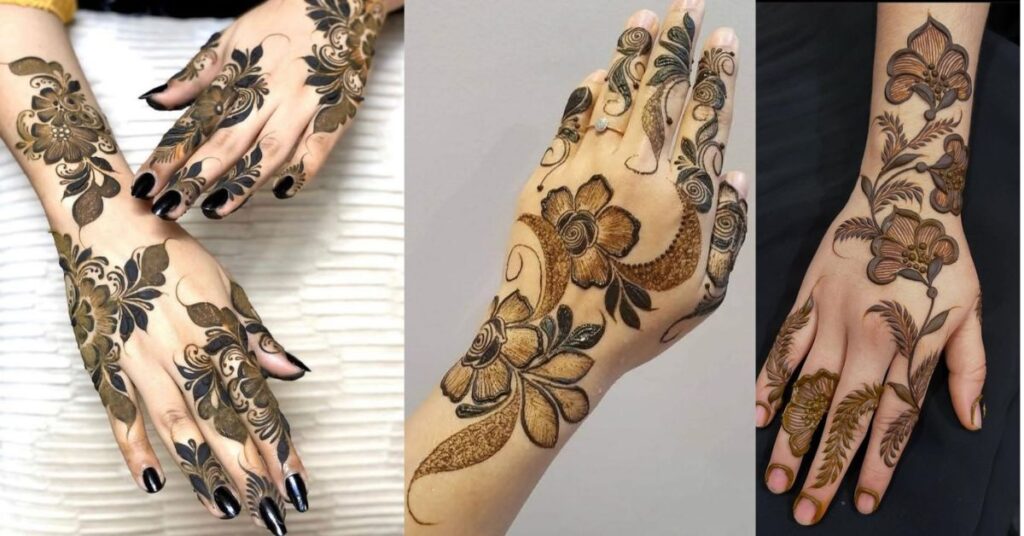
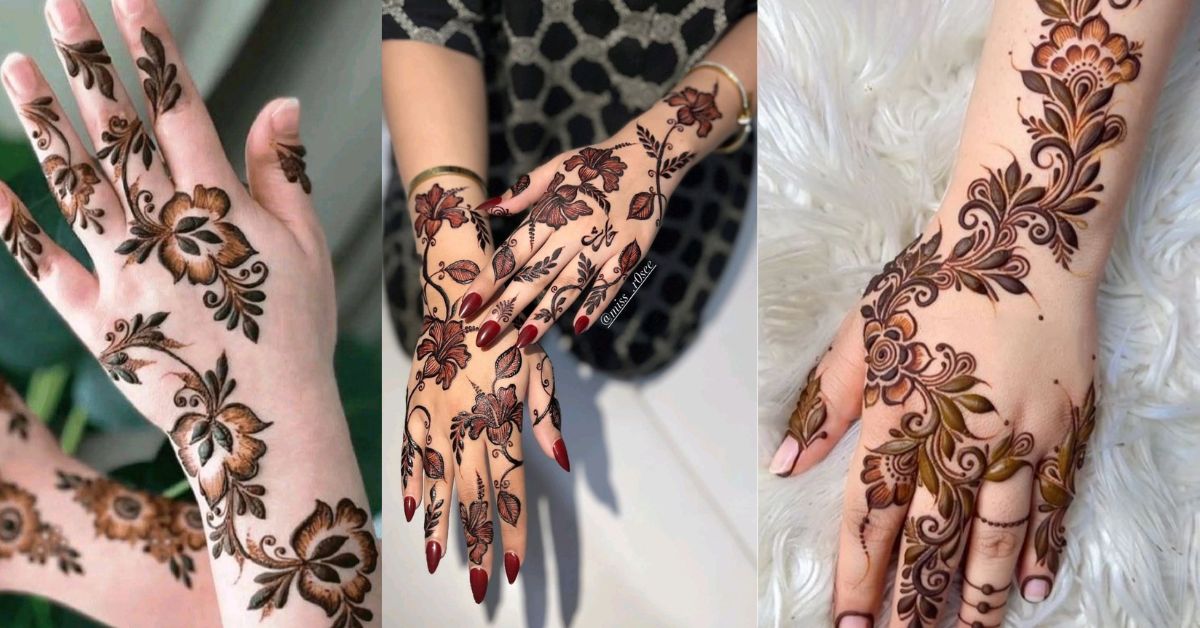
Floral Arabic mehndi designs are among the most timeless options. Flowers naturally work well with Arabic patterns because they can be connected with flowing vines and leaves.
Large flowers are often placed at important points of the design, while smaller leaves and curved stems are used to guide the pattern across the hand.
You can choose different floral arrangements depending on the look you want. Large shaded flowers can create a bold appearance, while smaller flowers can give the design a delicate and youthful feel.
Floral Arabic mehndi commonly includes:
- Rose-inspired flowers
- Five-petal flowers
- Shaded floral motifs
- Leafy vines
- Small buds
- Curved stems
- Paisley and floral combinations
The placement of empty space is especially important in floral Arabic mehndi. Leaving some natural skin visible around the flowers helps each motif remain clear.
These designs are suitable for almost every occasion. You can choose a small floral vine for a simple event or a larger floral composition for a wedding or festive celebration.
5. Back Hand Arabic Mehndi Designs
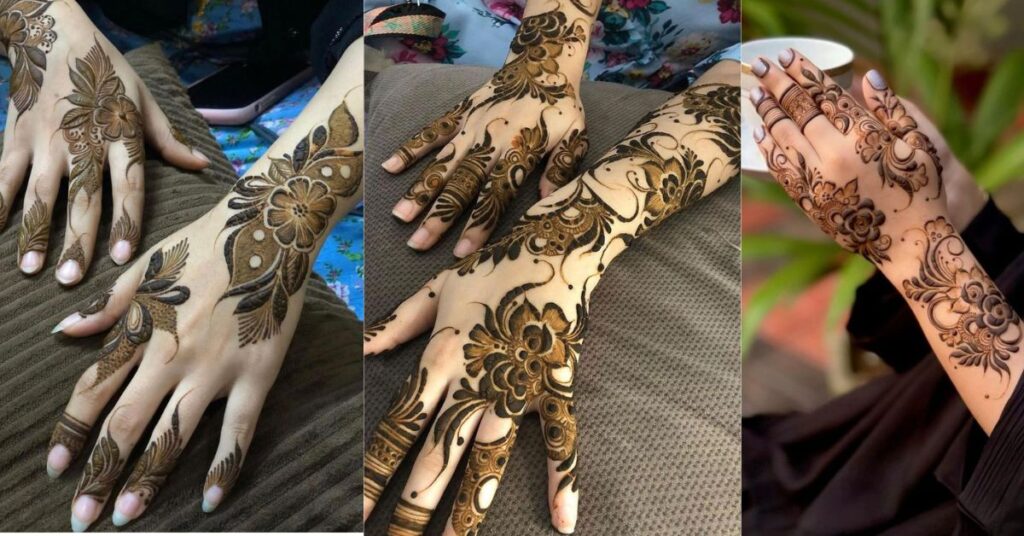
Back hand Arabic mehndi designs are extremely popular because the bold patterns are easy to see and photograph. The back of the hand provides a beautiful surface for diagonal vines, large flowers, leaves, and paisleys.
A common arrangement starts near the wrist and moves diagonally toward the index or middle finger. This creates a long visual line and makes the hand appear elegant.
Back hand Arabic designs can include:
- Diagonal floral vines
- Large flowers
- Leafy trails
- Bold paisleys
- Finger detailing
- Bracelet-style wrist patterns
- Minimal dotted accents
One reason this style works so well is that it does not require complete hand coverage. A single flowing pattern can create a stylish appearance while leaving plenty of natural skin visible.
For Eid, engagement parties, bridal showers, and other celebrations, a back hand Arabic design can be an excellent choice.
6. Front Hand Arabic Mehndi Designs
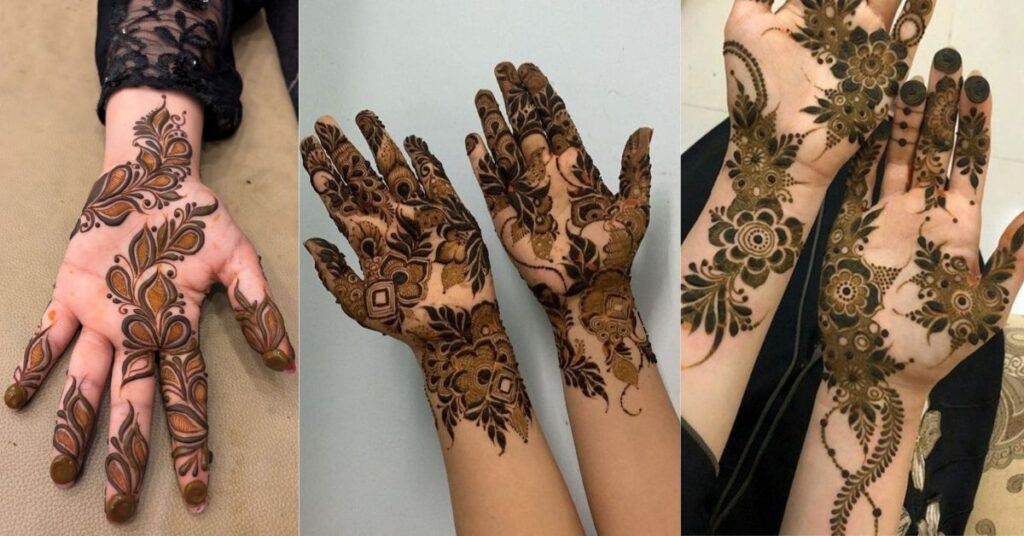
Front hand Arabic mehndi designs can be both simple and elegant. Instead of covering the entire palm, the design can focus on one side, the center, or a flowing pattern that connects the wrist with the fingers.
For a minimal appearance, you can choose a small floral motif with a few leaves. For a more festive look, the design can be extended across the palm and fingers.
Some popular front hand arrangements include:
- Side palm vines
- Floral trails
- Paisley motifs
- Center floral designs
- Finger vines
- Wrist-to-palm patterns
- Minimal Arabic chains
Front hand Arabic mehndi is particularly useful when you want something comfortable for everyday activities. Since the design does not necessarily cover the entire palm, it can feel less heavy than a filled traditional mehndi pattern.
It is also a good choice for women who like elegant designs but prefer a clean and modern finish.
Tips to Make Mehndi Darker & Long-Lasting
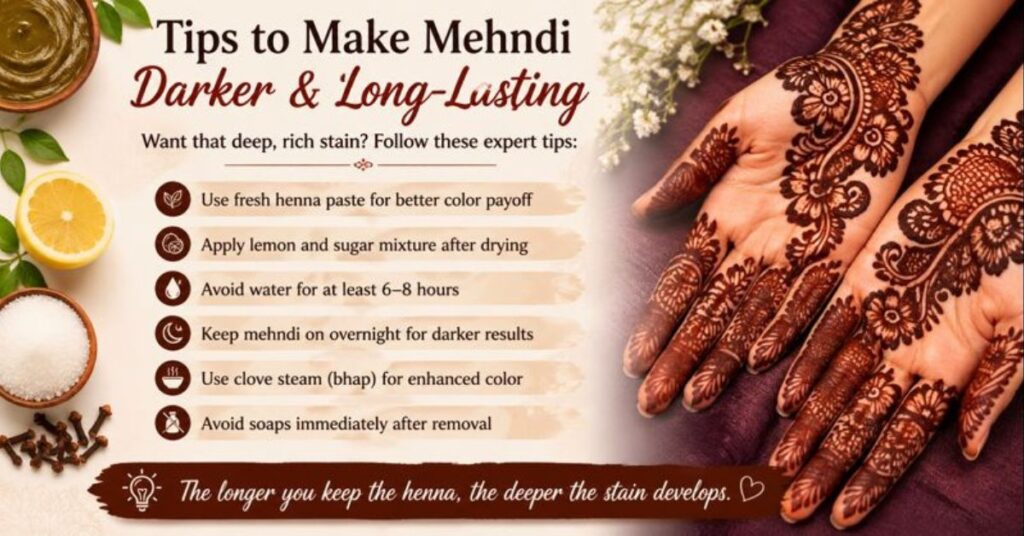
A beautiful Arabic mehndi design looks even better when the final stain develops into a deep, rich color. The quality of the henna paste and your aftercare routine both play an important role in the final result.
Use Fresh Henna Paste
Fresh, good-quality henna paste generally gives better results than old or poorly stored paste. Always choose a reliable source and avoid products that contain unsafe chemical additives.
Allow the Design to Dry Properly
Try not to touch or rub the design while it is drying. Give the paste enough time to set on the skin.
Use Lemon-Sugar Carefully
A traditional lemon-and-sugar mixture is sometimes used to help keep dried henna attached to the skin for longer. Apply only a small amount so that the paste does not become excessively wet.
Keep the Paste on Longer
For a deeper stain, many people leave the dried henna on for several hours or overnight, provided their skin tolerates it comfortably.
Avoid Immediate Washing
After removing the dried paste, avoid washing the area with soap and water immediately. Allow the stain to develop naturally.
Keep Water Away Initially
Frequent water exposure soon after removing the paste can affect the development of the stain. When possible, delay activities involving prolonged water contact.
Remember That Henna Darkens Gradually
Freshly removed henna may initially look orange. The color usually develops and becomes deeper over the following hours.
Why Arabic Mehndi is Trending in 2026
Arabic mehndi continues to attract attention because it combines traditional henna artistry with a modern aesthetic.
One major reason for its popularity is its relatively simple visual structure. People who have busy schedules may prefer designs that can be applied more quickly while still looking stylish.
Another reason is versatility. The same basic Arabic pattern can be adapted for Eid, weddings, engagement parties, festivals, birthdays, or casual gatherings.
In 2026, clean and minimal beauty trends are also influencing mehndi choices. Many women are choosing designs that highlight selected areas of the hand instead of completely covering the skin.
Arabic mehndi fits this preference perfectly because it uses:
- Bold and attractive motifs
- Modern negative space
- Floral and leafy patterns
- Easy-to-customize compositions
- Elegant finger details
- Beautiful diagonal layouts
- Traditional inspiration with a contemporary finish
Whether you prefer a small design or a detailed bridal arrangement, Arabic mehndi can be adjusted to suit your personal style.
FAQs 1. What are Arabic Mehndi Designs?
Arabic mehndi designs are a popular henna style recognized for bold outlines, flowing floral vines, paisleys, leaves, and open spaces. Unlike very dense mehndi patterns, Arabic designs usually focus on a few larger motifs arranged in an elegant, flowing composition.
2. Are Arabic mehndi designs easy to apply?
Yes, many Arabic mehndi designs are beginner-friendly. Simple flowers, leaves, vines, and paisleys can be created using basic henna strokes. More detailed bridal Arabic designs require additional practice, but simple versions can be learned relatively quickly.
3. Which is better: Arabic or Indian mehndi?
Both styles are beautiful, but they create different looks. Arabic mehndi generally has larger motifs, flowing vines, bold outlines, and more open skin. Indian mehndi often contains finer details and denser coverage. The best choice depends on your preferred style and occasion.
4. How long does Arabic mehndi last?
Henna commonly lasts around one to two weeks, although the exact duration depends on factors such as skin type, application, washing habits, and aftercare. The stain gradually fades as the outer layer of skin naturally sheds.
5. Can Arabic mehndi be used for weddings?
Absolutely. Bridal Arabic mehndi can look luxurious and elegant when enhanced with floral motifs, paisleys, detailed fingers, and wrist or arm patterns. It is especially suitable for brides who want a less crowded alternative to very dense traditional bridal mehndi.
Conclusion
Arabic Mehndi Designs offer a beautiful combination of elegance, simplicity, and traditional henna artistry. Their bold flowers, flowing vines, graceful paisleys, and carefully placed empty spaces make them suitable for almost every occasion.
Whether you are looking for a simple design for Eid, a floral pattern for a party, a jewelry-style arrangement for an engagement, or a luxurious bridal design, Arabic mehndi provides plenty of creative options.
The best part is that Arabic mehndi does not need excessive detailing to look beautiful. With the right placement of flowers, leaves, vines, and open spaces, even a simple design can make your hands look graceful and stylish.
If you love modern yet traditional henna art, Arabic mehndi is definitely a style worth trying in 2026.