
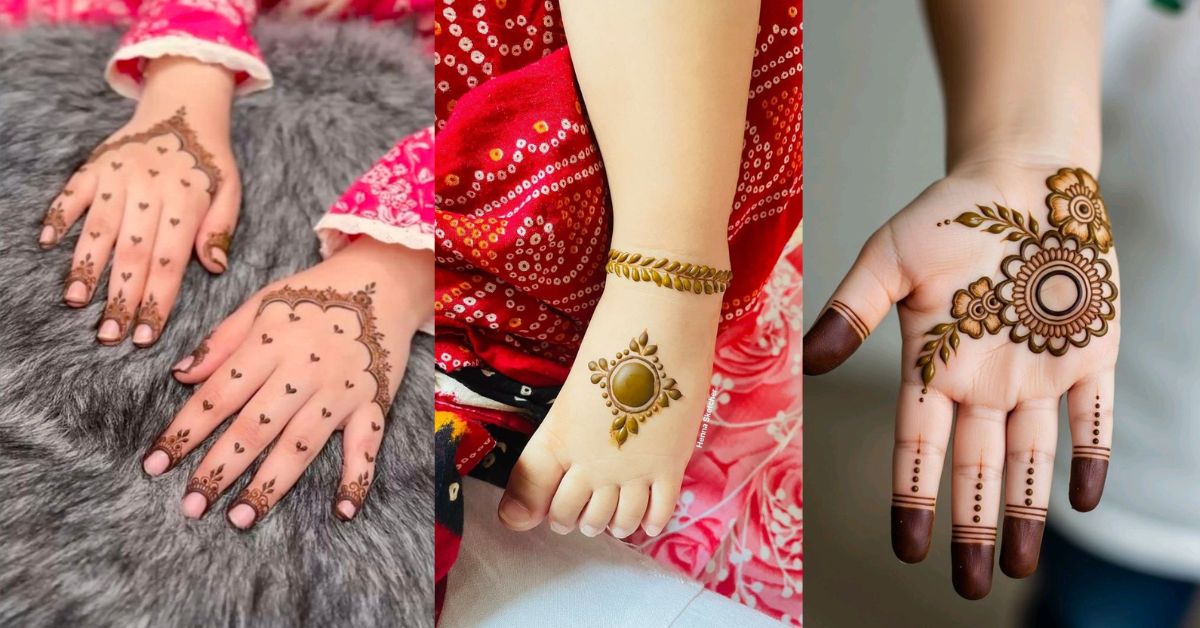
Mehndi is not just for brides or special occasions anymore; it has become a fun and creative activity for kids, too. Mehndi Designs for Kids are all about simple, cute, and light patterns that make little hands look adorable without taking too much time or causing discomfort.
Children often enjoy mehndi because it allows them to express their creativity and feel included in family celebrations. Whether it is Eid, a wedding, a birthday party, a school event, or a simple family gathering, a small henna design can make the occasion feel extra special. Unlike heavy bridal patterns, kids’ mehndi usually focuses on tiny flowers, hearts, stars, butterflies, leaves, and other playful motifs.
When choosing a design for a child, comfort and simplicity should always come first. Young children may not be able to keep their hands still for a long time, so a design that can be applied quickly is usually the best choice. In this article, you’ll explore easy mehndi ideas, festive styles, and helpful tips to make mehndi application safe and enjoyable for children.
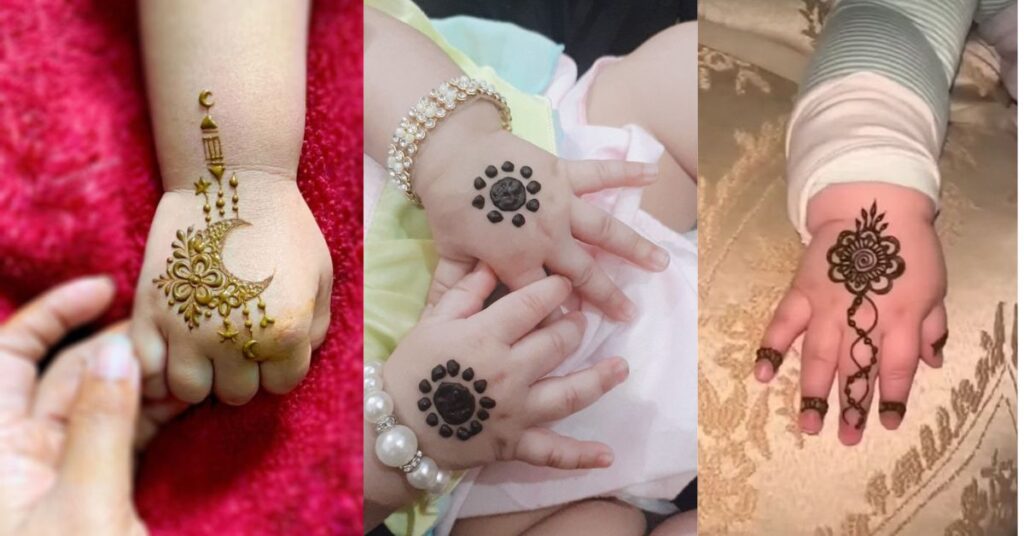
Simple Mehndi Designs for Kids
Simple designs are perfect because kids can’t sit still for long. These designs are quick to apply, easy to understand, and beautiful even when they contain only a few lines and dots. A minimal pattern also allows children to enjoy mehndi without feeling uncomfortable while waiting for it to dry.
For younger kids, a small design in the center of the palm or on one finger can be enough. Older children may enjoy a slightly larger pattern that includes flowers, vines, or a bracelet-style wrist design. The goal is not to cover the entire hand but to create a neat and attractive look that suits their little hands.
are also a great option for parents and beginners who want to apply mehndi at home. You do not need advanced artistic skills to create a cute result. With a steady cone, a light touch, and a little patience, even basic shapes can look charming.
Popular simple ideas include:
- Tiny floral patterns on fingers
- Small heart shapes on the palm
- Dots and swirl combinations
- Mini bracelet-style wrist mehndi
- Star and moon cute motifs
These designs can be mixed and matched according to the child’s age and preference. For example, a small heart can be surrounded by dots, while a simple flower can be connected to a thin vine. A few curved lines can also create a bracelet effect around the wrist without making the design feel heavy.
Simple mehndi is especially suitable for children who are trying henna for the first time. It takes less time to apply, dries more quickly, and is easier to remove or maintain. Parents can also let children choose their favorite motif, which makes the experience more enjoyable and personal.
These are perfect for beginners and parents applying mehndi at home. Whether you prefer a tiny palm design, a finger-only pattern, or a delicate wrist accent, simple mehndi can create a lovely festive look.
Floral Mehndi Designs for Kids
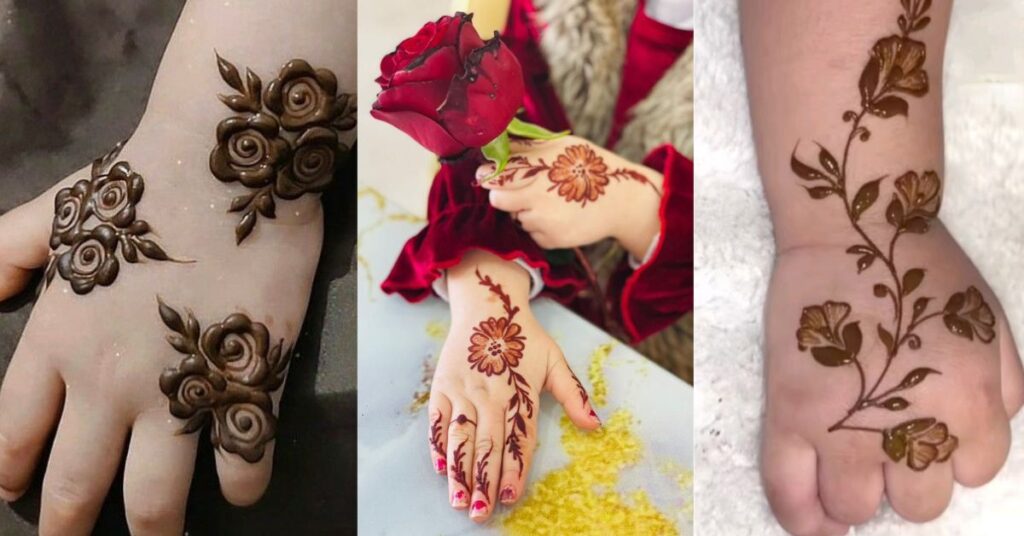
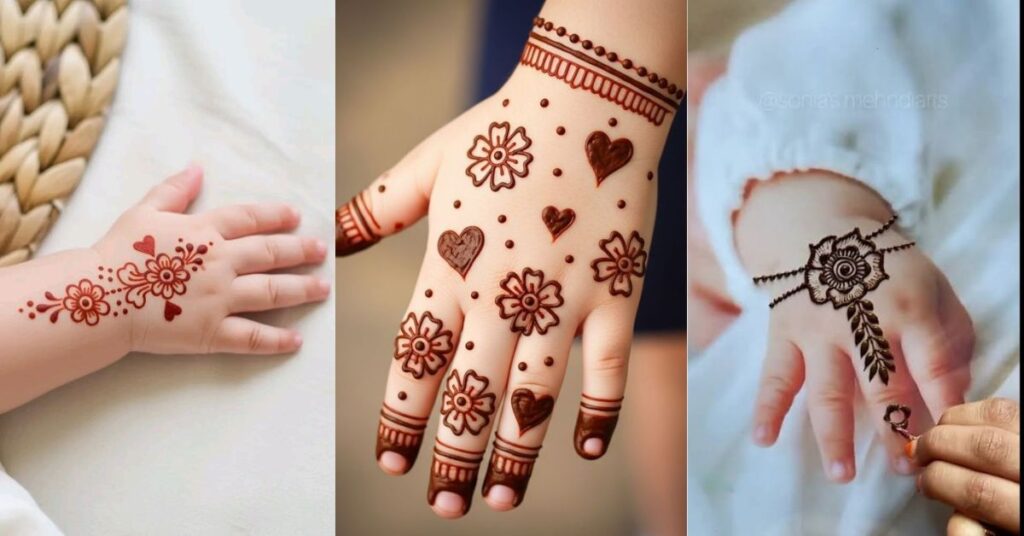
Flowers are always a favorite choice for kids because they look soft and pretty. Floral mehndi designs are easy to customize, and they can be made as small or as detailed as needed. A single flower can look beautiful on its own, while a few connected flowers can create a delicate vine across the hand.
For children, floral designs usually work best when the petals are open, and the lines are not too crowded. Small daisies, simple roses, lotus-inspired flowers, and five-petal blooms are all popular choices. Adding a few leaves or dots can make the design look more complete without making it complicated.
Floral mehndi is also suitable for many occasions. A small flower on the palm can be perfect for a casual day, while a floral wristband can look lovely during Eid or a wedding. Because flowers are timeless, these designs do not depend on a particular trend and can be enjoyed by children of different ages.
Cute floral ideas:
Single flower in the center of the palm
Small flower vines on fingers
Daisy chains on the wrist
Rosebud patterns with light shading
A single flower in the center of the palm is one of the easiest designs to apply. It can be surrounded by tiny dots or short curved lines for a more decorative appearance. Flower vines on fingers are another beautiful option because they create a delicate look while leaving most of the hand uncovered.
Daisy chains are especially cute for younger children. Their small, rounded petals make the design look cheerful and playful. For a slightly more detailed style, rosebuds with light shading can add depth while still keeping the pattern simple.
Parents can also combine floral motifs with hearts, leaves, or tiny stars. However, it is better to avoid filling every space, as open areas help the design look cleaner and more comfortable on small hands.
Small floral mehndi designs are timeless and perfect for every occasion. They are easy to apply, photograph beautifully, and can be adjusted to suit a child’s personality.
Cartoon & Cute Motifs Mehndi Designs
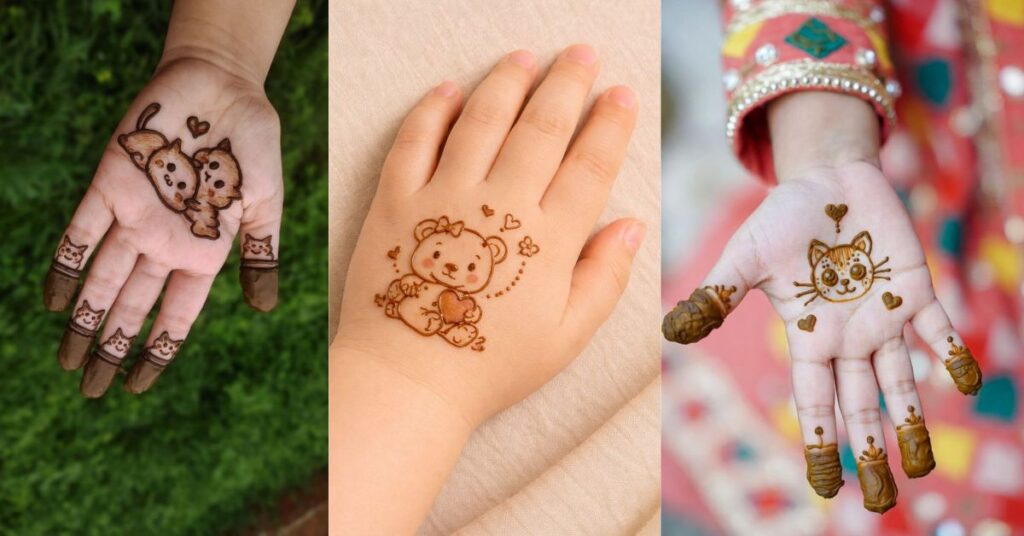
Kids love fun and playful designs that reflect their personality. Cartoon-inspired mehndi patterns are a creative way to make henna feel more exciting, especially for children who may not be interested in traditional floral designs.
Cute motifs can include smiley faces, butterflies, stars, bows, teddy bears, clouds, and other simple shapes. These designs do not need to be highly detailed. Even a few clean lines can create a recognizable and adorable character-inspired pattern.
For younger children, small motifs on the fingers or the back of the hand are often a good choice. Older kids may enjoy combining several motifs into a playful theme. For example, a butterfly can be placed beside a flower, or a few stars can be arranged around a small heart.
Trending cute motifs:
Smiley faces
Butterflies
Stars and hearts combination
Cartoons like Minnie-style bows
Teddy bear outlines
Smiley faces are among the simplest motifs to draw and can instantly make a design look cheerful. Butterflies are also popular because their wings can be decorated with dots, curves, and tiny floral details.
Stars and hearts can be arranged together to create a magical, playful appearance. Bow-inspired designs are another cute option, especially for children who enjoy girly and decorative patterns. Teddy bear outlines can be kept very simple, using a round head, small ears, and a few minimal facial details.
When creating cartoon-inspired mehndi, it is best to use simple outlines rather than trying to copy complicated characters. This keeps the design quick to apply and allows the child to remain comfortable. It also gives the pattern a soft, handmade appearance.
These designs make mehndi feel like a fun art activity rather than a traditional ritual. Children can choose their favorite motifs and enjoy watching them appear on their hands.
Eid Special Mehndi Designs for Kidz
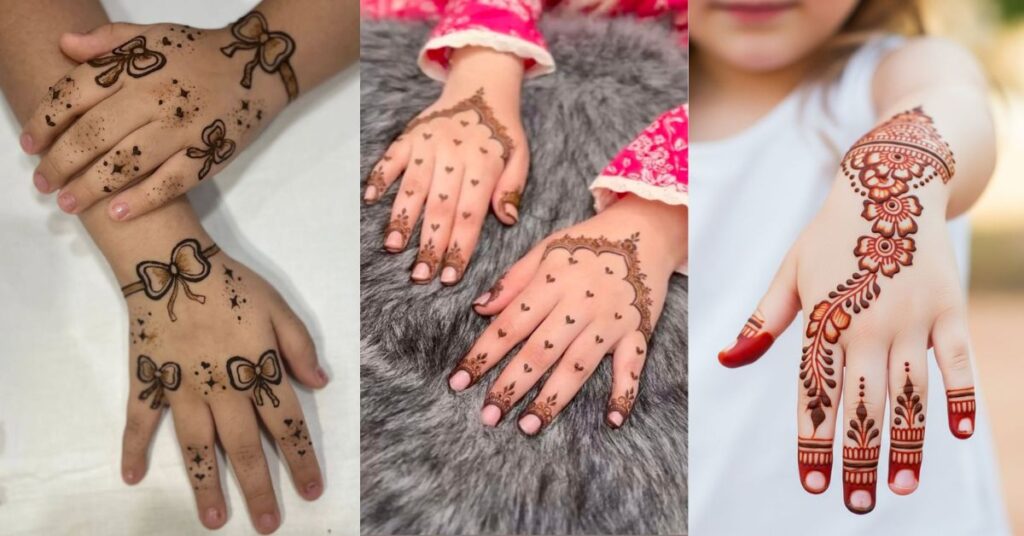
Eid is one of the most exciting times when kids love getting mehndi done. The celebration brings families together, and applying mehndi is often one of the most enjoyable traditions for children. A small festive design can make them feel included while keeping the application process easy and comfortable.
Eid-inspired mehndi designs for kids usually feature simple symbols connected with the celebration. Crescent moons, stars, lanterns, flowers, and tiny festive messages can all be used to create a charming look. These patterns can be applied on the palm, fingers, wrist, or back of the hand.
For younger children, a crescent moon with a few dots may be enough. Older kids may enjoy a slightly more decorative design with flowers and small stars. The design should remain light so that it does not take too long to apply.
Eid-inspired designs:
Crescent moon and star patterns
“Eid Mubarak” mini text designs
Lantern (fanous) shapes
Floral -style light patterns
A crescent moon and star combination is a classic Eid-inspired choice. It looks beautiful in the center of the palm or near the wrist and can be decorated with a few tiny dots. Mini “Eid Mubarak” text designs can also be used, although they require a steady hand and enough space to keep the lettering clear.
Lantern-inspired patterns add a festive touch and can be drawn using simple geometric lines. For a softer look, children can choose light Arabic-style floral patterns that include vines, leaves, and small flowers.
Eid mehndi does not need to be complicated to look special. Even a few meaningful motifs can create a beautiful design that matches the joyful atmosphere of the celebration. Parents can also allow children to choose their favorite Eid pattern, making the experience more memorable.
These festive designs are simple but make kids feel part of the celebration. They are perfect for family gatherings, Eid photographs, and special moments with loved ones.
Tips for Applying Mehndi on Kids
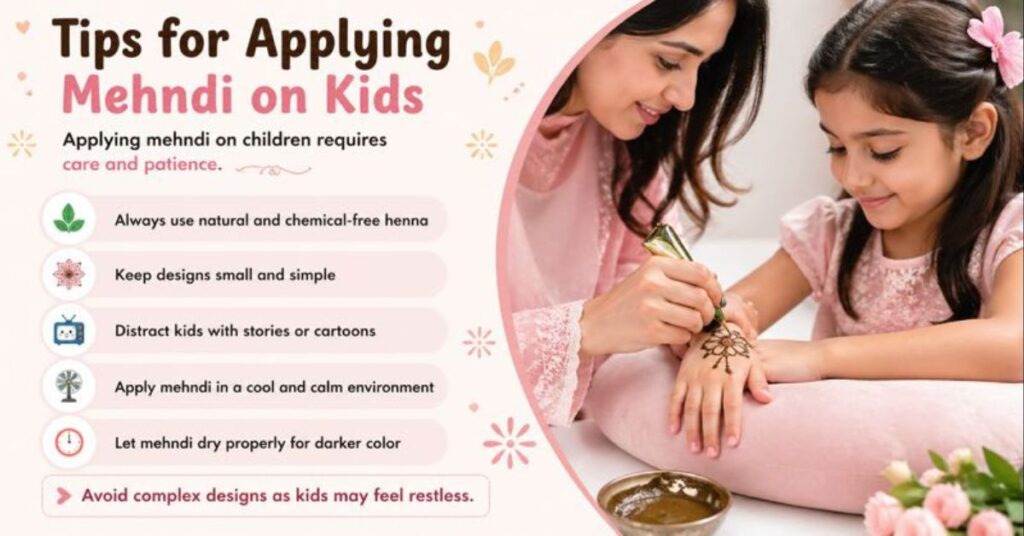
Applying mehndi on children requires care and patience. Kids may become restless while the design is being applied or while the henna is drying, so it is important to choose a comfortable time and a simple pattern.
Before applying mehndi, make sure the child’s hands are clean and dry. Avoid applying lotion or oily products immediately beforehand because they may affect how the henna stains the skin. It is also helpful to explain the process to the child so they know what to expect.
Always choose a reputable, natural henna product and avoid products that contain harsh chemicals. Black henna can contain PPD, which may cause serious skin reactions, especially in children. A small patch test can also be considered before using a new product.
Helpful tips:
Always use natural and chemical-free henna
Keep designs small and simple
Distract kids with stories or cartoons
Apply mehndi in a cool and calm environment
Let the mehndi dry properly for a darker color
Natural henna is generally preferred for children, but parents should still check the product ingredients and source carefully. Avoid unknown cones with unclear labels or unusually dark instant-stain claims.
Keeping the design small is another important tip. A simple pattern takes less time and reduces the chances of the child moving their hand before the design is finished. You can also keep the child entertained with a story, cartoon, or quiet activity.
Apply mehndi in a cool and calm environment, especially during warm weather. Once the design is complete, allow it to dry properly and avoid rubbing or washing it immediately. Remember that the final stain develops gradually, so there is no need to use harsh methods to make it darker.
Avoid complex designs as kids may feel restless. A comfortable experience is more important than a highly detailed pattern.
Best Areas for Mehndi on Kids
To keep it easy and comfortable, choose simple placement areas. Children’s hands are smaller than adults’ hands, so designs often look better when they are placed in a focused area rather than spread across the entire hand.
The center of the palm is a popular choice because it provides enough space for a small flower, heart, star, or simple geometric motif. Fingers are also suitable for tiny designs, especially when the child wants something minimal.
Wrist bands can create a bracelet-like appearance and are often quick to apply. For a more decorative look, a light design on the back of the hand can be used. However, it is best to avoid placing too much mehndi between the fingers if the child finds it uncomfortable.
- Palm center
- Fingers only
- Wrist bands
- Back of hand (light design)
Choosing the right placement makes the application easier and helps the design look neat. It also allows children to enjoy their mehndi without feeling that their hands are covered in heavy patterns.
For very young children, finger-only or small palm designs are often the most practical. Older children can try a light floral vine or a simple wrist pattern if they are comfortable sitting still.
FAQs
1. Are mehndi designs safe for kids?
Yes, natural henna is generally considered safe when used correctly, but parents should always choose a reputable product and check its ingredients. Avoid chemical-based black henna because it may contain PPD, which can cause skin irritation or allergic reactions. It is also wise to test a small area first when using a new henna product.
2. Which mehndi designs are best for beginners?
Simple flowers, dots, and heart patterns are best for beginners. Small vines, stars, leaves, and bracelet-style wrist designs are also easy to practice. These patterns require fewer details and can be completed quickly, making them suitable for both parents and children who are new to mehndi.
3. How long should mehndi stay on kids’ hands?
Ideally, 2–3 hours may give a light orange stain, while keeping natural henna on longer can help produce a deeper color. However, the exact result depends on the henna quality, skin type, and aftercare. Never force a child to keep the paste on if they feel uncomfortable, and avoid washing the design immediately after removing it.
4. Can I use cones for kids’ mehndi?
Yes, cones are a convenient way to apply mehndi on kids, provided they contain safe, reputable henna. A cone makes it easier to create thin lines, dots, flowers, and other simple motifs. Parents should check the ingredients and avoid cones that promise an instant black stain or have no clear product information.
5. What designs do kids like the most?
Cartoon motifs, stars, butterflies, and small floral patterns are most loved. Many children also enjoy hearts, smiley faces, moons, bows, and tiny bracelet designs. The best choice depends on the child’s age and personality, so allowing them to select a favorite motif can make the mehndi experience more enjoyable.
Conclusion
Mehndi Designs for Kidz are all about creativity, simplicity, and fun. Whether it’s Eid, weddings, or casual family events, cute mehndi designs can make children feel special and happy. Small flowers, hearts, stars, butterflies, and festive motifs are easy to apply and look beautiful on little hands.
When choosing a design, always consider the child’s comfort, age, and ability to sit still. Light patterns are usually better than heavy designs because they take less time and allow children to enjoy the experience. Natural henna, careful application, and proper aftercare can also help make the process safer and more pleasant.
With the right patterns and a little patience, you can turn mehndi application into a joyful memory for every child. A simple design may only take a few minutes, but the happiness it creates can become a lovely part of a family celebration.