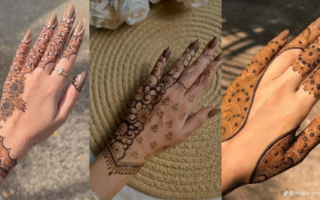
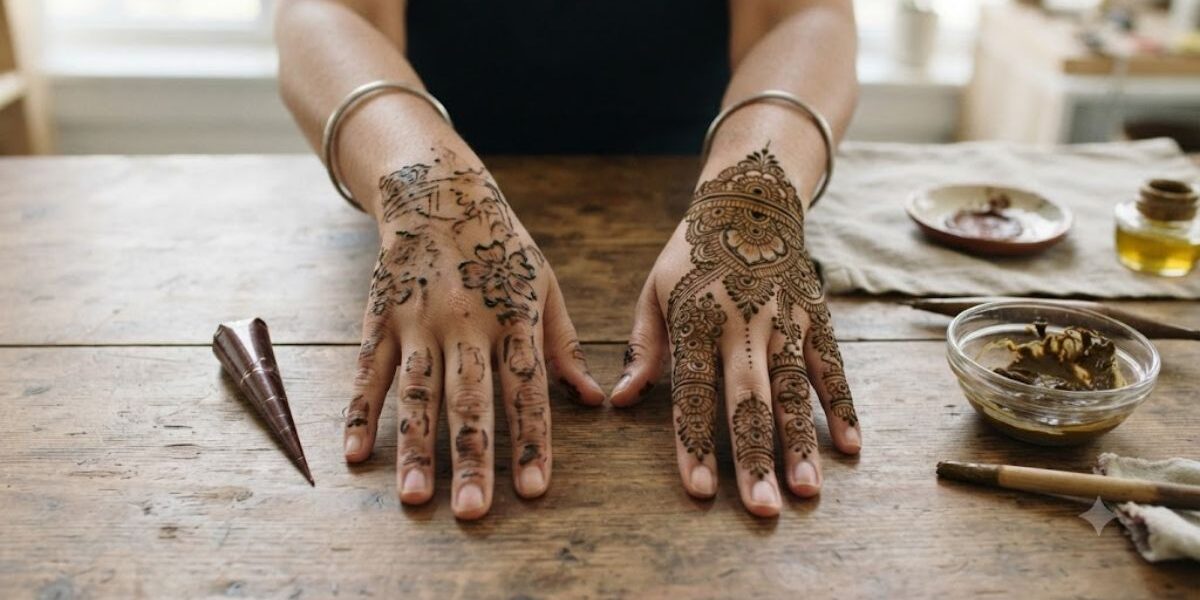
Mehndi is one of the most beautiful forms of traditional body art that represents beauty, culture, and creativity. From weddings and festivals to casual gatherings, henna designs have always been an important part of celebrations. However, creating a beautiful mehndi design is not as easy as it looks. Many beginners struggle with uneven lines, messy patterns, poor stain results, and designs that do not look balanced.
Learning from mistakes is an important part of becoming a skilled mehndi artist. Understanding the Mehndi Design Mistakes Beginners Make can help new artists improve their skills faster and create clean, attractive, and professional-looking designs.
At Mehndi Crafted, we believe that every beginner can learn beautiful henna art with the right guidance, practice, and techniques. Whether you are applying mehndi on your own hands or starting your journey as a mehndi designer, avoiding common mistakes will help you achieve better results.
In this complete guide, we will discuss the most common mistakes beginners make, why these mistakes happen, and practical solutions to improve your mehndi application skills.
What Are Mehndi Design Mistakes Beginners Make?
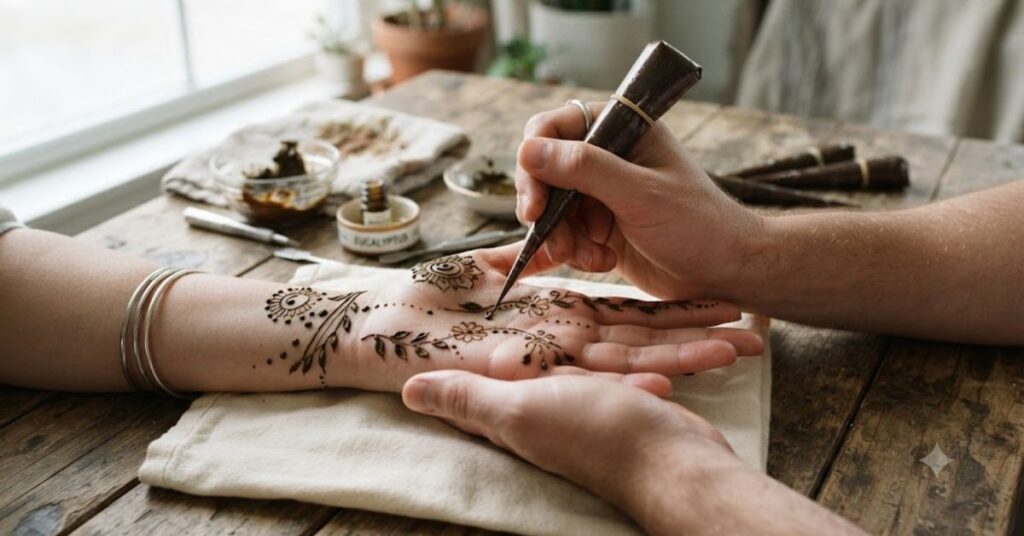
Beginners often focus only on copying beautiful designs from social media but ignore the basic techniques required to create neat mehndi patterns. A design may look simple in a picture, but achieving the same perfection requires proper knowledge of cone handling, pressure control, spacing, and design planning.
The most common Mehndi Design Mistakes Beginners Make include:
- Choosing complicated designs without enough practice
- Using poor-quality mehndi cones
- Applying too much or too little pressure
- Creating uneven lines
- Ignoring proper hand preparation
- Overcrowding designs
- Not understanding design balance
- Removing mehndi too early
- Not practicing basic patterns regularly
By identifying these problems early, beginners can improve their confidence and create professional-looking henna designs.
Why Do Beginners Make Mistakes While Applying Mehndi?
Mehndi application requires both creativity and technical skills. Many beginners think that simply following an online design will give perfect results, but every artist needs to understand the foundation of mehndi art.
Some major reasons behind beginner mistakes include:
1. Lack of Practice
The biggest reason beginners struggle with mehndi is a lack of regular practice. Like any other art form, mehndi requires patience and consistency.
Many beginners try advanced bridal or Arabic patterns without mastering basic elements such as:
- Straight lines
- Curved lines
- Dots
- Circles
- Leaves
- Flowers
- Simple mandala patterns
Practicing these basic elements daily helps improve hand control and confidence.
2. Copying Complex Designs Too Early
One of the biggest Common Mehndi Mistakes for Beginners is selecting designs that are too difficult.
Many beginners choose:
- Heavy bridal mehndi designs
- Detailed Arabic patterns
- Full-hand traditional designs
- Intricate portrait mehndi
without having enough experience.
This often leads to:
- Uneven patterns
- Broken lines
- Messy finishing
- Frustration
Beginner Tip:
Start with simple designs and slowly increase difficulty. Learning basic patterns first will make complex designs easier in the future.
Mistake 1: Not Preparing Hands Before Applying Mehndi
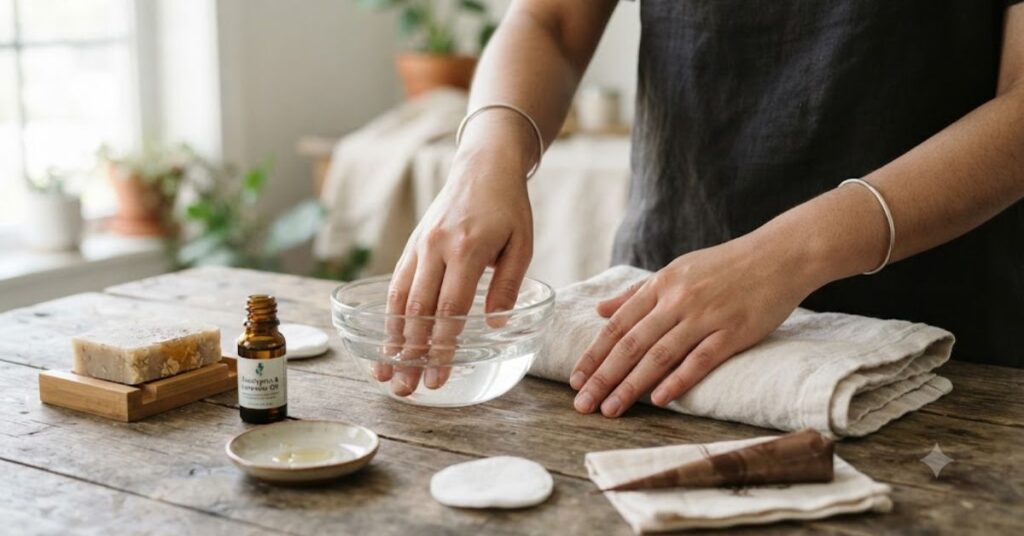
Proper preparation plays an important role in achieving a dark and long-lasting mehndi stain. Many beginners directly apply henna without cleaning their hands properly.
This is one of the most common Mehndi Design Mistakes Beginners Make because oils, lotions, and dirt can affect the henna stain.
Why Hand Preparation Matters
The skin needs to be clean so that mehndi can properly absorb into the upper layers of the skin.
Before applying mehndi:
- Wash hands with soap
- Remove any moisturizer or oil
- Avoid applying cream before mehndi
- Keep hands dry
Clean skin allows better henna penetration and improves the final color.
Mistake 2: Using Low-Quality Mehndi Cones
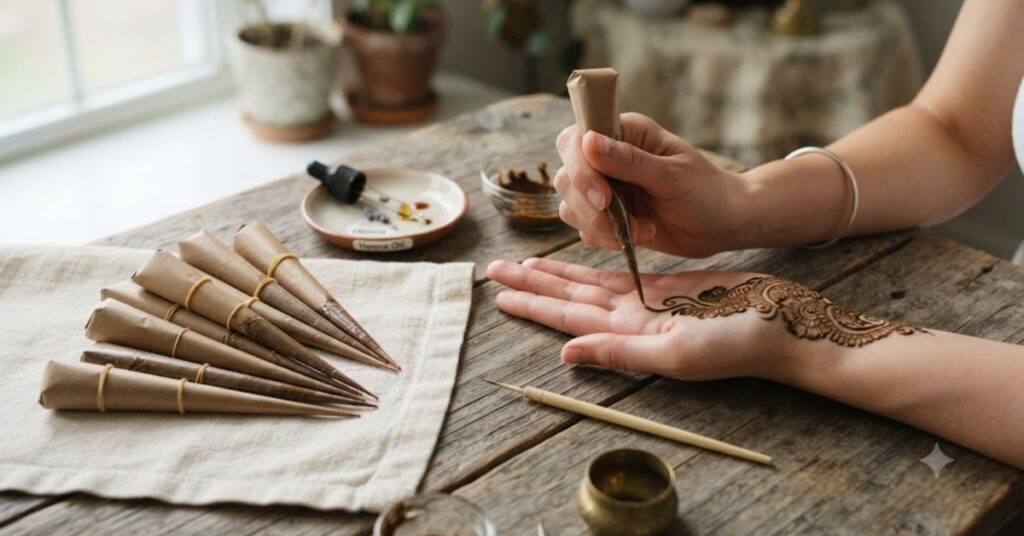
The quality of the cone directly affects the final design. Many beginners purchase cheap cones without checking ingredients or freshness.
Poor-quality cones can cause:
- Weak color
- Uneven flow
- Broken lines
- Difficulty controlling designs
A good mehndi cone should have:
✔ Smooth paste consistency
✔ Fine tip opening
✔ Fresh natural henna
✔ Easy flow control
At Mehndi Crafted, we always recommend beginners focus on quality materials because even a talented artist cannot create clean designs with poor tools.
Mistake 3: Holding the Mehndi Cone Incorrectly
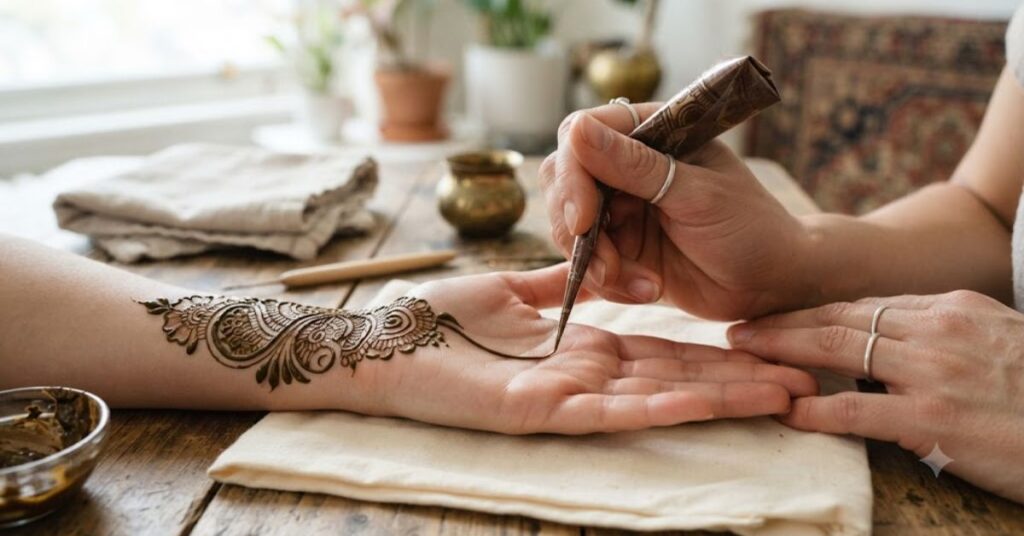
Cone handling is one of the most important skills for beginners. Many new artists hold the cone too tightly or incorrectly, which creates uneven pressure.
Incorrect cone grip can result in:
- Thick and thin lines together
- Sudden paste release
- Shaky designs
- Uncomfortable hand movement
Correct Cone Holding Technique
Follow these simple steps:
- Hold the cone like a pen.
- Keep your fingers relaxed.
- Apply gentle pressure from the back of the cone.
- Control the flow using your fingers.
- Move your hand smoothly.
Regular practice will improve your control and make your designs cleaner.
Mistake 4: Applying Too Much Pressure
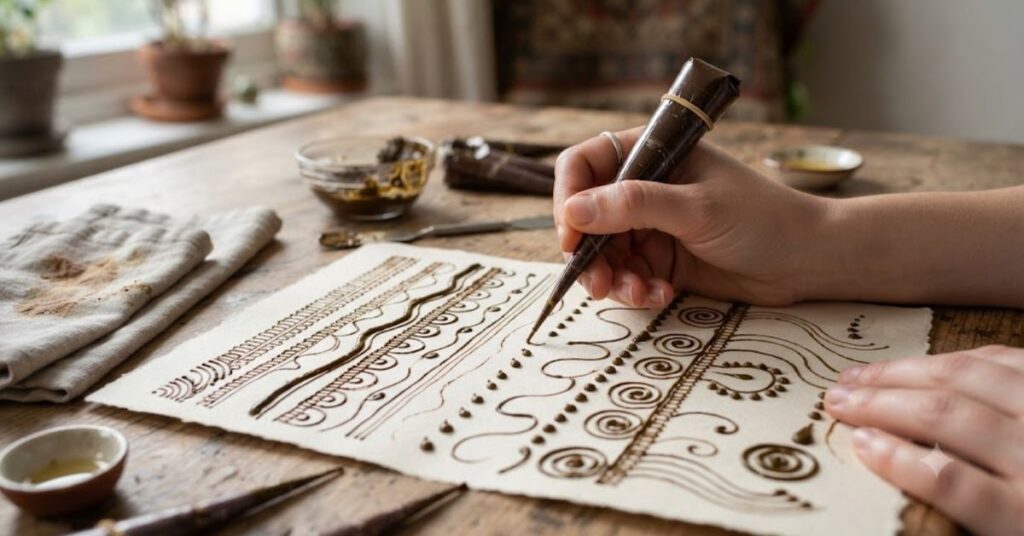
Pressure control is a skill that every mehndi artist needs to learn.
Many beginners think pressing the cone harder will create darker lines, but this usually creates messy designs.
Too much pressure causes:
- Thick unwanted lines
- Extra paste on the skin
- Design imbalance
- Longer drying time
Beginner Mehndi Design Tips:
Practice creating different line thicknesses:
- Light pressure for thin details
- Medium pressure for normal outlines
- Slightly stronger pressure for bold patterns
Mehndi Design Mistakes: Beginners Learning pressure control is one of the fastest ways to improve mehndi skills.
Mistake 5: Ignoring Basic Design Balance
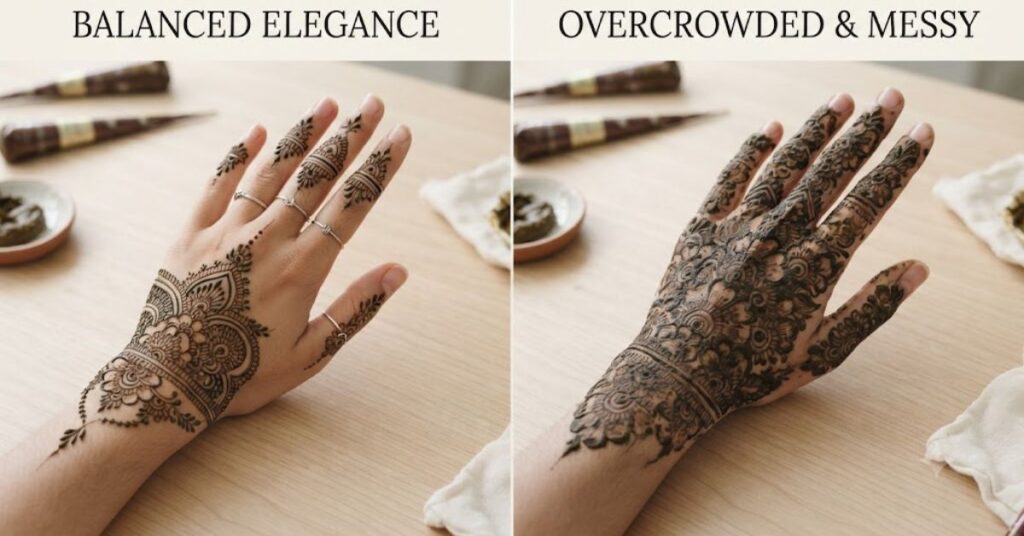
A beautiful mehndi design is not only about adding more patterns. Balance and spacing are equally important.
Many beginners fill every space because they think more details make a design better.
However, overcrowding can make the design look:
- Heavy
- Confusing
- Unprofessional
Professional artists understand the importance of:
- Empty spaces
- Symmetry
- Pattern flow
- Proper spacing
A balanced design looks elegant and attractive even with simple elements.
Mistake 6: Not Learning Basic Mehndi Patterns First
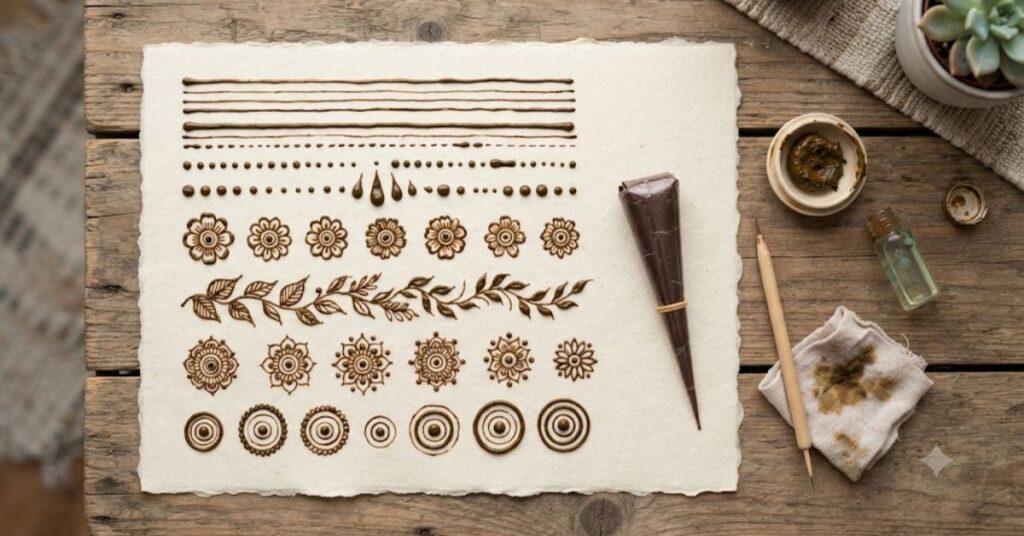
Before creating advanced designs, beginners should master simple patterns.
Important beginner patterns include:
Floral Patterns
Flowers are one of the easiest elements for beginners. They can be used in:
- Arabic mehndi
- Indian mehndi
- Pakistani mehndi
- Minimal designs
Leaf Patterns
Leaves help connect different parts of a design and make it look complete.
Mandala Designs
Circular mandala patterns improve hand control and symmetry.
Lines and Dots
These basic elements create the foundation of almost every mehndi style.
Learning these basics is one of the most effective Beginner Mehndi Design Tips for improving quickly.
Mistake 7: Choosing the Wrong Design Style
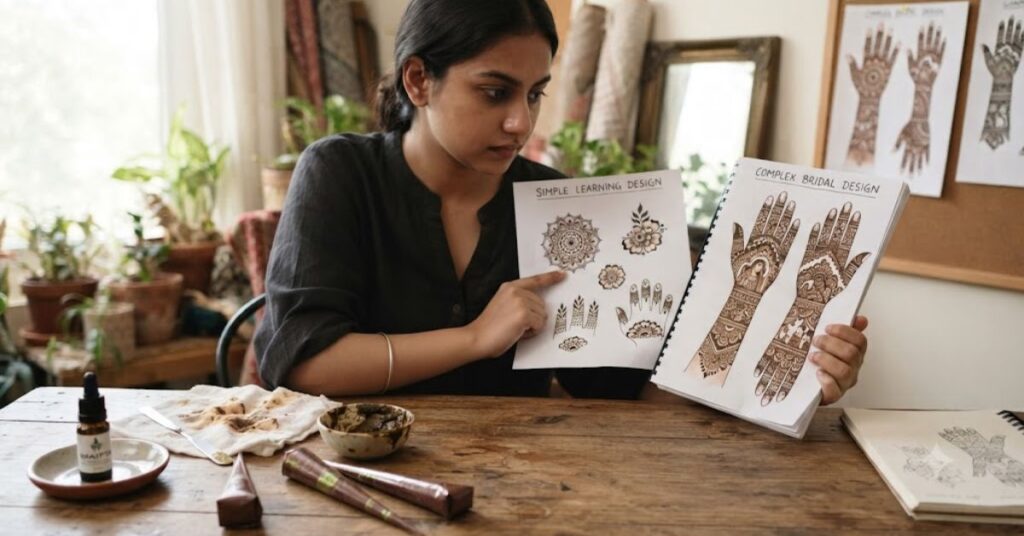
One of the biggest Mehndi Design Mistakes Beginners Make is selecting a design style that does not match their current skill level.
Every mehndi style has different levels of difficulty. Beginners often start with highly detailed designs because they look beautiful in pictures, but creating them requires advanced techniques.
For example:
- Bridal mehndi requires excellent hand control and patience.
- Arabic mehndi requires smooth flow and proper spacing.
- Mandala designs require symmetry and accuracy.
- Portrait mehndi requires professional-level experience.
Instead of starting with difficult patterns, beginners should gradually improve their skills.
Better Approach:
Start with:
✔ Simple floral designs
✔ Easy finger patterns
✔ Minimal Arabic designs
✔ Small back-hand designs
✔ Basic mandala patterns
After mastering these, move toward detailed designs.
At Mehndi Crafted, we recommend beginners build a strong foundation before attempting complicated henna artwork.
Mistake 8: Making Lines Too Thick or Uneven
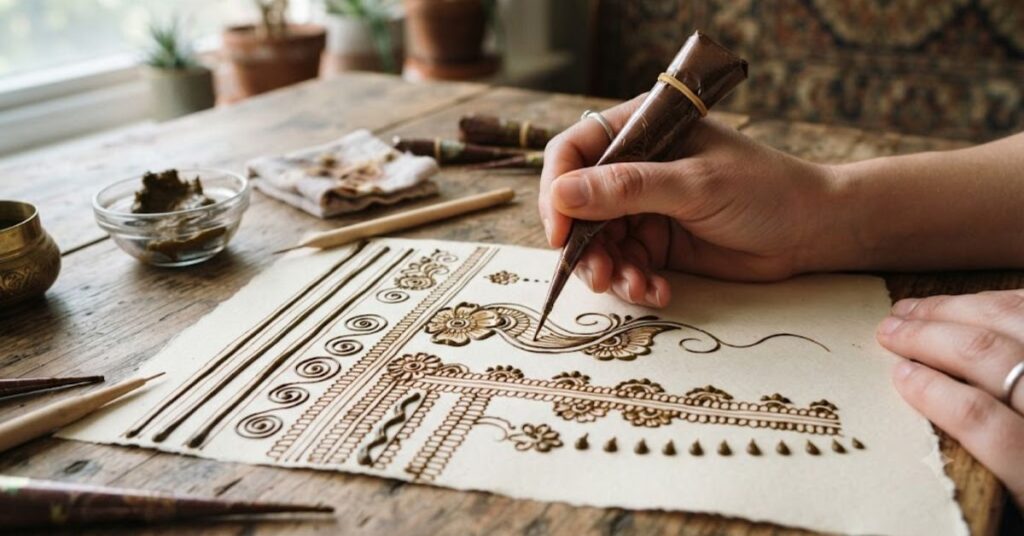
Clean lines are the foundation of a beautiful mehndi design. Mehndi Design Mistakes Beginners: Many beginners struggle with maintaining consistent line thickness.
Uneven lines can make even a beautiful pattern look messy.
Common problems include:
- Thick lines in some areas
- Very thin lines in others
- Shaky outlines
- Broken curves
These issues usually happen because of:
- Wrong cone pressure
- Poor cone grip
- Lack of practice
- Applying mehndi too quickly
How to Improve Line Control
Practice these exercises daily:
Straight Line Practice
Draw straight lines repeatedly until your hand movement becomes smooth.
Curve Practice
Practice creating:
- Small curves
- Large curves
- Spiral shapes
Dot Practice
Dots are important for filling designs and creating decorative details.
Consistent practice will improve your confidence and make your designs look more professional.
Mistake 9: Rushing While Applying Mehndi
Patience is one of the most important qualities of a good mehndi artist.
Many beginners rush because they want to complete designs quickly. However, speed without control can damage the final result.
Rushing can cause:
- Smudged patterns
- Unequal spacing
- Missing details
- Poor finishing
A beautiful mehndi design requires time and attention.
Professional Tip:
Focus on accuracy first. Speed will naturally improve with regular practice.
A beginner should focus on creating a clean design rather than completing it quickly.
Mistake 10: Not Understanding Design Flow

A professional mehndi design has a natural flow. Every element connects smoothly with the next pattern.
Many beginners randomly add:
- Flowers
- Leaves
- Lines
- Dots
- Shapes
without planning the overall look.
This creates a design that feels unorganized.
How to Create Better Design Flow
Before applying mehndi:
- Decide the main focus area.
- Choose the type of pattern.
- Plan the direction of the design.
- Leave proper empty spaces.
- Add details gradually.
Good design flow makes mehndi look elegant and balanced.
Mistake 11: Overcrowding the Design
Adding too many patterns is another common Mehndi Design Mistakes Beginners.
Many new artists believe that a hand looks beautiful only when it is completely covered with mehndi. However, professional designs often use a balance between detailed areas and empty spaces.
Overcrowded designs can look:
- Heavy
- Confusing
- Less attractive
- Difficult to read
Beginner Mehndi Design Tips:
Use empty spaces wisely. A simple design with proper spacing often looks more stylish than a crowded pattern.
Modern mehndi trends especially focus on:
- Minimal designs
- Clean lines
- Elegant patterns
- Balanced decoration
Mistake 12: Not Practicing Both Hands
Many beginners only practice on paper or one hand. This creates difficulty when applying mehndi professionally.
A good mehndi artist should practice:
- Left hand application
- Right hand application
- Different skin areas
- Different angles
Applying mehndi on your own hand can improve:
- Cone control
- Hand flexibility
- Confidence
Practice on different surfaces and hands to become more comfortable.
Mistake 13: Removing Mehndi Too Quickly
Mehndi Design Mistakes: Beginners focus only on applying the design and ignore aftercare.
Removing mehndi too early can result in a light stain.
For a darker color:
- Allow mehndi to dry completely
- Keep it on the skin for several hours
- Avoid washing immediately
- Follow proper aftercare steps
The final stain develops gradually after removing the dried paste.
Mistake 14: Using Water Immediately After Removing Henna
Another common mistake is washing hands with water right after removing mehndi paste.
Water can reduce the stain development process.
Instead:
- Gently scrape off dried mehndi
- Avoid water for some time
- Apply natural oils if needed
Proper aftercare helps achieve a richer henna color.
Mistake 15: Not Learning From Mistakes
Every professional mehndi artist started as a beginner. Making mistakes is part of the learning process.
However, repeating the same mistakes without improvement slows progress.
Keep improving by:
- Taking pictures of your designs
- Comparing old and new work
- Practicing regularly
- Learning new techniques
- Following professional artists
The goal is not perfection on the first try but continuous improvement.
How to Improve Your Mehndi Skills as a Beginner
Learning mehndi requires dedication, creativity, and regular practice. Following the right techniques can help beginners improve faster.
Here are some effective Beginner Mehndi Design Tips:
1. Practice Daily for Better Control
Even 15–20 minutes of daily practice can create noticeable improvement.
Practice:
- Basic shapes
- Floral designs
- Finger patterns
- Borders
- Simple Arabic motifs
Consistency is more important than practicing only once a week.
2. Follow Professional Tutorials
Watching experienced mehndi artists can help beginners understand:
- Cone techniques
- Design planning
- Pattern combinations
- Finishing methods
However, do not copy advanced designs immediately. Learn the technique behind each pattern.
3. Create Your Own Design Collection
Save your favorite designs and organize them by category:
- Simple mehndi designs
- Arabic mehndi designs
- Bridal mehndi designs
- Festival mehndi designs
- Minimal mehndi designs
This will help you develop creativity instead of copying everything.
4. Improve Your Cone Technique
Cone handling directly affects design quality.
Practice:
- Smooth paste flow
- Equal pressure
- Comfortable grip
- Controlled movement
A skilled artist can create beautiful designs even with simple patterns because their technique is strong.
Beginner Mistakes in Different Mehndi Styles
Different styles have different challenges. Understanding them can help beginners avoid mistakes.
Arabic Mehndi Mistakes
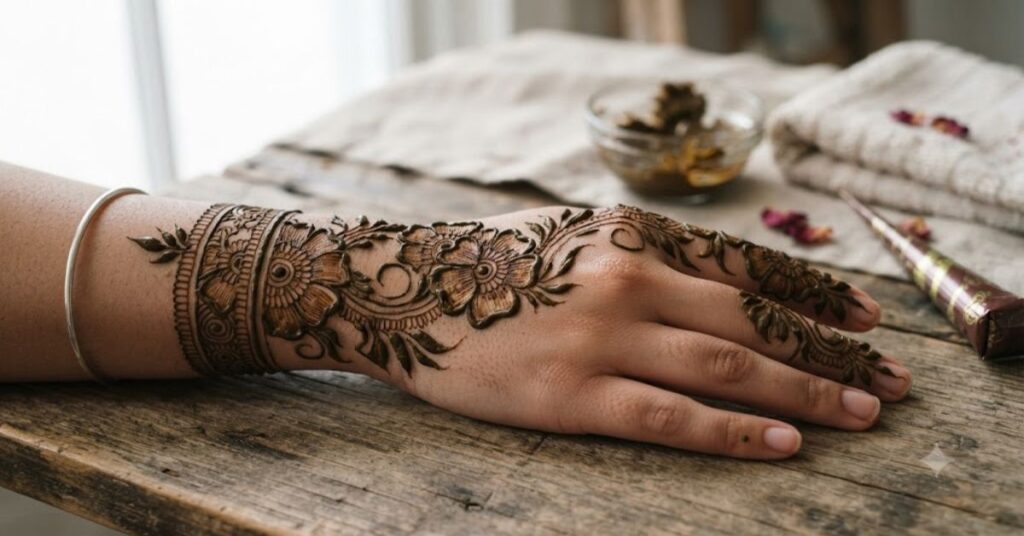
Arabic mehndi is known for bold flowers, vines, and beautiful spacing.
Common mistakes include:
- Making flowers too large
- Poor spacing between patterns
- Incorrect vine placement
- Adding unnecessary details
Solution:
Focus on clean lines and balanced empty spaces.
Indian Mehndi Mistakes
Indian mehndi usually contains detailed traditional patterns.
Beginners often struggle with:
- Too many small details
- Uneven filling
- Poor symmetry
Solution:
Learn simple traditional motifs first before moving to detailed designs.
Pakistani Mehndi Mistakes
Pakistani mehndi combines traditional and modern elements.
Beginners often make mistakes by:
- Mixing too many styles
- Creating unbalanced patterns
- Ignoring design flow
Solution:
Choose one style theme and build your design around it.
Why Avoiding Mehndi Mistakes Matters
Avoiding beginner errors helps you:
✔ Create cleaner designs
✔ Gain confidence
✔ Improve application speed
✔ Build professional skills
✔ Create attractive henna artwork
Understanding Common Mehndi Mistakes for Beginners allows new artists to improve without wasting time.
Advanced Tips to Avoid Mehndi Design Mistakes Beginners Make
Becoming a skilled mehndi artist requires more than just copying designs. Beginners need to understand techniques, creativity, and proper application methods. Avoiding common errors can help you create professional-looking henna designs with confidence.
The following tips will help you improve your mehndi skills and avoid the most frequent mistakes.
1. Plan Your Design Before Starting
One of the most important Mehndi Design Mistakes Beginners Make is starting without any proper plan.
Many beginners immediately begin drawing without thinking about:
- Design placement
- Main focal point
- Pattern combination
- Overall balance
This often creates an uneven and confusing design.
Professional Approach:
Before applying mehndi:
- Select your design style.
- Decide where the main pattern will be placed.
- Choose supporting elements.
- Maintain proper spacing.
- Complete the design step-by-step.
A planned design always looks cleaner and more professional.
2. Focus on Clean Finishing
A design may have beautiful patterns, but poor finishing can reduce its beauty.
Professional mehndi artists pay attention to:
- Sharp edges
- Smooth curves
- Equal spacing
- Clean lines
- Proper detailing
Beginners should avoid adding too many details before mastering finishing techniques.
Remember, a simple but neat mehndi design can look more attractive than a complicated, messy one.
3. Use High-Quality Natural Mehndi
The quality of henna paste affects both design appearance and stain results.
Beginners should choose:
- Fresh mehndi cones
- Natural ingredients
- Smooth consistency
- Fine cone tips
Low-quality products can make application difficult and reduce confidence.
At Mehndi Crafted, we always encourage beginners to understand the importance of good materials because tools play an important role in creating beautiful henna artwork.
4. Learn From Professional Artists
Learning from experienced mehndi artists helps beginners understand advanced techniques.
You can improve by studying:
- Pattern placement
- Hand movement
- Design structure
- Detailing methods
- Modern trends
However, inspiration should help develop your own creativity instead of only copying others.
5. Practice Different Hand Areas
Many beginners only practice palm designs, but professional mehndi requires experience with different areas.
Practice:
- Front hand designs
- Back hand designs
- Fingers
- Wrist patterns
- Feet mehndi designs
Each area requires different techniques and pressure control.
6. Maintain Patience While Learning
Mehndi is an art that improves with time. Expecting perfect results immediately is another mistake beginners often make.
Skill development requires:
- Regular practice
- Learning from mistakes
- Trying new patterns
- Improving technique
Every experienced artist was once a beginner. Progress comes from consistency and dedication.
Beginner Mehndi Design Tips Checklist
Before applying mehndi, beginners should remember this checklist:
Clean your hands properly
Use a fresh mehndi cone
Practice basic patterns first
Hold the cone comfortably
Maintain equal pressure
Avoid overcrowding designs
Keep proper spacing
Allow mehndi to dry naturally
Follow stain aftercare methods
Practice regularly
Following these steps can help avoid most Common Mehndi Mistakes for Beginners.
How Beginners Can Create Professional-Looking Mehndi Designs
Creating professional mehndi designs is possible with the right approach.
Follow these steps:
Step 1: Master Basic Elements
Learn:
- Flowers
- Leaves
- Dots
- Lines
- Circles
- Vines
These elements are used in almost every mehndi style.
Step 2: Improve Your Creativity
Do not always copy existing designs.
Try combining:
- Different flowers
- New patterns
- Unique layouts
- Modern elements
Creativity helps you create original designs.
Step 3: Focus on Quality Instead of Speed
Many beginners want to complete designs quickly, but quality matters more.
A professional design should have:
- Smooth finishing
- Balanced patterns
- Clean details
- Attractive flow
Speed comes naturally with practice.
For your article, you can add this section with internal links like this:
Related Mehndi Inspiration on Mehndi Crafted
Looking for more beautiful henna ideas for different occasions? Explore these trending mehndi collections on Mehndi Crafted and discover elegant designs, traditional patterns, and modern styles for every celebration.
- Pakistani Mehndi Designs – Explore traditional Pakistani henna patterns featuring detailed floral motifs, cultural elements, and elegant hand artwork.
- Peacock Mehndi Designs – Discover beautiful peacock-inspired mehndi patterns with artistic feathers, floral details, and graceful traditional designs.
- Minimal Mehndi Designs – Find simple and stylish henna ideas perfect for everyday wear, beginners, and modern fashion lovers.
- College Girl Mehndi Designs – Check out trendy and easy-to-wear mehndi styles specially designed for college events and casual celebrations.
- Baby Shower Mehndi Designs – Explore cute and elegant pregnancy-inspired henna designs for baby showers and special moments.
- Leg Mehndi Designs – Get inspiration from stunning leg and foot mehndi patterns ranging from minimal to bridal styles.
- Rose Mehndi Designs – Discover romantic rose-themed henna artwork with beautiful floral patterns and creative arrangements.
- Birthday Mehndi Designs – Find unique birthday mehndi ideas featuring fun, stylish, and personalized designs.
- Anniversary Mehndi Designs – Explore romantic henna patterns perfect for celebrating love and special milestones.
- Easy Mehndi Designs for Beginners – Learn simple henna designs that are perfect for beginners who want beautiful results with easy patterns.
Explore more latest henna trends and creative designs on Mehndi Crafted to find the perfect inspiration for your next celebration.
FAQs
1. What are the most common mehndi mistakes beginners make?
The most common mistakes include using poor-quality cones, applying too much pressure, choosing difficult designs too early, overcrowding patterns, and not practicing basic techniques.
Understanding these Mehndi Design Mistakes Beginners Make helps new artists improve faster.
2. How can beginners improve their mehndi skills?
Beginners can improve by practicing daily, learning basic patterns, improving cone control, watching professional tutorials, and experimenting with different designs.
Following proper Beginner Mehndi Design Tips can make the learning process easier.
3. Why does my mehndi design look messy?
A mehndi design usually looks messy because of:
- Poor cone control
- Uneven pressure
- Lack of planning
- Too many details
- Incorrect spacing
Practice and patience can help improve neatness.
4. How long should beginners practice mehndi?
Beginners should practice at least 15–30 minutes daily. Regular practice improves hand control and confidence.
Small daily improvements create better results over time.
5. How can I make my mehndi lines smoother?
To create smoother lines:
- Hold the cone like a pen
- Keep your hand relaxed
- Practice curves and straight lines
- Apply consistent pressure
Good cone control is the key to smooth designs.
6. Why is my mehndi stain not dark?
A light stain can happen because of:
- Low-quality henna
- Removing paste too early
- Washing hands immediately
- Poor aftercare
Using fresh natural mehndi and following proper care methods can improve stain results.
7. Should beginners start with bridal mehndi designs?
Beginners should avoid starting directly with complex bridal designs. It is better to learn simple patterns first and gradually move toward detailed designs.
8. How can I avoid common mehndi mistakes?
You can avoid mistakes by practicing regularly, choosing suitable designs, improving cone control, learning proper techniques, and following expert guidance.
Conclusion
Learning mehndi is a beautiful journey that requires creativity, patience, and regular practice. Every beginner makes mistakes, but understanding these mistakes helps you improve faster and develop better skills.
The most important Mehndi Design Mistakes Beginners Make include poor preparation, incorrect cone handling, choosing advanced designs too early, uneven pressure, and ignoring proper spacing. By focusing on basic techniques and practicing consistently, anyone can create beautiful henna artwork.
Remember that professional mehndi artists are not created overnight. They improve through dedication, experimentation, and continuous learning.
At Mehndi Crafted, our goal is to inspire beginners and mehndi lovers with helpful guides, creative ideas, and expert tips that make learning henna easier.
Keep practicing, stay creative, and enjoy the beautiful art of mehndi.