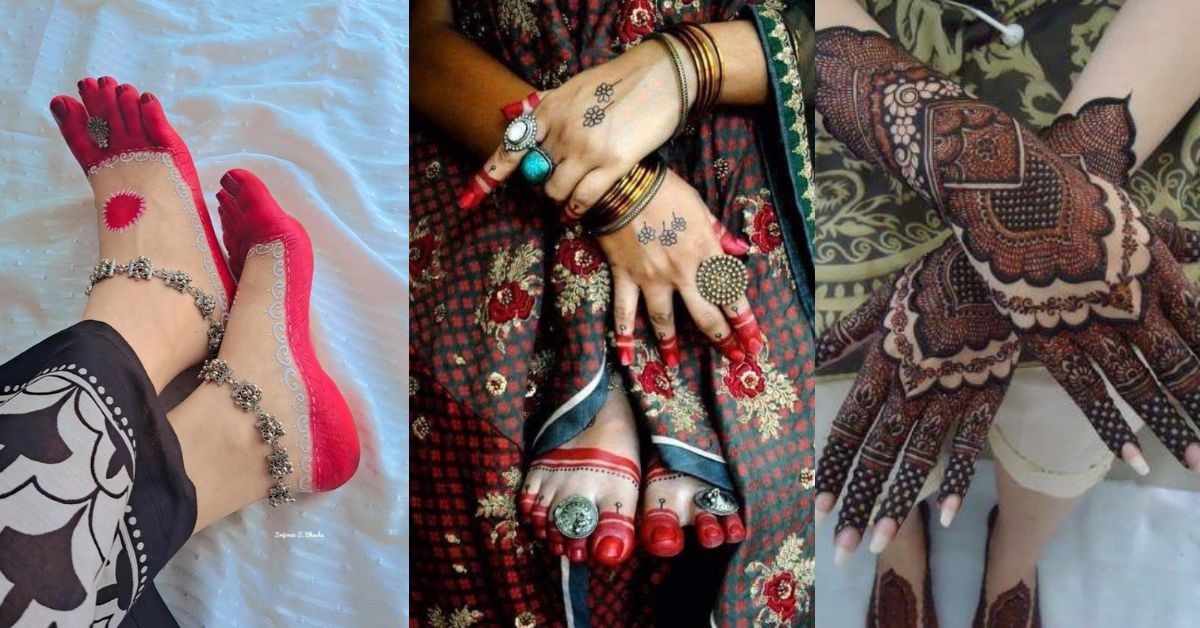
Mehndi is more than a temporary form of body art. It is a beautiful way to celebrate culture, express creativity, and add a personal touch to special occasions. Bengali mehndi designs are especially loved for their delicate patterns, graceful lines, floral details, and traditional charm. Whether you are preparing for a wedding, Eid, a family celebration, or simply want to decorate your hands, Bengali-inspired mehndi can offer a lovely balance between elegance and simplicity.
In 2026, many people are looking for designs that feel traditional without appearing too heavy. Simple Bengali Mehndi Designs 2026 are becoming a popular choice because they combine cultural beauty with comfortable, wearable patterns. These designs often feature fine vines, small flowers, leafy trails, paisleys, dots, and open spaces that make the hands look neat and stylish.
At Mehndi Crafted, we believe that beautiful mehndi does not always need to cover every part of the hand. A carefully placed design with balanced details can look just as attractive as a full bridal pattern. This guide explores creative Bengali mehndi ideas, styling tips, design placement, and ways to choose a pattern that suits your occasion.
Whether you prefer delicate finger art, a simple palm design, or a graceful back-hand pattern, these ideas can help you find inspiration for your next mehndi look.
What Makes Bengali Mehndi Designs Special?
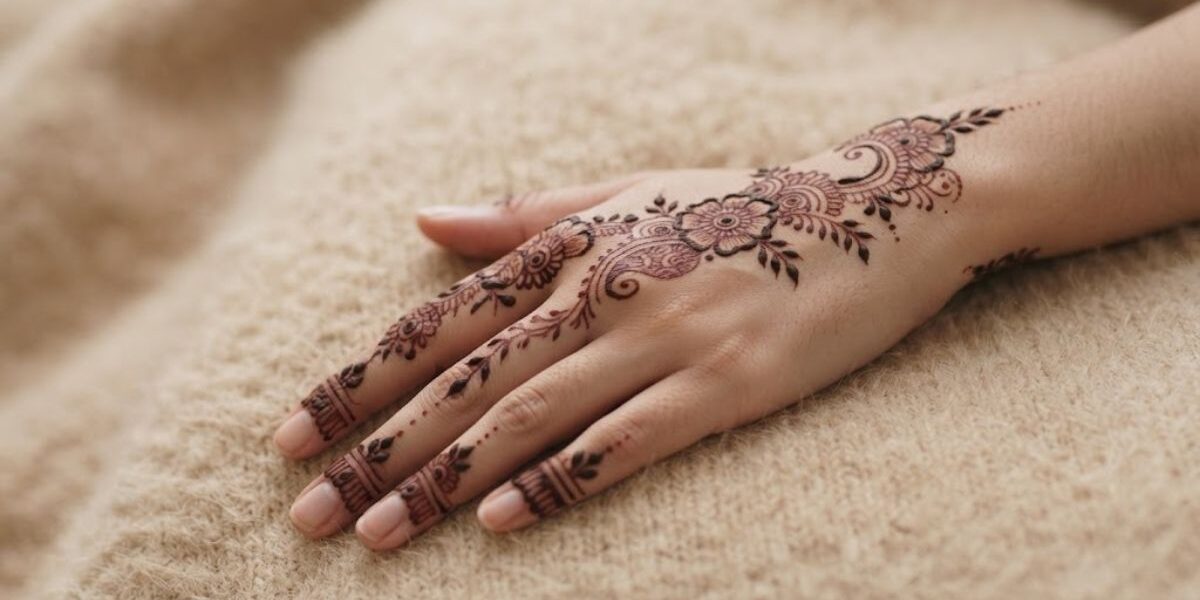
Bengali mehndi designs are often recognized for their artistic flow and delicate detailing. While styles can vary from one artist to another, many Bengali-inspired patterns include floral vines, leafy branches, paisleys, curved lines, and traditional decorative elements.
Unlike very dense designs, Bengali patterns can create a soft and balanced appearance. The design may begin from one side of the hand and move naturally toward the fingers or wrist. This flowing arrangement gives the mehndi a graceful look without making it feel crowded.
Another attractive feature is the use of negative space. Leaving small areas of the skin visible allows each motif to stand out. This is particularly useful for people who enjoy neat, modern mehndi but still want a traditional influence.
Some common features of Bengali-inspired mehndi include:
- Fine floral and leafy details
- Curved vines and flowing trails
- Small paisleys and traditional motifs
- Decorative finger patterns
- Dots, tiny circles, and delicate lines
- Open spaces between motifs
- Balanced palm and wrist arrangements
- A combination of traditional and contemporary elements
The beauty of these designs comes from their composition rather than the number of elements. Even a small pattern can look artistic when the lines are clean and the spacing is well planned.
Why Simple Bengali Mehndi Designs 2026 Are Trending
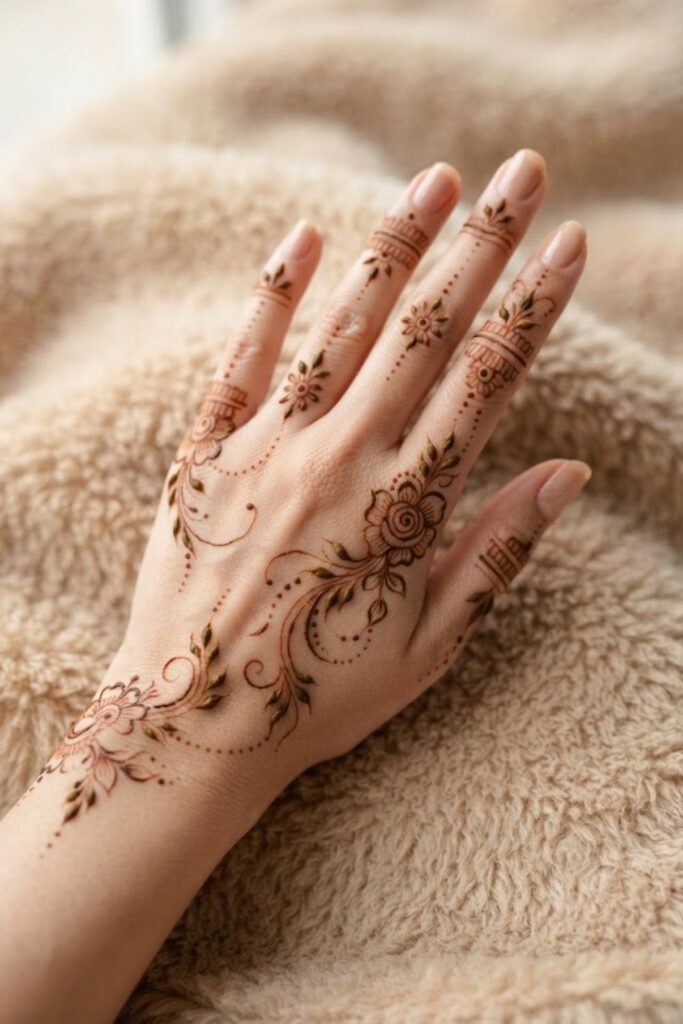
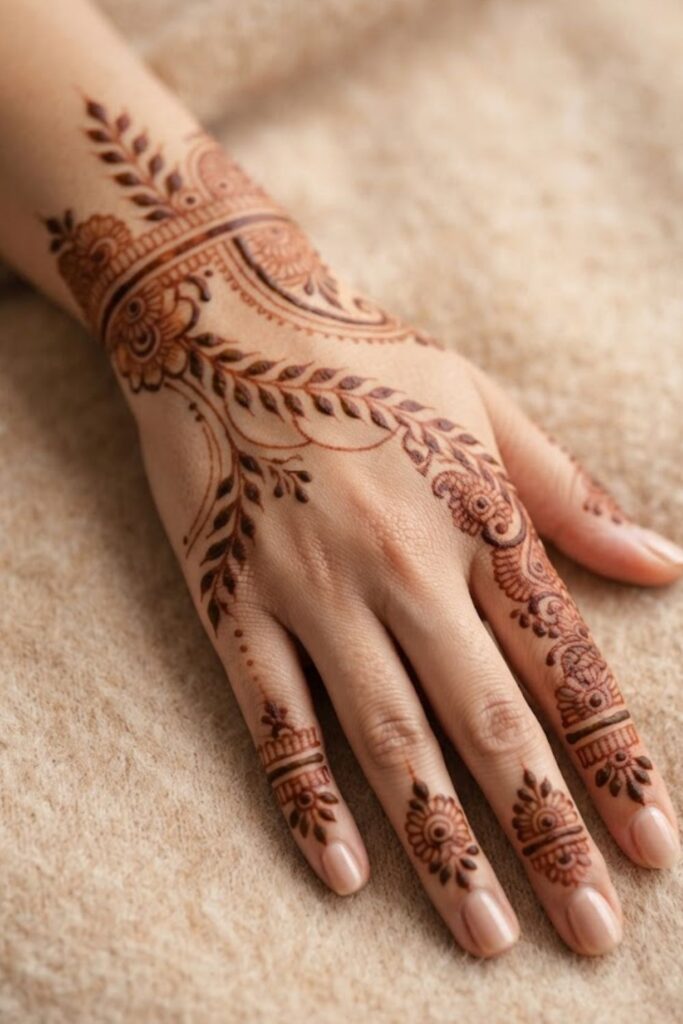
The popularity of simple mehndi has grown because people want designs that are beautiful, practical, and easy to wear. Heavy patterns can take more time to apply and may not suit every occasion. A simpler design offers flexibility while still making the hands look decorated.
One reason Simple Bengali Mehndi Designs 2026 are appealing is their versatility. They can be worn by college students, bridesmaids, wedding guests, working women, and anyone who prefers a subtle look. A small floral vine may be perfect for a casual gathering, while a slightly more detailed palm design can work beautifully for a wedding event.
These designs are also easier to customize. You can add a name, initial, favorite flower, or small traditional motif without changing the entire composition. The result is a personal design that feels meaningful and unique.
Simple Bengali patterns are also suitable for different hand shapes and sizes. A long vine can visually extend the fingers, while a centered motif can create a balanced palm design. Small details can be adjusted according to personal preference.
Main Reasons People Love These Designs
- They are elegant without being overly heavy.
- They can be applied in less time than full-hand patterns.
- They work well for both casual and festive occasions.
- They are easy to customize.
- They photograph beautifully when the lines are clear.
- They suit people who prefer minimal decoration.
- They can be combined with other mehndi styles.
If you are exploring more delicate patterns, you may also enjoy our collection of Simple Mehndi Designs, which includes ideas for everyday and special occasions.
20 Beautiful Simple Bengali Mehndi Designs 2026
The following ideas are inspired by Bengali artistic elements while keeping the overall appearance simple, wearable, and modern. Each design can be adjusted according to the occasion, hand placement, and level of detail you prefer.
1. Delicate Bengali Floral Vine
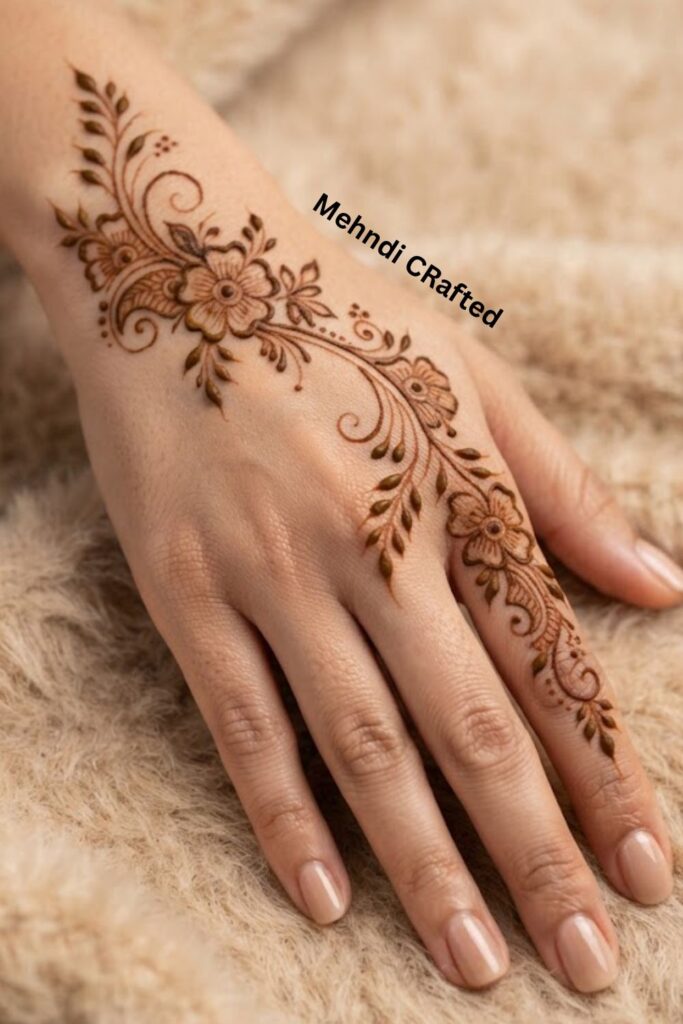
A delicate floral vine is one of the easiest ways to create a graceful Bengali-inspired look. The design begins with a thin curved stem that moves across the palm or back of the hand. Small flowers and leaves are added along the vine to create a natural flow.
For a softer appearance, keep the flowers small and leave space between each motif. This design works especially well on the back of the hand because the vine can follow the natural shape of the wrist and fingers.
It is a lovely option for someone who wants traditional inspiration without a dense pattern. You can also extend the vine toward one finger for a connected look.
2. Bengali Leaf Trail Mehndi
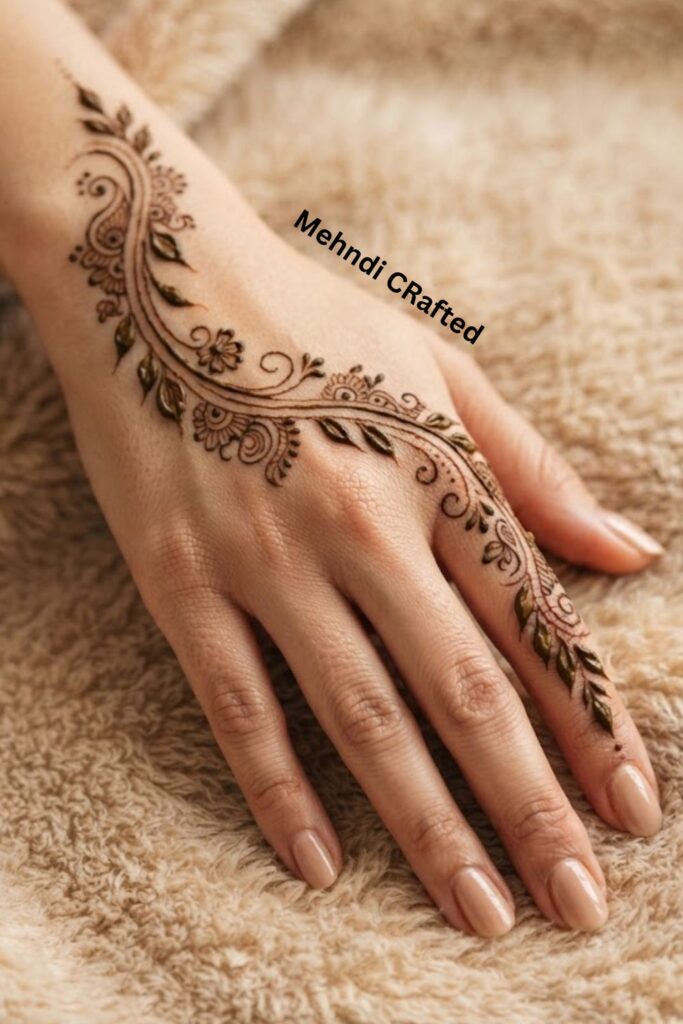
Leaf trails are simple, elegant, and easy to customize. This design features a curved line decorated with pointed leaves placed at regular intervals. The trail may begin near the wrist and move toward the center of the palm.
To make the pattern look more Bengali-inspired, add a few tiny flowers or curved branches between the leaves. Avoid filling every space so the design remains light and airy.
This style is suitable for Eid, family gatherings, and casual celebrations. It also works beautifully as a matching design for both hands.
3. Minimal Bengali Mehndi With Small Flowers
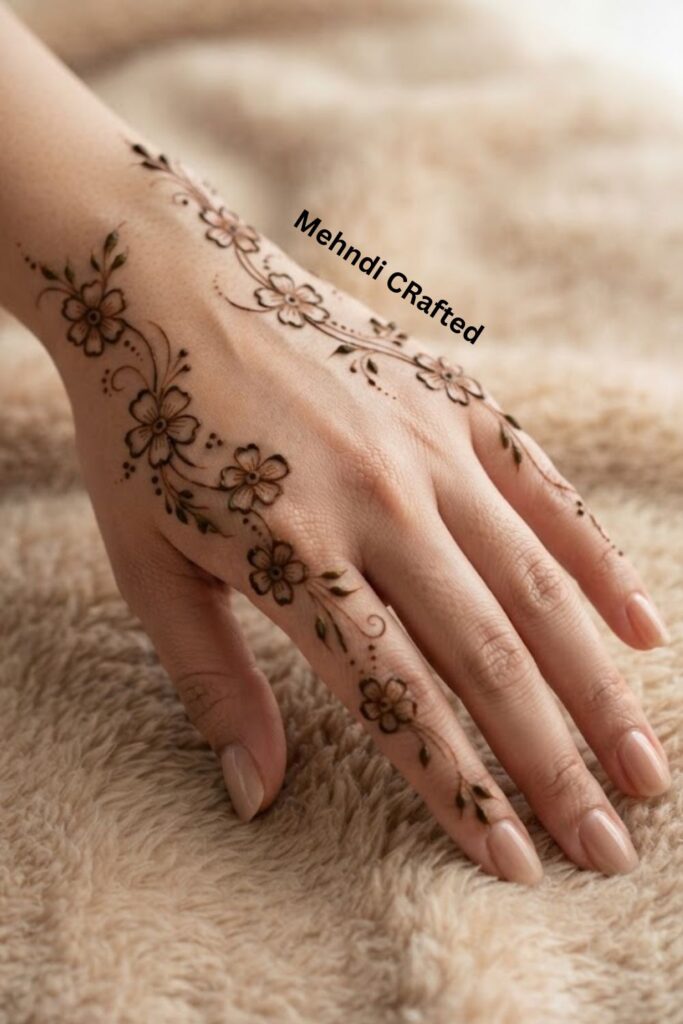
Minimal Bengali Mehndi Designs are ideal for people who enjoy clean patterns and subtle decoration. This idea uses a few small flowers connected by thin curved lines.
The design can be placed on the side of the palm, near the wrist, or across the back of the hand. Small dots may be added around the flowers to create a delicate finishing touch.
Because the pattern is not crowded, it looks neat even when applied with very fine lines. It is also a good choice for beginners who want to practice floral motifs.
4. Bengali Paisley and Leaf Combination
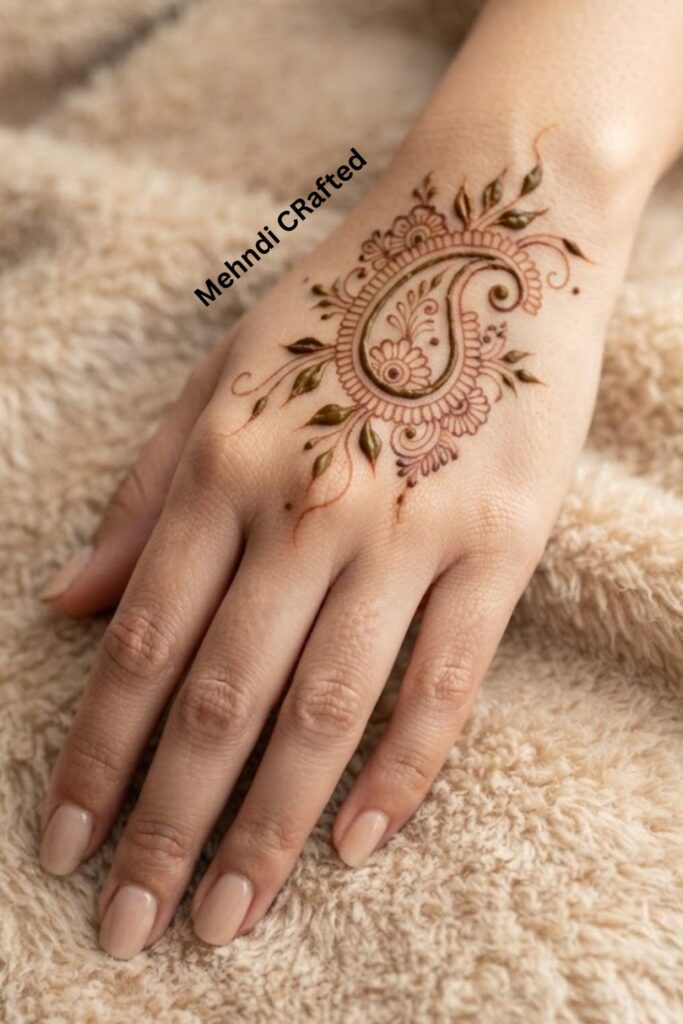
Paisleys are a timeless part of many South Asian mehndi styles. In this design, one small paisley is placed near the center or side of the hand and surrounded by a few leaves.
Instead of filling the paisley with heavy shading, use thin internal lines, tiny dots, or a small flower. This keeps the design elegant and suitable for a simple mehndi look.
The combination of a paisley and leafy details creates a traditional appearance while maintaining a modern sense of space.
5. Simple Bengali Finger Mehndi
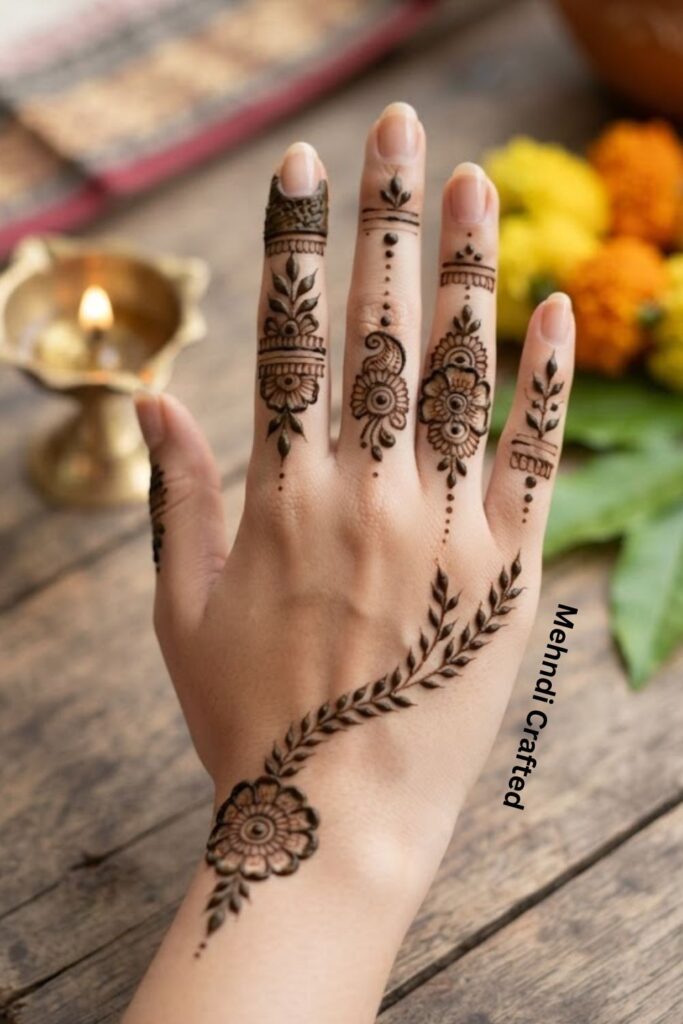
Finger mehndi is a popular choice for those who want a small but noticeable design. A Bengali-inspired finger pattern can include tiny leaves, curved lines, dots, or miniature flowers.
You can decorate only one finger for a modern look or apply matching details across several fingers. Keeping the palm mostly empty makes the finger pattern stand out.
This design is especially suitable for college events, small celebrations, and people who prefer minimal decoration.
For more finger-focused inspiration, explore our guide to Finger Mehndi Designs.
6. Bengali Back-Hand Floral Pattern
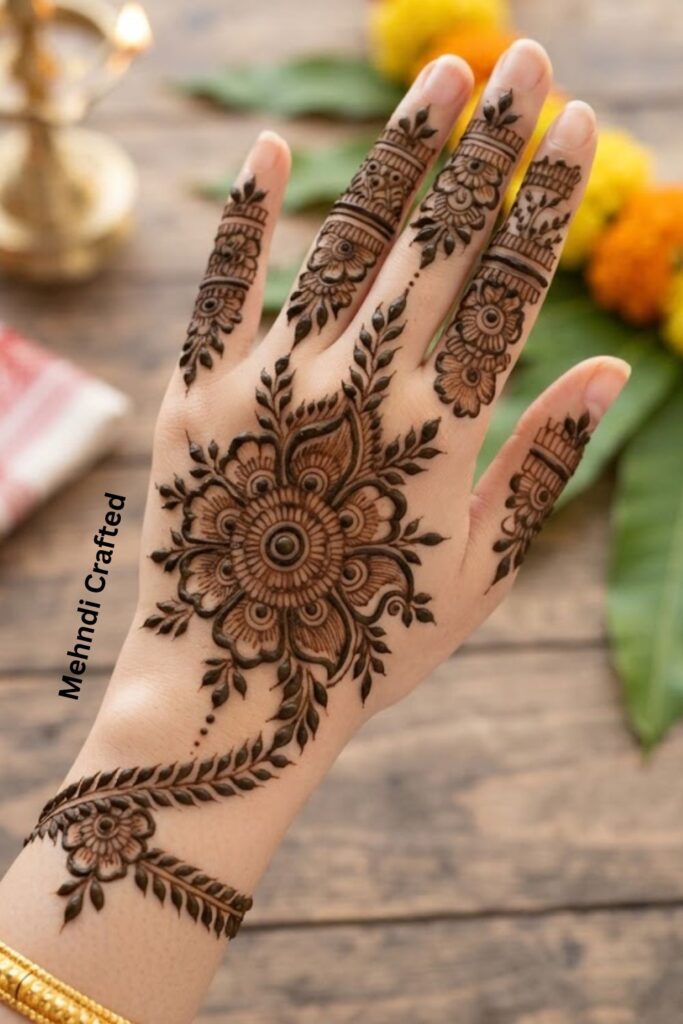
The back of the hand provides a beautiful space for a simple floral design. This pattern may feature one central flower with curved leaves extending toward the wrist.
To create a balanced appearance, keep the central motif slightly larger than the surrounding details. A few dots or small petals can be added around the flower without making the design too heavy.
This is one of the most versatile Simple Bengali Mehndi Designs 2026 because it can be worn for both traditional and modern occasions.
7. Bengali Bracelet Mehndi
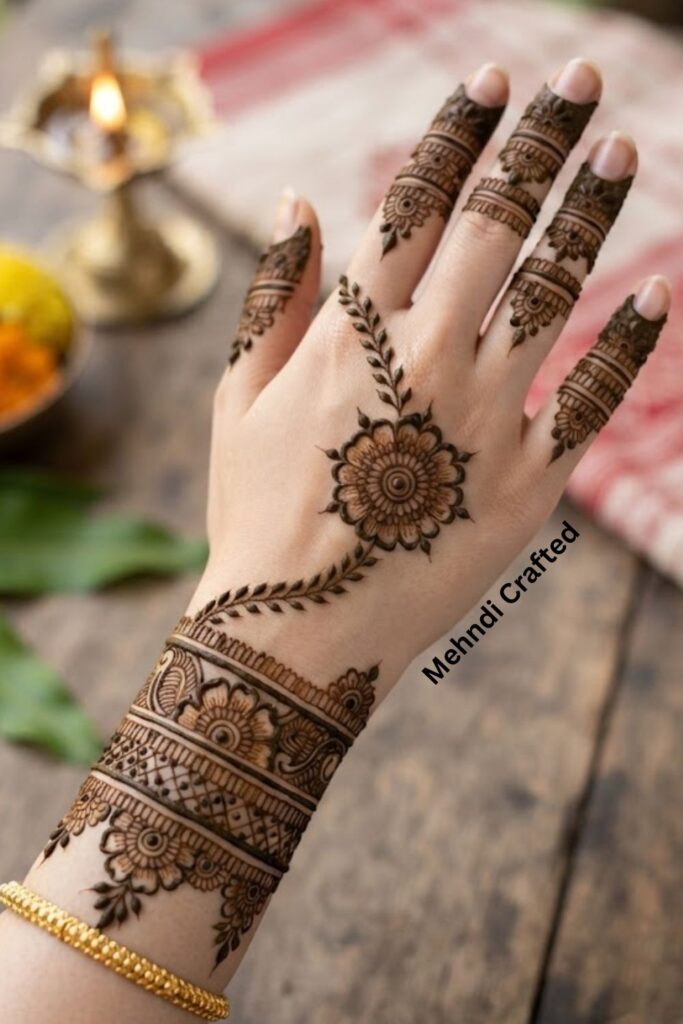
A bracelet-style mehndi design wraps around the wrist like a delicate piece of jewelry. It can include floral chains, leafy curves, small circles, or connected dots.
For a Bengali-inspired appearance, add a thin vine above or below the bracelet. You can also connect the wrist design to one finger using a fine line.
This style is perfect for people who enjoy jewelry-inspired mehndi but want something lighter than a full wrist pattern.
8. Bengali Bail Mehndi Design
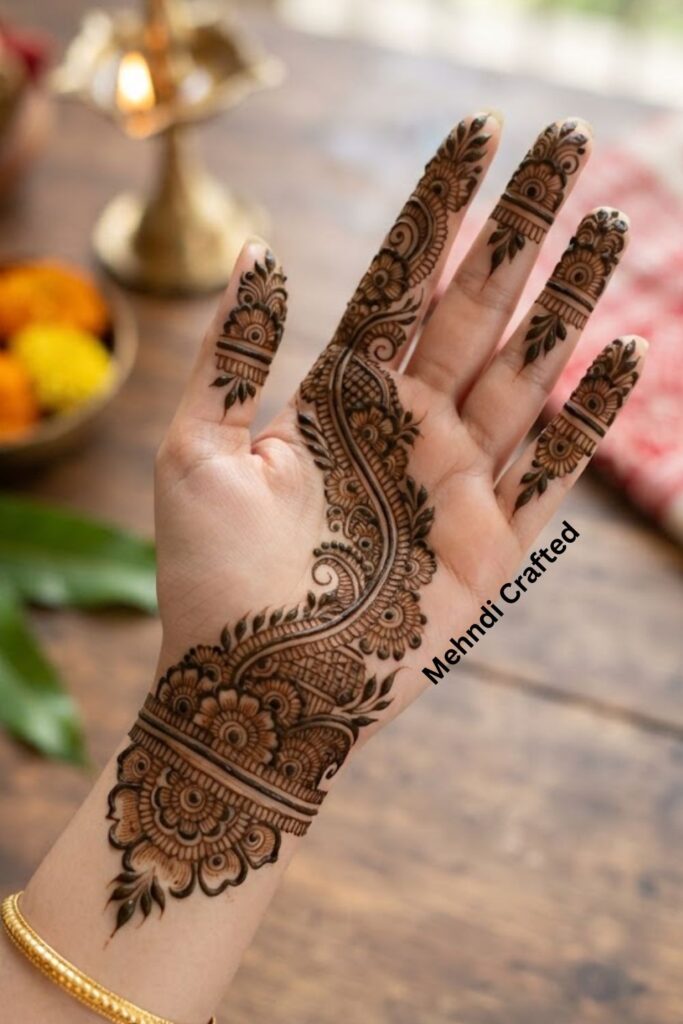
A bail is a flowing vine that can be placed along the side of the palm or back of the hand. Bengali-inspired bail designs often look graceful because of their curved movement and delicate details.
You can create a simple bail using one main stem, a few leaves, and tiny flowers. The design may start near the wrist and move diagonally toward the fingers.
This pattern is easy to adjust and works well for both beginners and experienced mehndi artists.
9. Bengali Mandala With Open Space
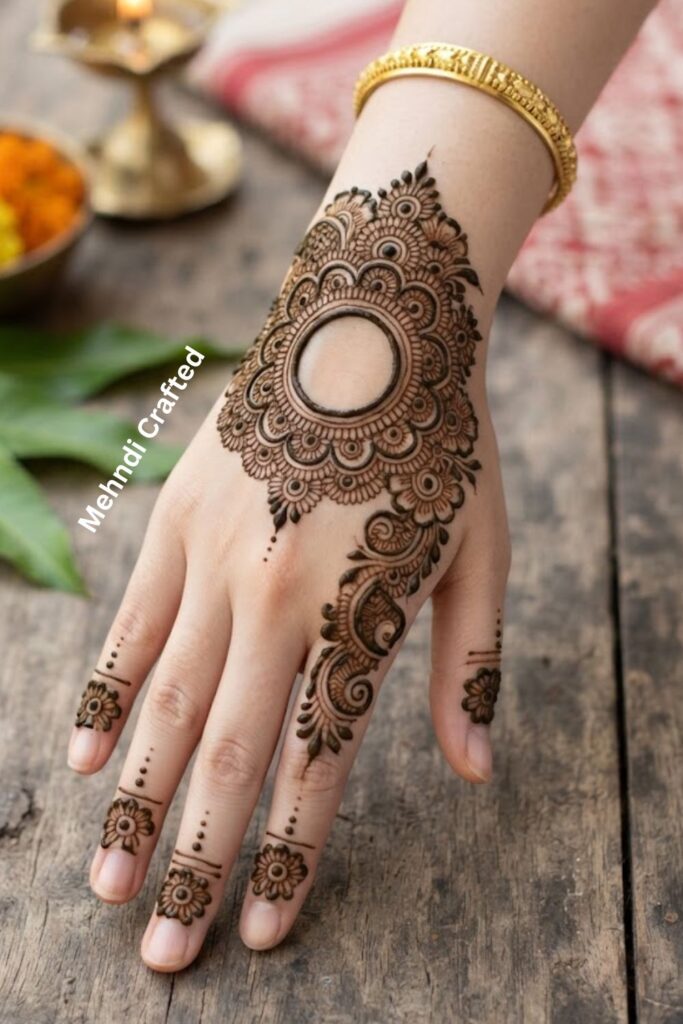
A small mandala can create a beautiful focal point without covering the entire palm. In this design, a circular motif is placed in the center of the hand and surrounded by a few simple petals or dots.
Instead of adding many layers, use two or three neat rings and a small floral center. Leave the surrounding palm open to maintain a light appearance.
This is a lovely option for people who want a traditional motif with a clean, modern finish.
10. Bengali Floral Finger Chain
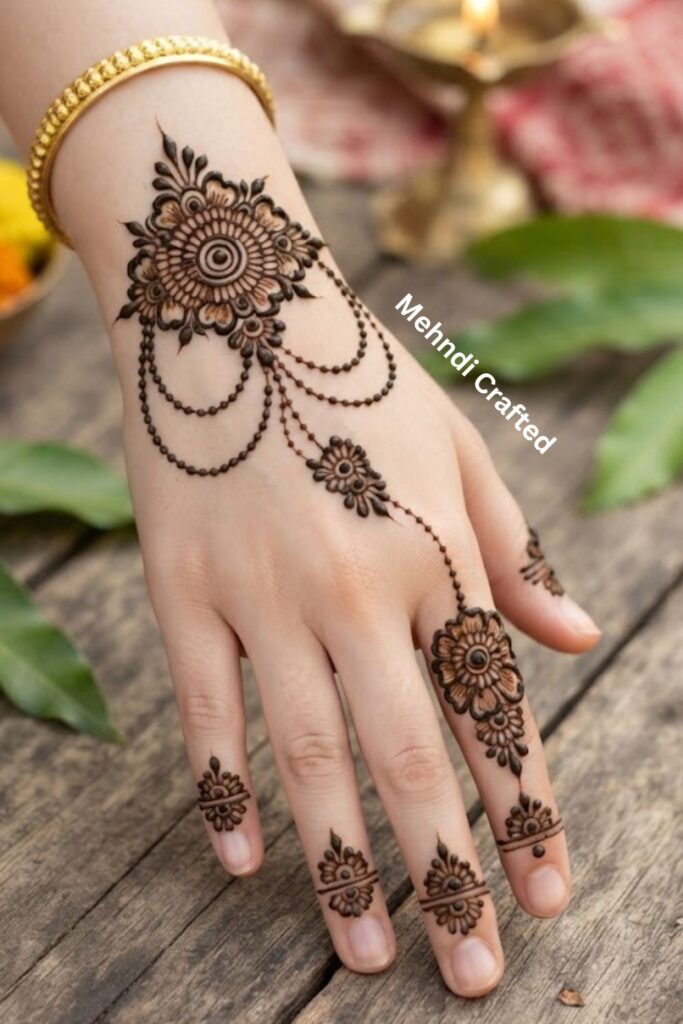
A floral finger chain connects a small wrist or palm motif to one finger through a delicate line. The chain may include tiny flowers, leaves, or dots.
This design creates a jewelry-like effect and looks especially attractive on the back of the hand. It can be kept very simple by using only one connected trail.
The floral finger chain is a stylish choice for weddings, Eid, and festive gatherings.
11. Bengali Side-Palm Mehndi
Side-palm mehndi is perfect for those who want a design that looks elegant from different angles. The pattern is placed along the outer edge of the palm and may include a curved vine, paisley, or floral arrangement.
Because the design follows the side of the hand, it does not require a large amount of detail. A few carefully placed leaves can create a graceful effect.
This style also works well when matching both hands with slightly different patterns.
12. Bengali Lotus-Inspired Design
The lotus is a beautiful floral motif that can be adapted into a simple Bengali-inspired mehndi pattern. A small lotus may be placed near the wrist, center of the palm, or back of the hand.
To keep the design light, use a few clearly defined petals and surround them with tiny leaves or dots. Avoid excessive filling if you prefer a minimal appearance.
This design is suitable for festive occasions and can also be combined with a delicate vine.
13. Bengali Dot and Curve Mehndi
Sometimes the simplest patterns create the most elegant results. This design uses curved lines, tiny dots, and small circular details arranged in a balanced way.
You can create a border near the wrist or decorate one side of the palm. The dots add rhythm to the design while the curves make it look soft and artistic.
This is a good choice for beginners because it does not require complicated motifs.
14. Bengali Floral Wrist Trail
A floral wrist trail begins near the wrist and extends slightly upward toward the hand. It may include small flowers, leaves, and curved stems arranged in a natural direction.
The design can be worn alone or paired with a simple finger pattern. For a more delicate result, use thin lines and keep the flowers evenly spaced.
This style is especially attractive when the wrist design is visible alongside bangles or bracelets.
15. Bengali Half-Palm Mehndi
A half-palm design decorates only one portion of the hand, leaving the rest open. This can include a small floral arrangement, paisley, or leafy vine.
Half-palm patterns are ideal for people who want a noticeable design without full coverage. They are also easy to match with different outfits and accessories.
The open space gives the design a modern appearance while the traditional motifs preserve its cultural charm.
16. Bengali Arabic-Inspired Vine
Arabic-style vines can be combined with Bengali-inspired floral details to create a graceful hybrid design. The pattern usually features a bold flowing curve with leaves and flowers placed along the stem.
To keep the design simple, use one main vine rather than several overlapping trails. Add small Bengali-style floral elements to give it a distinctive appearance.
This is a beautiful option for people who enjoy both traditional and contemporary mehndi styles.
17. Bengali Minimal Peacock Motif
A small peacock motif can add artistic character to a simple mehndi design. Instead of drawing a large detailed peacock, use a small outline with a few decorative feathers.
The motif can be placed on the back of the hand or near the wrist. Surround it with leaves, dots, or a thin vine for balance.
This design is ideal for anyone who wants a cultural symbol without choosing a heavy bridal pattern.
18. Bengali One-Line Floral Mehndi
A one-line floral design uses a continuous flowing line to create a simple arrangement of leaves and flowers. It can be placed diagonally across the palm or along the back of the hand.
The beauty of this pattern lies in its simplicity. A single graceful line can create a modern appearance while still reflecting traditional floral inspiration.
It is a practical choice for quick mehndi applications and casual occasions.
19. Bengali Ring-Style Finger Design
A ring-style finger pattern is inspired by the appearance of a delicate ring. It may include a small flower, circular band, or tiny leafy detail around one finger.
This design can be worn alone or paired with a small wrist motif. It is especially suitable for people who enjoy jewelry-inspired mehndi.
For a clean finish, keep the band narrow and the central motif small.
20. Bengali Floral and Negative Space Design
This design combines small flowers, leafy curves, and open skin to create a balanced appearance. The motifs may be arranged along one side of the palm or across the back of the hand.
The negative space helps the design look lighter and makes each flower more visible. It is a modern interpretation of traditional mehndi artistry.
Among Simple Bengali Mehndi Designs 2026, this style is particularly suitable for people who want a design that feels elegant, artistic, and easy to wear.
How to Choose the Right Bengali Mehndi Design
Choosing a mehndi design depends on more than appearance. The occasion, outfit, hand placement, application time, and personal style all matter.
Before selecting a pattern, consider the following points.
Consider the Occasion
For Eid or a family gathering, a simple floral vine or finger design may be enough. For a wedding guest look, you can choose a slightly more detailed palm or wrist pattern.
Brides may prefer fuller designs, but a simple Bengali-inspired pattern can also be used for pre-wedding events, engagement ceremonies, or intimate celebrations.
Think About Your Outfit
A heavily embroidered outfit may pair beautifully with a minimal mehndi design. If your outfit is simple, a slightly more detailed floral pattern can add visual interest.
You do not need to match every motif with your clothing. Instead, choose a design that complements the overall style and color of your outfit.
Choose According to Application Time
If you have limited time, select a design with fewer motifs and open spaces. Floral vines, finger patterns, and bracelet-style designs are usually easier to apply than dense full-hand patterns.
Planning the design in advance can also help the application process go smoothly.
Match the Design to Your Hand Placement
Different placements create different visual effects:
- Palm: Best for centered motifs, mandalas, and floral arrangements.
- Back of hand: Ideal for vines, flowers, and finger chains.
- Fingers: Suitable for small, delicate patterns.
- Wrist: Perfect for bracelet and bail designs.
- Side palm: Great for diagonal vines and paisleys.
The best design is one that follows the natural shape of your hand.
Simple Bengali Mehndi Designs 2026 for Different Occasions
A major advantage of Bengali-inspired mehndi is its versatility. The same basic design can be adjusted to suit different events.
For Eid
Eid mehndi often looks beautiful when it is delicate and festive. Choose a floral vine, small paisley, or finger design. Adding tiny dots and leaves can make the pattern feel more decorative without becoming heavy.
You can explore more festive inspiration in our collection of Eid Mehndi Designs.
For Weddings
For a wedding guest or bridesmaid look, choose a floral wrist trail, half-palm design, or Bengali-inspired bail. If you want more detail, combine a small mandala with leafy extensions.
Brides can also use these patterns for smaller pre-wedding functions where a full bridal design may not be necessary.
For Engagements
Engagement mehndi often works well with jewelry-inspired designs. A bracelet pattern, finger chain, or delicate floral motif can complement rings and bangles beautifully.
Keep the design balanced so that it does not compete with the jewelry.
For College and Casual Events
Simple finger patterns, one-line vines, and small back-hand designs are practical choices for college events or casual gatherings. They look stylish without requiring a long application session.
For Family Celebrations
A small floral or leafy pattern is suitable for birthdays, family dinners, and cultural celebrations. You can also create matching designs for sisters, cousins, or friends.
How to Make Bengali Mehndi Look More Elegant
Elegance in mehndi comes from balance, spacing, and clean application. Even a simple pattern can look professional when these elements are handled carefully.
Keep the Lines Clean
Fine, controlled lines make floral and leafy motifs look more refined. Avoid rushing the application, especially around small details.
Use Balanced Spacing
Do not place every motif too close together. Open spaces help the design breathe and make the overall pattern easier to appreciate.
Avoid Overfilling
Heavy shading is not always necessary. A few fine lines inside a paisley or flower can create enough detail without making the design crowded.
Create a Natural Flow
Try to arrange motifs so they follow the shape of the hand. Curved vines and diagonal trails often look more graceful than random placements.
Add Small Finishing Details
Tiny dots, short curves, and miniature leaves can complete a design. However, these details should support the main pattern rather than overpower it.
Tips for Applying Simple Bengali Mehndi Designs 2026
Even a simple design benefits from careful preparation and application. Follow these tips for a cleaner and more attractive result.
Prepare the Skin
Wash your hands with mild soap and dry them completely before applying mehndi. Avoid applying heavy lotion or oily products because they may affect the paste’s grip.
Use a Good Mehndi Cone
A fine-tip cone helps create delicate lines and small motifs. Test the cone on paper before beginning to make sure the paste flows smoothly.
Start With the Main Motif
Draw the central flower, paisley, or vine first. Once the main structure is complete, add smaller leaves, dots, and decorative details.
Maintain Consistent Pressure
Try to keep the cone pressure steady. Uneven pressure can make some lines too thick and affect the overall balance of the design.
Allow the Paste to Dry
Let the mehndi dry naturally before touching or rubbing the design. Avoid moving your hand too much while the paste is still wet.
Follow Aftercare Instructions
After the paste has dried, gently remove it according to your preferred method. Avoid washing the area immediately if you want the stain to develop properly.
For more general care advice, you can also read our guide on How to Make Mehndi Last Longer.
Bengali Mehndi Design Ideas for Beginners
Beginners often feel more comfortable starting with patterns that use basic shapes. Bengali-inspired designs can be simplified into flowers, leaves, curves, and dots.
A good beginner design may include:
- One curved vine
- Three or four small leaves
- A simple flower
- A few dots
- One small paisley
- A basic wrist border
Practice each element separately before combining them. Once you become comfortable with the shapes, you can create more detailed compositions.
It is also helpful to draw the design lightly on paper first. This allows you to experiment with spacing and placement before applying it to the hand.
How to Customize Bengali Mehndi Designs
One of the best things about mehndi is that it can be personalized. You do not need to copy a design exactly. Instead, use the main idea and adjust it according to your taste.
You can customize a Bengali-inspired design by:
- Adding your initials
- Including a small favorite flower
- Changing the direction of the vine
- Making the pattern more open
- Adding a bracelet-style wrist detail
- Connecting a finger motif to the palm
- Using a small paisley instead of a flower
- Combining Bengali and Arabic-inspired elements
Personalization makes the design feel more meaningful and helps you create something that is different from common patterns.
Bengali Mehndi and Modern Minimalism
Modern mehndi trends often focus on clean lines, open spaces, and carefully selected motifs. This makes Bengali-inspired patterns a natural fit for minimal styling.
Minimal Bengali Mehndi Designs can look sophisticated because they do not rely on excessive decoration. A small flower placed in the right position may create more impact than a crowded arrangement.
Minimal designs are also easy to pair with watches, bracelets, rings, and bangles. They allow accessories to remain visible while still adding a traditional touch.
This balance between cultural inspiration and modern simplicity is one reason these patterns continue to attract attention in 2026.
Common Mistakes to Avoid
Even a beautiful design can lose its charm if the application is not balanced. Avoid these common mistakes when creating Bengali-inspired mehndi.
Using Too Many Motifs
Adding too many flowers, leaves, and dots can make the design look crowded. Choose a few main elements and repeat them carefully.
Ignoring Hand Shape
A design that looks attractive on one hand may not suit another. Consider the length of the fingers and the natural shape of the palm.
Making Every Line the Same Thickness
Variation in line thickness can create depth, but it should be controlled. Extremely uneven lines may make the design look untidy.
Filling All Open Spaces
Negative space is an important part of simple mehndi. Leave some areas open to maintain clarity and elegance.
Rushing the Application
Quick application may lead to uneven lines or incomplete motifs. Take your time, especially when working on delicate floral details.
Frequently Asked Questions
What are Simple Bengali Mehndi Designs 2026?
Simple Bengali Mehndi Designs 2026 are delicate mehndi patterns inspired by Bengali artistic elements. They often include floral vines, leaves, paisleys, dots, and open spaces while maintaining a light and elegant appearance.
Are Bengali mehndi designs suitable for beginners?
Yes, many Bengali-inspired designs are suitable for beginners. Floral vines, leaf trails, finger patterns, and dot-based designs use basic shapes that can be practiced easily.
What is the difference between Bengali and Arabic mehndi designs?
Bengali-inspired designs often focus on delicate detailing, floral arrangements, and graceful line work. Arabic mehndi commonly features bold flowing vines, larger motifs, and more open space. However, modern designs can combine elements from both styles.
Which Bengali mehndi design is best for Eid?
A floral vine, small paisley, bracelet-style pattern, or finger mehndi design can be a beautiful choice for Eid. The best option depends on how much detail and application time you prefer.
Can Bengali mehndi designs be used for weddings?
Yes. Simple Bengali-inspired patterns can be used for wedding guests, bridesmaids, engagement ceremonies, and pre-wedding events. Brides can also choose more detailed versions for smaller functions.
What are Minimal Bengali Mehndi Designs?
Minimal Bengali Mehndi Designs use fewer motifs, fine lines, and open spaces to create a clean and elegant look. They are ideal for people who prefer subtle decoration.
How can I make a Bengali mehndi design look more modern?
You can make the design look modern by using negative space, fine lines, small motifs, asymmetrical placement, and jewelry-inspired details such as bracelet or finger-chain patterns.
Can I combine Bengali mehndi with other styles?
Yes. Bengali-inspired floral elements can be combined with Arabic vines, Indian paisleys, Moroccan geometric details, or modern minimalist patterns to create a unique design.
How long does a simple Bengali mehndi design take to apply?
A small finger or wrist design may take only a few minutes, while a more detailed palm or back-hand pattern may take longer. Application time depends on the complexity and the artist’s experience.
Which hand placement is best for Bengali mehndi?
The back of the hand, side palm, fingers, and wrist are all suitable. Floral vines and finger chains often look especially graceful on the back of the hand, while small mandalas work well on the palm.
Final Thoughts
Bengali-inspired mehndi offers a beautiful combination of tradition, creativity, and simplicity. From delicate floral vines and leafy trails to bracelet patterns and small paisleys, there are many ways to create a design that feels elegant without being overwhelming.
The appeal of Simple Bengali Mehndi Designs 2026 lies in their flexibility. They can be adapted for Eid, weddings, engagements, family celebrations, and everyday occasions. Whether you prefer a minimal finger pattern or a more detailed floral arrangement, the key is to focus on clean lines, balanced spacing, and a natural flow.
At Mehndi Crafted, we hope these ideas help you discover a design that matches your personal style and celebration. Start with a simple motif, experiment with placement, and gradually add details that make the pattern your own.
Beautiful mehndi is not always about complexity. Sometimes, a few graceful lines and thoughtfully placed flowers are enough to create a memorable look.